
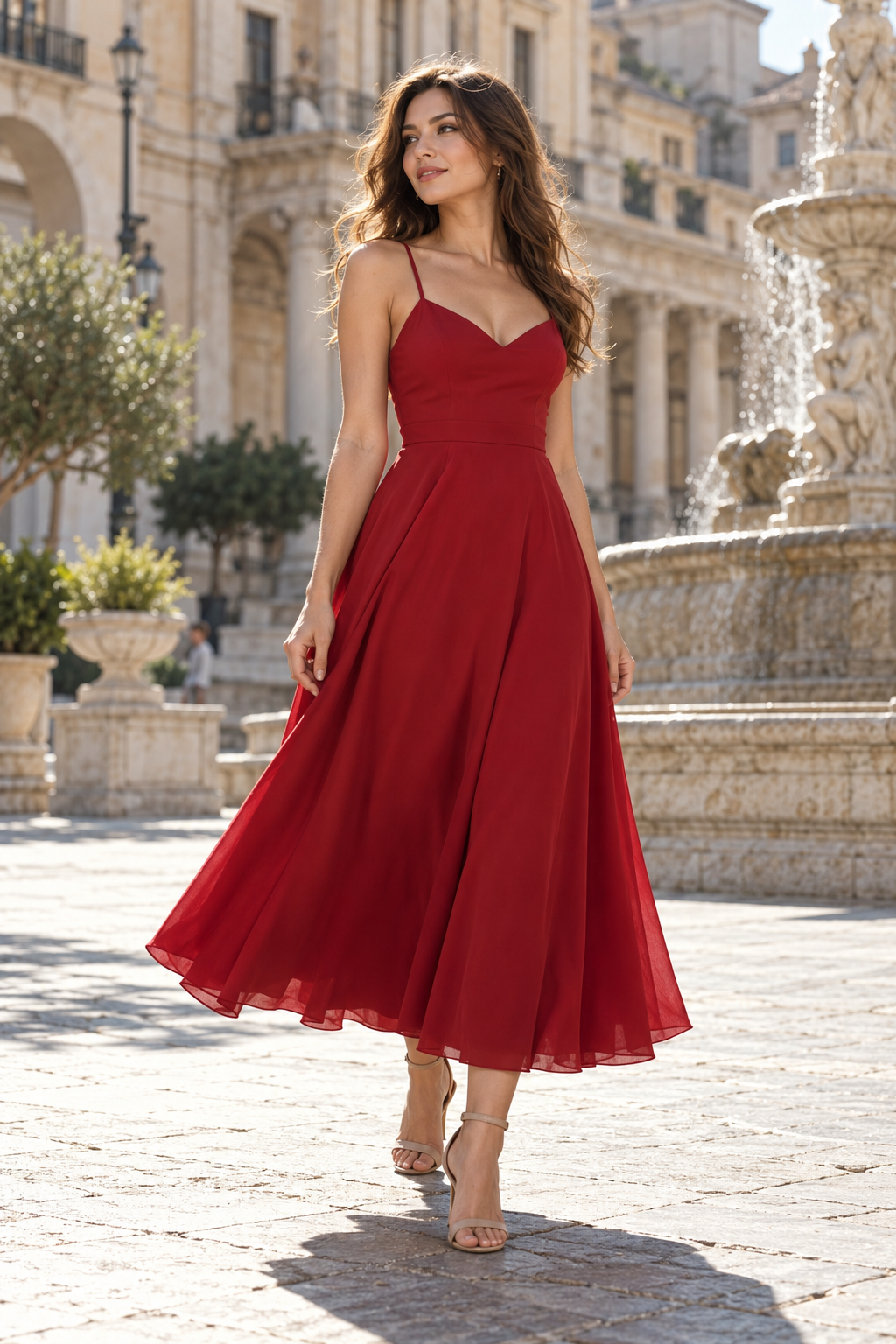
A red dress can be quiet, dramatic, romantic, or sharply modern. The result depends on the shade, cut, fabric, and setting. If you like the color but worry that it will feel too bold, begin with one clear idea for the occasion and keep the rest of the outfit considered. Red is versatile when you let it lead.
Find the shade you enjoy wearing
Scarlet and true red feel vivid in daylight, while cherry, brick, oxblood, and burgundy offer different levels of depth. There is no rule that one undertone suits everyone. Hold the dress near your face in natural light, then look at it under indoor light if the event is in the evening. Some reds become orange under warm bulbs; others turn wine-dark. Think about whether you want the dress to be the strongest color in the room or a softer part of the setting. A shade you feel comfortable repeating is more useful than a color selected only because it is fashionable.

Match the cut to the event
A tailored red midi can be polished for a dinner or gallery opening. A relaxed cotton dress works for daytime, while a long satin or crepe gown suits a formal evening. For a wedding, check the invitation and cultural context, since red has different associations in different traditions. When uncertain, a restrained silhouette in a deeper red often feels more appropriate than a highly embellished bright gown. Let the dress code guide hem length, neckline, and fabric rather than treating the color alone as the entire outfit.
Let fabric control the intensity
Fabric changes how red behaves. Matte crepe makes a strong color feel clean and modern. Satin reflects light and looks more glamorous, especially after dark. Velvet deepens the shade and works well in cooler months. Cotton or linen softens the effect for daytime, though wrinkles can become part of the look. Choose a texture that suits the venue and the amount of movement planned. A beautifully cut red dress in a simple fabric may be more memorable than one with many competing details. Examine seams and lining closely because a saturated color can reveal construction flaws.
Keep accessories intentional
Black accessories create contrast, while tan or brown can make red feel warmer and easier for day. Metallics add an evening finish, but one metal usually gives the clearest result. A cream bag or subtle pearl can soften a sharp red outfit. Avoid feeling obliged to match every accessory to the exact dress shade; near matches can look accidental. Instead, choose a small palette of two or three colors. A sculptural earring may be enough jewelry when the dress has an interesting neckline. Try the complete look in daylight before you commit.
Make makeup and styling work together
You do not need red lipstick to wear a red dress. A natural lip can let the garment remain the focus, while a carefully chosen red lip creates a more deliberate, classic effect. If you choose both, compare the undertones rather than assuming any two reds will match. Hair can be simple when the dress has volume or strong shoulders. A soft updo can show a neckline; loose hair can make a structured dress feel less formal. Styling decisions should support how you want to feel, not follow a fixed formula.
Wear it with ease
A vivid color attracts attention, so comfort matters. Check that the dress lets you sit, walk, and reach without shifting. Photograph it in the lighting you expect at the event and inspect whether the fabric becomes sheer or overly shiny. If you keep adjusting the neckline or smoothing the skirt, tailoring may be worthwhile. The best red dress is one you forget you are wearing after the first few minutes. That ease is what turns a striking garment into a convincing personal style statement.
Can a red dress work in the daytime?
Yes. Choose a matte fabric and a relaxed cut, then use accessories that suit the setting. A cotton or crepe midi with flat sandals feels very different from a satin evening gown, even in a similar shade. Daylight also makes fit and fabric quality more visible, so check lining and seams carefully. If you are attending a ceremony, read the dress guidance and consider the cultural meaning of red for that particular celebration.