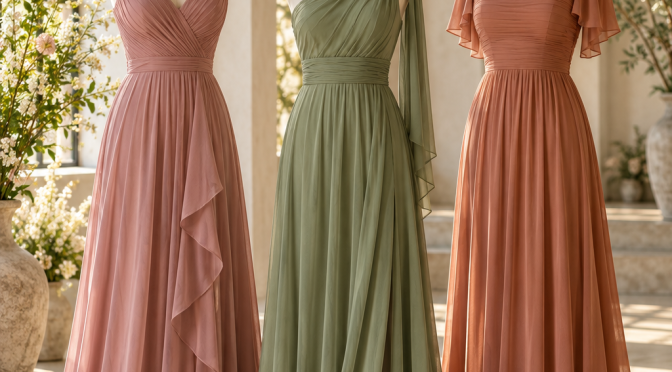
A considered bridesmaid palette can make a wedding feel beautifully cohesive without making every person look identical. Today’s most memorable bridal parties often use a family of shades rather than one exact color. The result feels personal, flattering, and naturally suited to the season.
Start with the setting and season
Look at the ceremony space first. A summer garden can carry dusty rose, sage, and pale blue with ease. Autumn celebrations suit terracotta, olive, wine, and warm neutrals. For winter, navy, deep emerald, plum, and cocoa create richness without feeling heavy. A neutral venue gives you more freedom, while a colorful space may call for softer, quieter dresses.
Build a palette, not a uniform
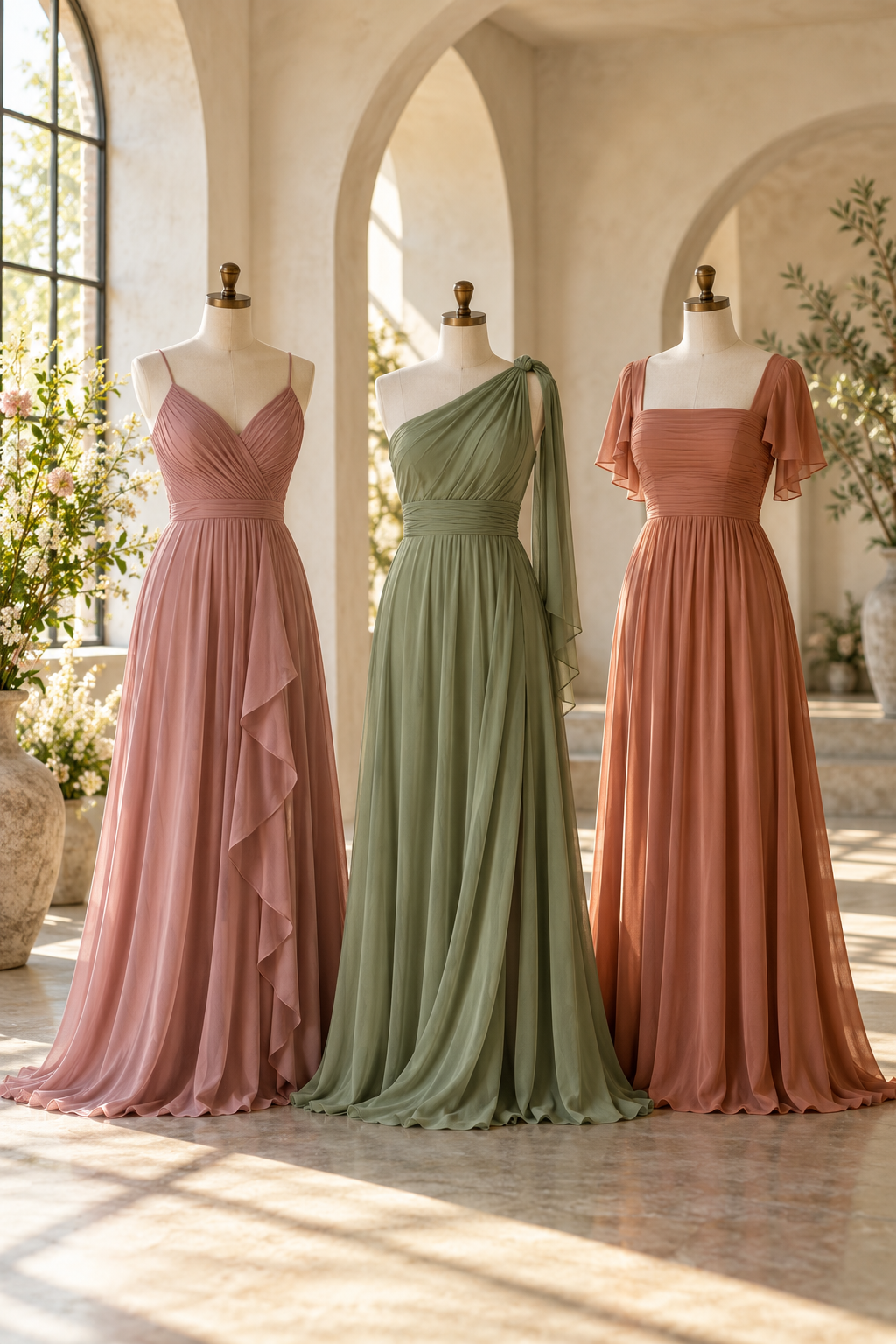
Choose one anchor color and two supporting tones. The shades should share an undertone—warm, cool, or muted—so they look intentional together. Let each bridesmaid select a silhouette that works for her while keeping fabric or length consistent. This approach gives the group rhythm in photos and lets each person feel comfortable.

Use fabric to create depth
Different fabrics catch light in different ways. Matte chiffon feels soft and romantic; satin makes color appear more luminous; velvet adds depth for an evening or winter wedding. If mixing materials, stay within the same color family and test the dresses together in natural light before finalizing the lineup.
Keep accessories coherent
Accessories can unify varied dresses. A shared metal for jewelry, matching bouquet ribbons, or a similar shoe tone creates a clear visual link without taking away individuality. Remember that bouquets and flowers become part of the palette too, so leave room for their color and texture.
The most successful bridesmaid palette feels like an extension of the celebration rather than a strict formula. Give everyone clear direction, offer a little flexibility, and keep the focus on colors that make the entire group feel confident.