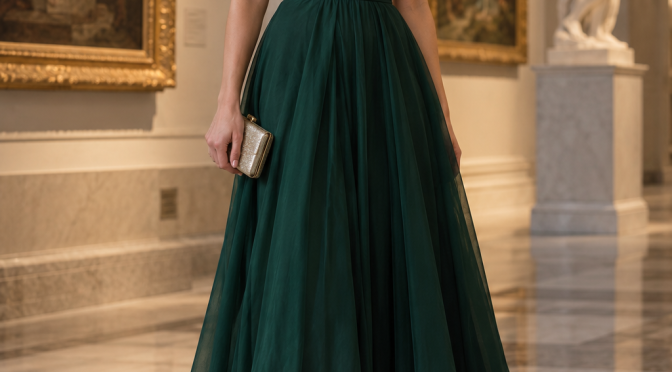
A formal dress should create a sense of ease as well as occasion. For plus-size shoppers, the most useful fitting questions concern support, proportion, movement, and fabric quality. There is no one silhouette that suits every body. A strong gown starts with the features you want to emphasize and the experience you want to have while wearing it.
Begin with the foundation
The right undergarments can change how a gown sits, but they should not be expected to repair a poorly cut dress. Decide whether you want a built-in bra, adjustable straps, or enough coverage to wear your preferred support. Bring the actual undergarments to a fitting, because a neckline can behave differently with them in place. Check that the bodice stays stable when you raise your arms, bend slightly, and sit down. A dress that relies on constant pulling or tape alone may be difficult to enjoy for a long event. Comfort and security are part of a polished appearance.
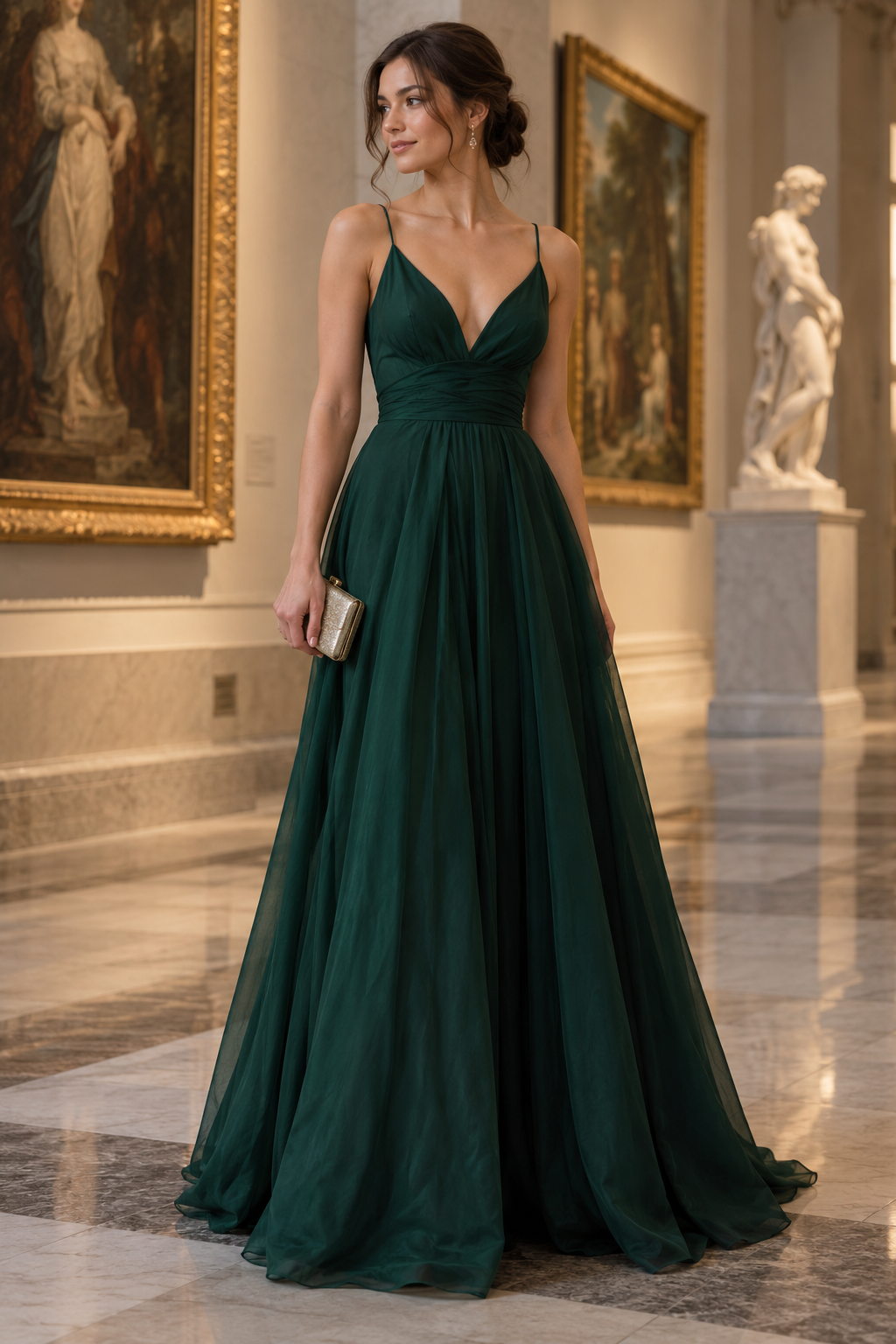
Compare silhouettes without rules
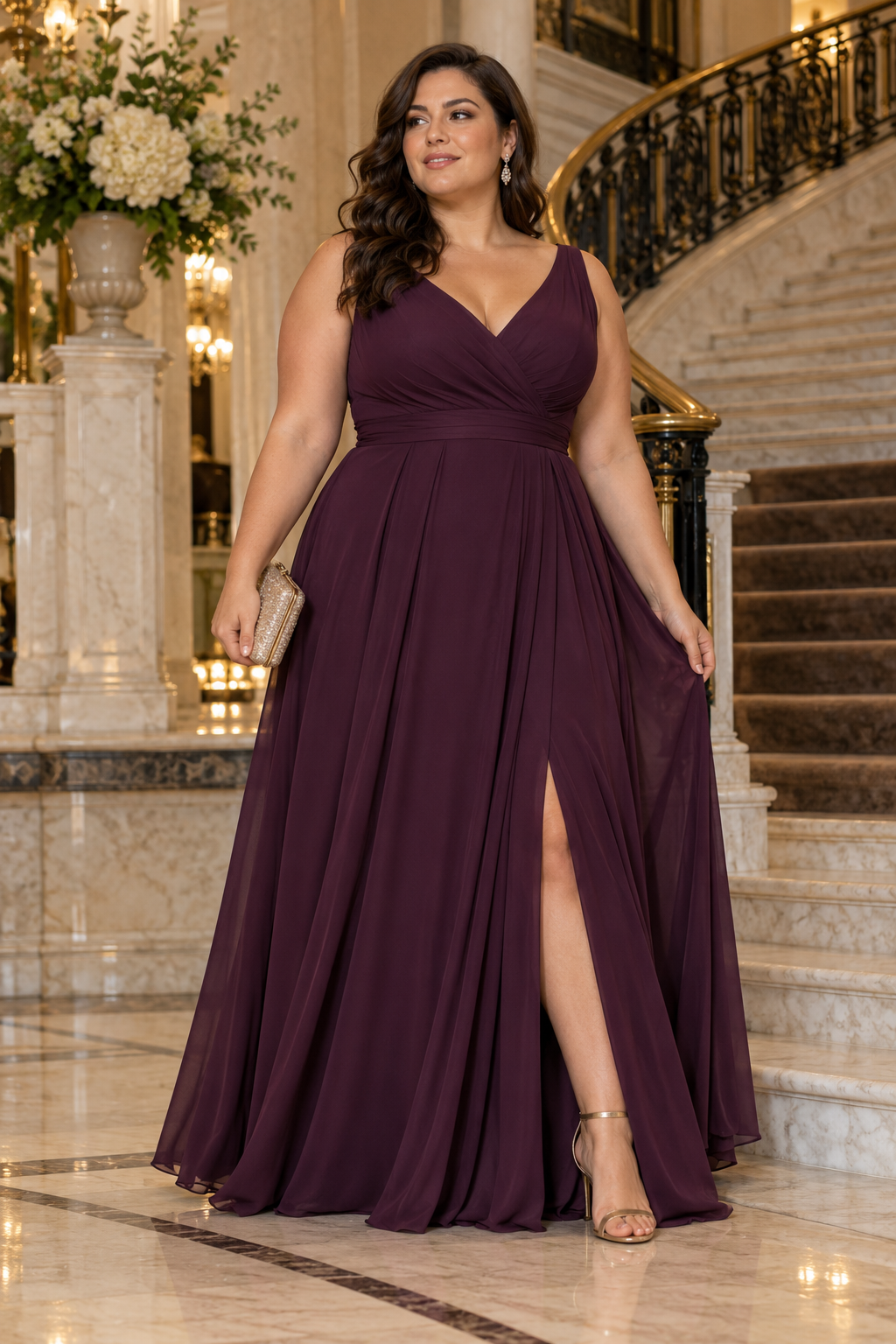
A wrap gown can define the waist and allow adjustability, but its overlap must stay secure in motion. An A-line shape offers space through the hip and skirt; a column can look sleek when the fabric has enough structure. Fit-and-flare silhouettes can be striking when the flare begins at a point that feels balanced on your body. Try several cuts even if you already have a favorite. Pay attention to where seams sit and whether the dress follows your natural proportions. The point is not to conceal a particular area. It is to find a shape that lets you stand and move comfortably.
Inspect the fabric closely
Formal fabrics vary greatly in quality. A substantial crepe may skim smoothly; thin stretch fabric can reveal every seam and undergarment line. Satin brings sheen, while chiffon layers can add softness and motion. Velvet creates depth for cool-weather events. Check the lining: it should move with the outer layer rather than catching or riding up. Look at the dress in daylight and under indoor lights, especially if it has sequins or a strong color. A beautifully cut fabric with a comfortable lining often does more for the look than extra embellishment.
Prioritize movement
A fitting-room mirror gives only one view. Take a few full steps, turn, sit, and stand again. If the dress has a slit, check its height both while walking and seated. If it has sleeves, make sure the shoulder does not pull when you reach. A floor-length gown should clear your shoes enough to avoid stepping on the hem. These checks are practical rather than cosmetic: an outfit that moves with you looks better in photographs and gives you more energy to enjoy the evening. Ask a friend to capture a short video if movement is hard to judge alone.
Budget for tailoring
Standard sizing rarely matches every measurement. Fit the areas that are hardest to change, often the shoulders and bust, then discuss waist shaping or hem length with a tailor. A small adjustment to strap length can change the position of the entire bodice. Beading, lace borders, and heavy embellishment make alterations more complex, so ask before purchasing. Allow enough time for a second fitting with your event shoes. Tailoring is a normal part of formalwear, not a sign that you chose the wrong size. The goal is a dress that supports your body as it is.
Complete the outfit with confidence
Accessories can be simple when the gown has a strong color or shape. Choose shoes you can wear through the whole event, a bag that holds essentials, and jewelry that works with the neckline. If you need a layer, try it with the dress instead of treating it as an afterthought. Photograph the full outfit in normal light. If you like how you look and can stop adjusting the garment, you have found the right direction. Formal style is most convincing when the wearer looks present, comfortable, and ready to celebrate.
Is one dress shape always best for plus-size bodies?
No. Bodies, preferences, and events differ too much for a single formula. Use waist placement, shoulder fit, and freedom of movement as practical checks, then choose the silhouette you enjoy. The dress that feels secure and balanced on you is more useful than a rule based only on a size label.