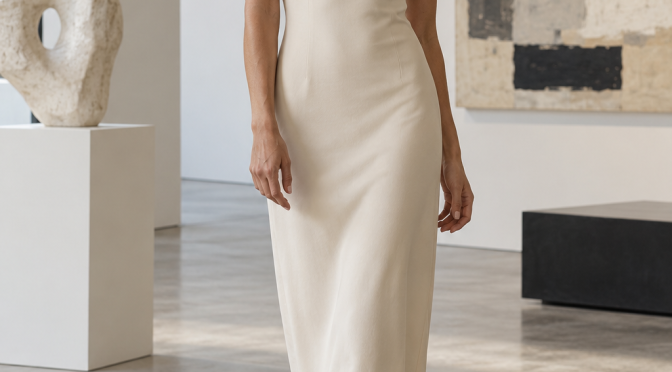
A minimalist dress can make a powerful impression through restraint. With fewer decorative details, cut, fabric, and fit become more visible. That is what makes a simple dress versatile and what makes choosing one worth some care. These checks help a clean silhouette feel deliberate for work, dinner, or a special event.
Look at the line first
A minimalist dress depends on its outline. Step back from the mirror and notice the shape from shoulder to hem before examining any small detail. A column creates one uninterrupted line; an A-line gives gentle space below the waist; a wrap introduces movement and definition. None is automatically more modern than another. The choice depends on how you want the dress to relate to your body and the event. Check the side view as well as the front. A dress may look clean head-on but pull across the hip or bunch at the back.
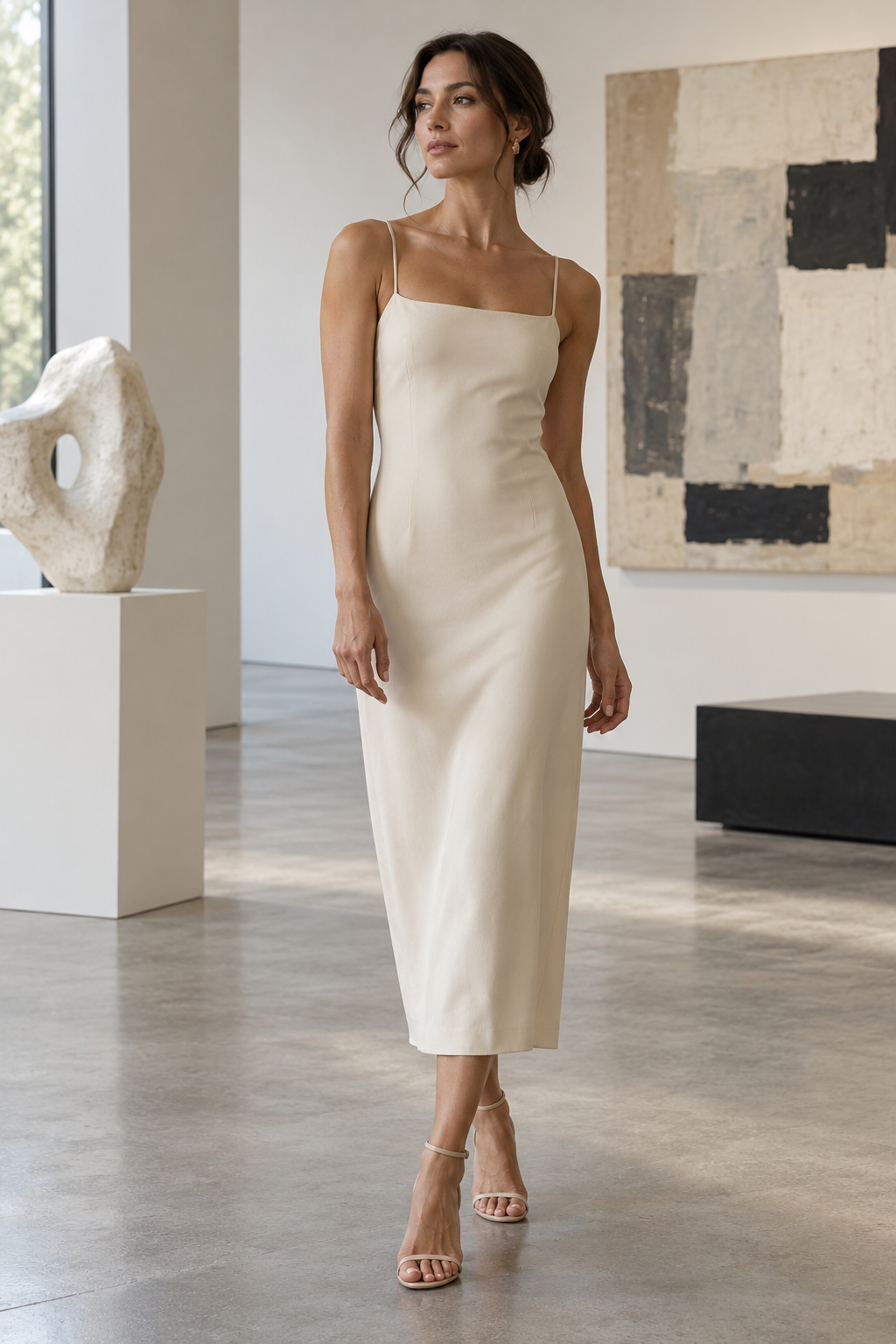
Make fabric the feature
When there is no print or embellishment to distract the eye, material quality matters. Crepe can give a smooth matte finish, cotton poplin adds crispness, and satin offers light and fluidity. Knit dresses can look refined when the fabric has enough weight to hold its form. Touch the material and check whether it springs back after being handled. Inspect the lining and seam allowances. In a pale dress, test opacity in daylight and with your chosen undergarments. Good fabric is not necessarily the most expensive, but it should support the shape you want rather than fighting it.
Use fit as quiet detail
A shoulder seam in the right place, a sleeve with enough room, and a hem that ends intentionally can make a plain dress look tailored. Small fit problems are also easier to notice when the design is simple. Try the dress while sitting, walking, and reaching. If it twists or rides up, the cut may not suit your proportions. A tailor can refine length or waist shaping, but it is best to choose a garment that fits well at the shoulders and bust from the start. Minimalism looks effortless because the underlying decisions have been made carefully.
Choose a restrained palette
Cream, navy, black, chocolate, olive, and stone are familiar minimalist colors, but a clear red or cobalt can also feel minimal when the silhouette is clean. Think about your existing wardrobe and how often you want to wear the dress. A neutral may combine easily with shoes and outerwear you already own. A strong color can become the entire statement without added decoration. Hold the garment near your face in daylight, then check it under evening light if you plan to wear it to a dinner. Color can change significantly between the two.
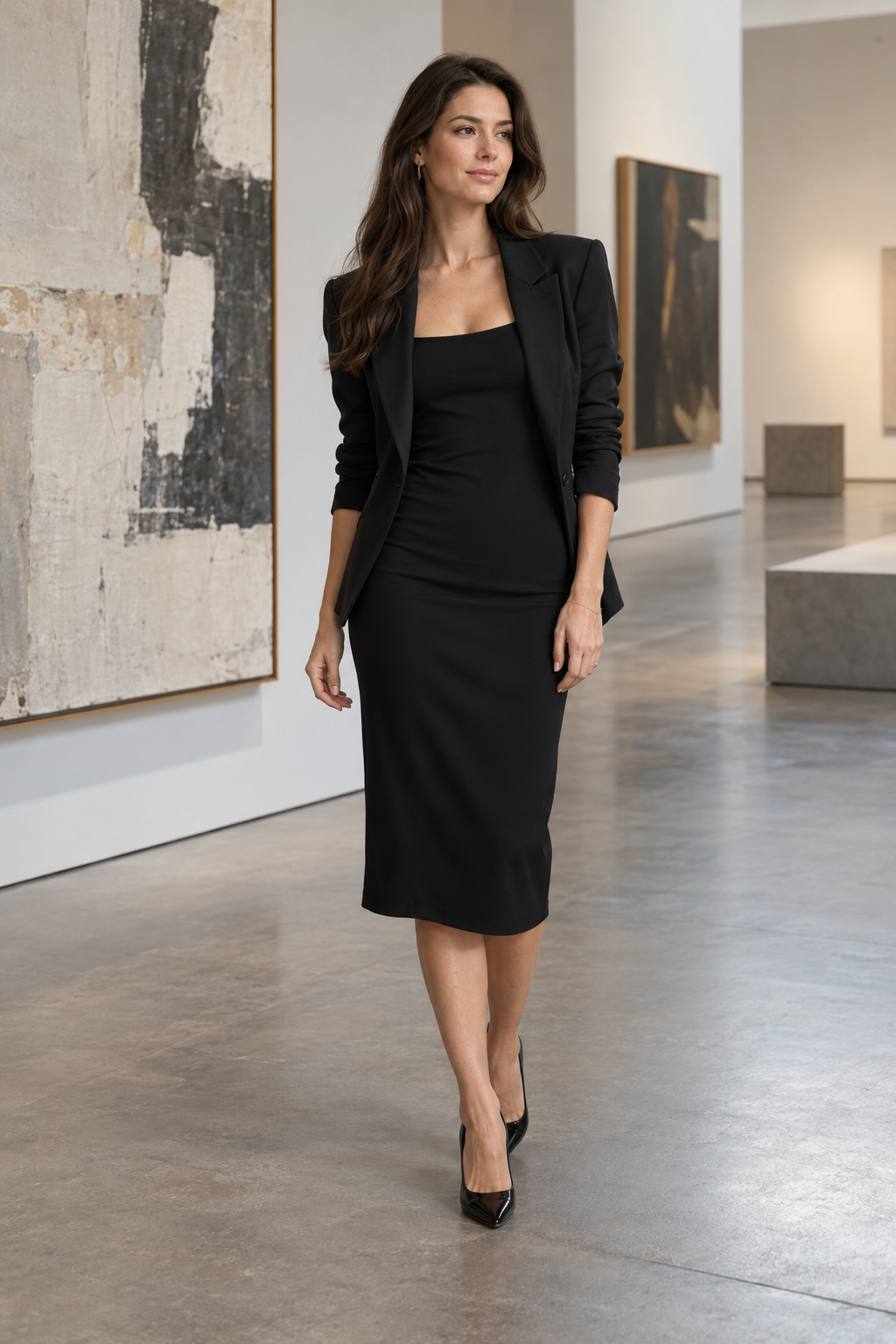
Let one accessory lead
A sculptural earring, polished belt, distinctive shoe, or compact bag can add personality without overwhelming a simple dress. Choose one focal point and keep the other pieces quiet. If the neckline has an interesting shape, you may need no necklace at all. For daytime, a tailored jacket and flat shoe can make the dress practical; for evening, a sharper shoe and smaller bag can change the mood. Try these combinations before buying new accessories. A truly versatile dress earns its place by working with pieces you already enjoy wearing.
Care for the clean finish
Minimalist clothes reveal wear quickly, so consider upkeep before purchasing. Light fabrics may need careful cleaning, while structured cotton may require ironing. Check whether the dress creases after sitting and whether the seams lie flat after washing or steaming. Store it so the shoulder shape and hem remain smooth. If the garment requires more maintenance than you are willing to give, choose another fabric. The best simple dress is one you will actually wear, not a beautiful object that stays in the closet because it is too difficult to maintain.
Can a minimalist dress work for a formal event?
Yes. Choose a refined fabric and precise fit, then add one elegant accessory. A long crepe or satin column can be striking in a formal room. Check the invitation and let the venue guide length and shoes. The simplicity gives space for your posture and personality to be noticed.
A simple design also makes repair worthwhile: replace a loose button, refresh a hem, and keep the fabric pressed for repeated wear.