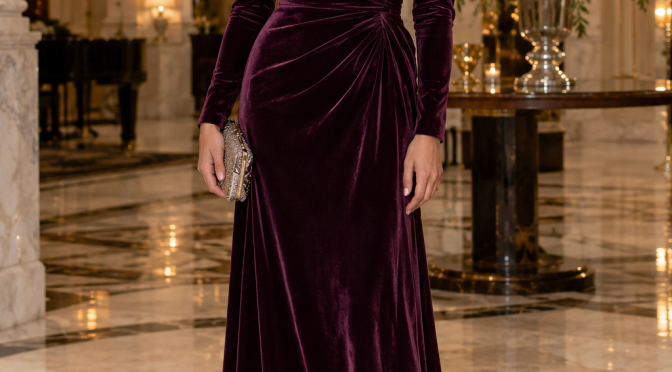
A winter wedding outfit has to do more than look elegant in a photograph. The best dress also suits the invitation, indoor temperature, journey, and time spent celebrating.
Read the invitation and venue together
Start with the stated dress code, then picture the spaces you will actually occupy. A black-tie hotel reception may call for a floor-length gown, while a daytime ceremony in a country house could welcome a refined midi. Winter does not automatically mean heavy velvet or dark color. A well-lined crepe dress can feel formal without overheating indoors. Check whether the ceremony and reception happen in different locations and whether there is a walk between them. That small logistical detail can shape footwear, outerwear, and fabric more than a mood board can.
Choose fabric for movement and temperature
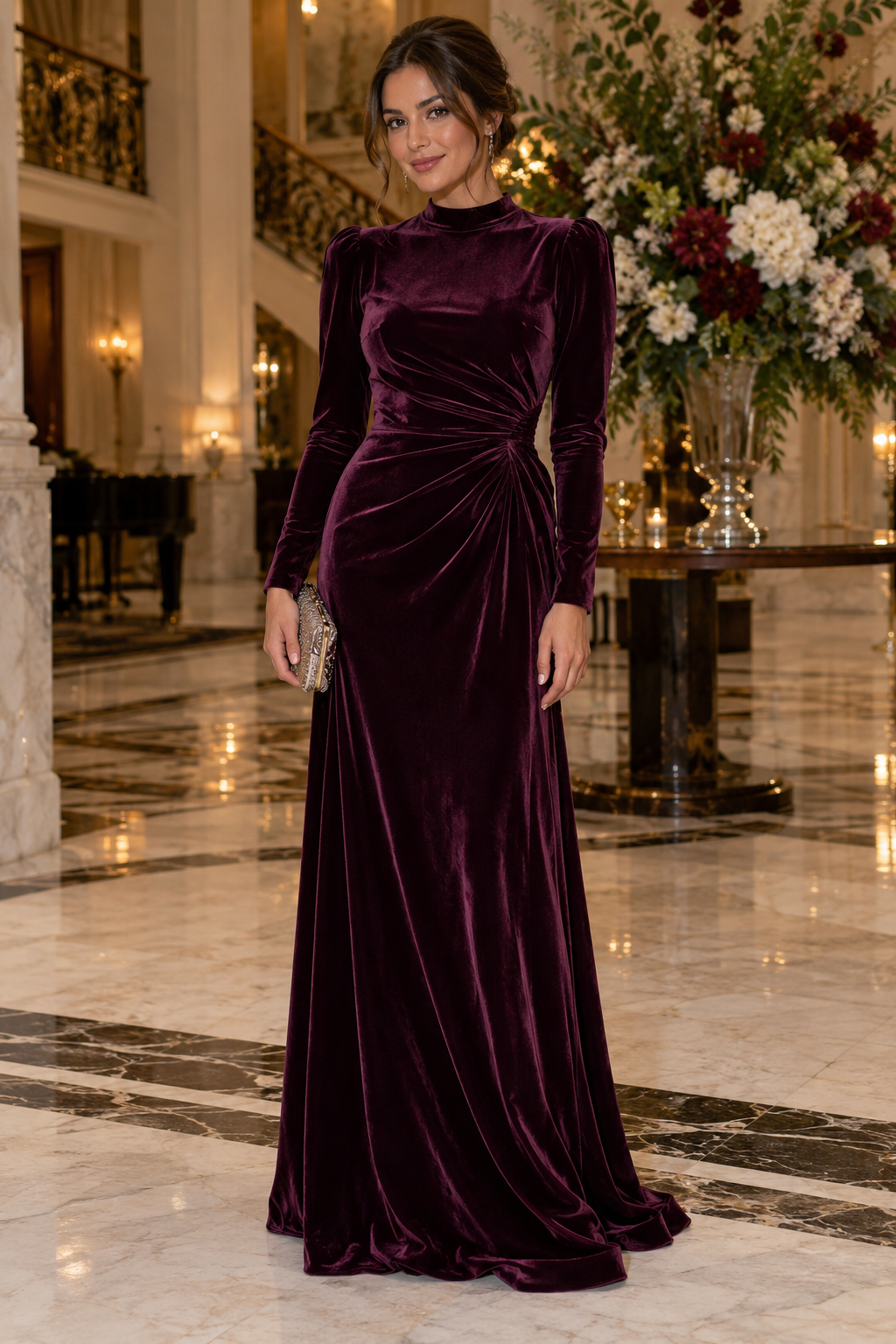
Velvet offers depth and warmth, but its pile can show pressure marks and may feel too warm in a crowded room. Crepe creates a smooth line and often layers more easily under a coat. Heavier satin reflects evening light beautifully, though it can crease and show damp marks. Hold the fabric against light to assess opacity and check the lining for breathability. Sit and walk in the dress for several minutes. A fabric that looks perfect while standing may cling to tights or pull at the knees after dinner. The right material balances appearance with real wear.
Use sleeves and coverage deliberately
Long sleeves can be elegant and practical, but the cut matters. A sleeve should let you raise your arms and reach across a table without tugging at the bodice. Three-quarter sleeves may feel less restrictive and allow jewelry to show. A high neckline can create a clean formal line, especially with a softly draped skirt. If the dress is sleeveless, plan a proper layer rather than relying on a coat you must remove at dinner. Coverage should look intentional in the room, not simply be a response to cold weather outside.
Make outerwear part of the outfit
Your coat may appear in arrival photographs and will certainly be visible during travel. Try it over the dress before the event, checking that sleeves fit comfortably and the hem relationship looks considered. A long tailored coat can support a formal gown; a shorter structured coat may work better with a full midi skirt. Avoid outerwear that crushes statement sleeves or catches on embellishment. A wrap can be useful inside a chilly venue, but it should stay on your shoulders without constant adjustment. Think in layers so you can adapt as the room warms.
Choose shoes for the route
Winter footwear should account for wet pavements, steps, and standing time. A closed-toe heel or refined block heel often offers a better compromise than a fragile sandal. If the venue requires a walk through snow or rain, consider changing shoes on arrival and carrying the dress shoes in a compact bag. Test the gown hem with the actual heel height, not a similar pair. A hem that drags when you switch footwear can become both dirty and unsafe. Practical planning preserves the polish of the outfit through the entire evening.
Build color around the light
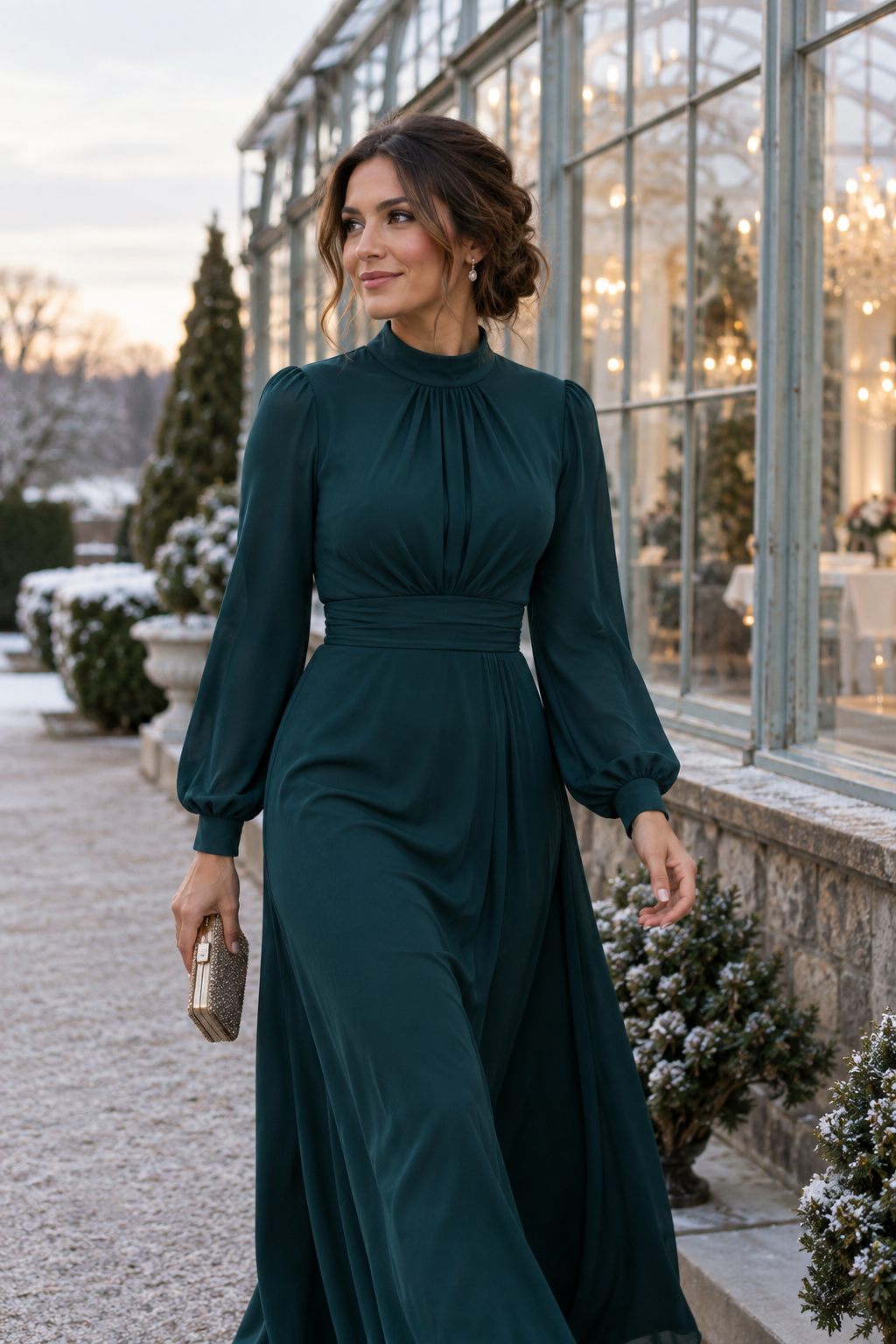
Deep teal, plum, navy, and burgundy often look rich against winter surroundings, but lighter shades can work too. Evaluate the color in daylight and warm indoor light; some jewel tones become nearly black under dim bulbs. Metallic accessories can add brightness without making the dress feel festive in a costume-like way. If the fabric already has sheen, choose quieter jewelry and a matte or softly textured bag. Ask whether photographs will be taken outdoors, where a strongly reflective fabric may look very different. A coherent palette beats adding sparkle everywhere.
Rehearse the whole look
Before the wedding, wear the dress with underlayers, tights, shoes, coat, bag, and jewelry. Walk, sit, and take a quick photograph in different light. Check whether static, sleeve bunching, or visible undergarment lines need attention. Pack only useful fixes, such as a small stain-care item and fashion tape appropriate to the fabric. Confirm the event’s guest etiquette and avoid white or bridal-looking styling unless the couple explicitly invites it. A complete rehearsal turns a beautiful outfit into an easy one, leaving you free to focus on the celebration.
One final check: review the weather forecast shortly before the wedding, then adapt your coat and travel shoes without changing the dress at the last minute. That practical flexibility is the secret to a winter guest look that feels composed from arrival through the final dance.