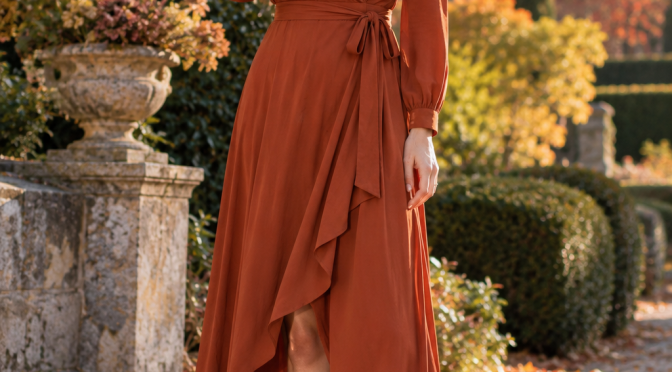
A wrap dress can move between a workday and an evening plan, but only when its closure, fabric, and proportions stay secure through ordinary movement.
Understand the wrap construction
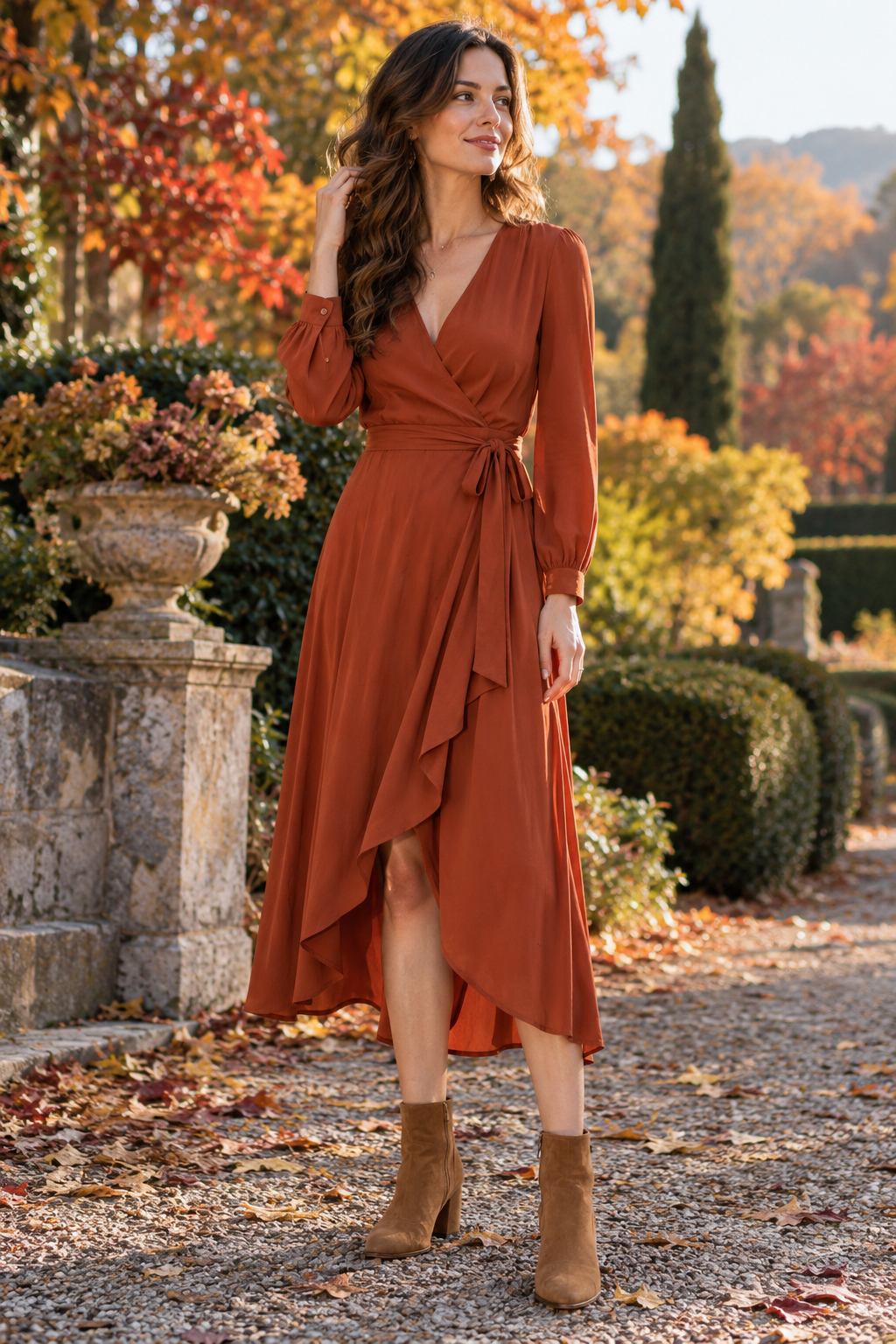
True wrap dresses close with an inner tie and an outer tie or fastening; faux wraps mimic the diagonal line with a fixed skirt. Neither is automatically better. A true wrap offers adjustment when your body changes slightly, but the front overlap must remain generous when you sit or walk. A fixed wrap may feel more secure and can be simpler for a long workday. Inspect the interior attachment, stitching, and tie placement. If the opening shifts constantly in the fitting room, the problem may not disappear after styling. Choose construction that matches how you actually move.
Test the neckline in motion
The V neckline is a defining feature, yet its depth can change when the waist tie tightens. Sit down, reach forward, and bend slightly while checking coverage. A small hidden snap or camisole can help, but it should not be required to rescue a badly fitted bodice. The shoulder seams should remain stable and the fabric should lie smoothly across the chest. If a dress gapes only on one side, tailoring may solve it more elegantly than pulling the tie harder. The goal is an effortless diagonal line, not an outfit that demands constant surveillance.
Choose a fabric that earns repeat wear
Matte jersey drapes easily and travels well, though very thin versions can cling. Woven viscose or crepe may look sharper for the office while still moving naturally at dinner. Cotton blends bring breathability but can feel more casual, depending on print and texture. Hold the dress up to light, inspect the overlap, and check how the skirt falls after sitting. A pattern can camouflage wrinkles, but it cannot correct poor construction. If you want one dress to cover multiple occasions, prioritize a fabric that feels comfortable for hours and looks tidy after a commute.
Get the waist position right
The tie should meet your natural waist or the intended design line without dragging the bodice down. If it sits too high, the skirt may flare at an awkward point; too low, and the upper body may look heavy. Petite and tall wearers may need different adjustments even when the size is otherwise correct. Try tying the dress at its designed tension, then walk around rather than pulling it as tightly as possible. A wrap dress should skim, not compress. The correct waist placement often makes accessories and layering far easier to judge.

Style a workday version
For work, choose a length and overlap that remain comfortable at a desk, on stairs, and during meetings. Closed-toe flats, loafers, or a modest heel can anchor the dress without competing with its diagonal lines. A tailored blazer works best when it closes comfortably over the tie and does not create bulk at the waist. Keep jewelry simple if the dress has a busy print. A structured bag can add a professional edge to a softer fabric. The finished outfit should look considered even when the blazer comes off.
Shift to dinner with restraint
An evening transition need not involve changing every accessory. Swap practical shoes for a polished pair, add a compact bag, or choose one more noticeable earring. If the dress is a strong rust, navy, or patterned shade, let that remain the focal point. A delicate necklace can follow a V neckline, but check that it does not disappear into the fabric. For a cooler evening, a long coat may be cleaner than a bulky cardigan. The best transformation feels like a change in emphasis, not a completely different costume.
Maintain the wrap and its shape
Follow the care label, especially if the dress is viscose or another fabric prone to shrinkage. Tie strings can twist in the wash, so secure them gently before cleaning when appropriate. Hang or fold according to the fabric’s weight, and steam creases carefully rather than pressing the diagonal edge out of shape. Recheck hidden snaps and inner ties before an event. A wrap dress is versatile when its closure remains dependable. Caring for those small structural details will do more for its longevity than collecting extra accessories.
Before you buy a second wrap dress, compare it with the one you wear most. Notice the overlap, tie position, and fabric weight that already work for you. Repeating those successful details in a new color is often more useful than chasing a completely different cut.