Category Archives: Casual & Everyday

‘Casual and everyday dresses for women’

How to Wear a Sweater Dress Without Losing Shape or Comfort

A sweater dress can offer warmth and ease while still looking refined. The key is choosing knit weight, fit, and layers that move together rather than fighting the silhouette.

Start with the knit itself

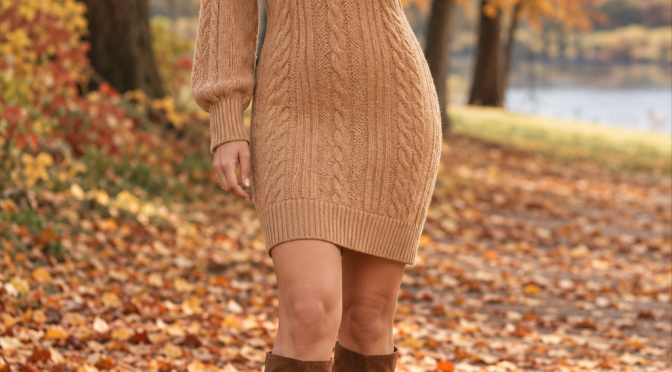
A sweater dress should feel comfortable against your skin and recover after gentle stretching. Examine the fabric composition, knit density, and seam construction before deciding on color or styling. Fine-gauge knit can drape close to the body, while a heavier rib gives more texture and can feel substantial. Hold the garment up to light to check opacity, particularly at the hips and seat. Rub a small area gently to see whether the surface fuzzes easily. No knit is completely maintenance-free, but a well-made one should retain its shape after ordinary movement and make you want to wear it again.
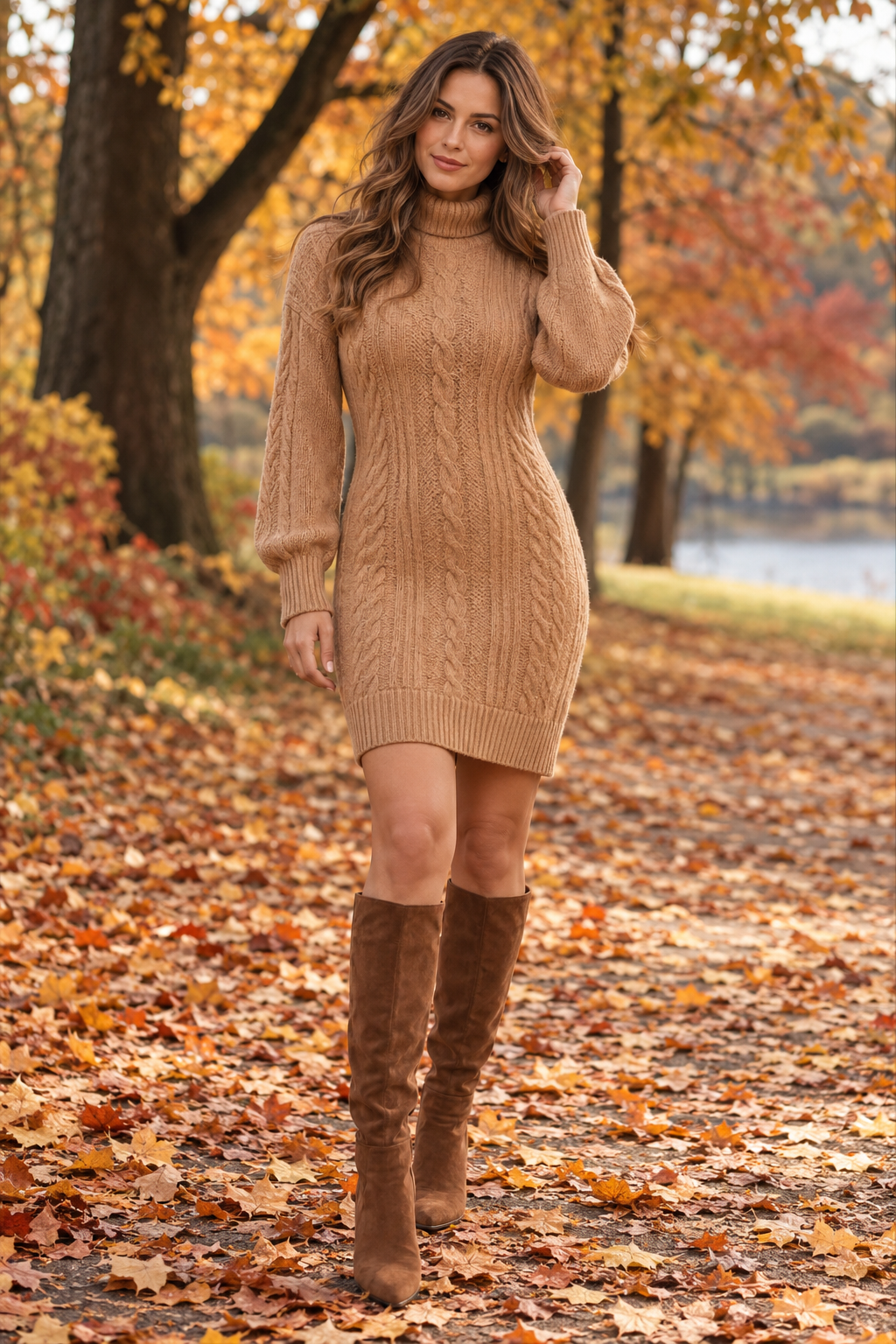
Adult model wearing a camel knit sweater dress in an autumn park

Choose ease deliberately

A sweater dress does not have to be skin-tight to look polished. A little ease through the torso allows the knit to fall smoothly and keeps the dress comfortable when seated. If you prefer a closer fit, look for enough stretch and a weight that does not become transparent over curves. Oversized designs need proportion too: a defined shoulder, clean neckline, or controlled hem can prevent the garment from looking shapeless. Try walking and sitting in the dress before committing. If it rides up constantly or twists around the body, the issue is likely fit or knit construction, not a styling problem.

Check length with your footwear

Knit dresses can change length slightly as they hang, so allow the fabric to settle before judging the hem. A knee-length style may pair naturally with tall boots, while a longer midi can look elegant with ankle boots or loafers. The gap between hem and boot top matters visually and practically in cold weather. Try the full outfit in a mirror from the side as well as the front. If the hem clings to tights, consider a smooth underlayer or a different hosiery texture. The most comfortable length is one that stays in place as you move rather than requiring frequent adjustment.

Layer for warmth, not bulk

A sweater dress already supplies texture, so outer layers should fit over it easily. A tailored coat can give a relaxed knit clear structure; a roomy trench suits a lighter gauge on milder days. Check that the coat sleeves accommodate the dress sleeves without bunching. A thin thermal layer underneath can add warmth without changing the outline, but test the neckline and hem so it stays hidden. If you add a scarf, choose one that complements the dress’s knit rather than repeating the same heavy texture everywhere. Comfortable layering creates a smooth shape and lets each piece do a distinct job.
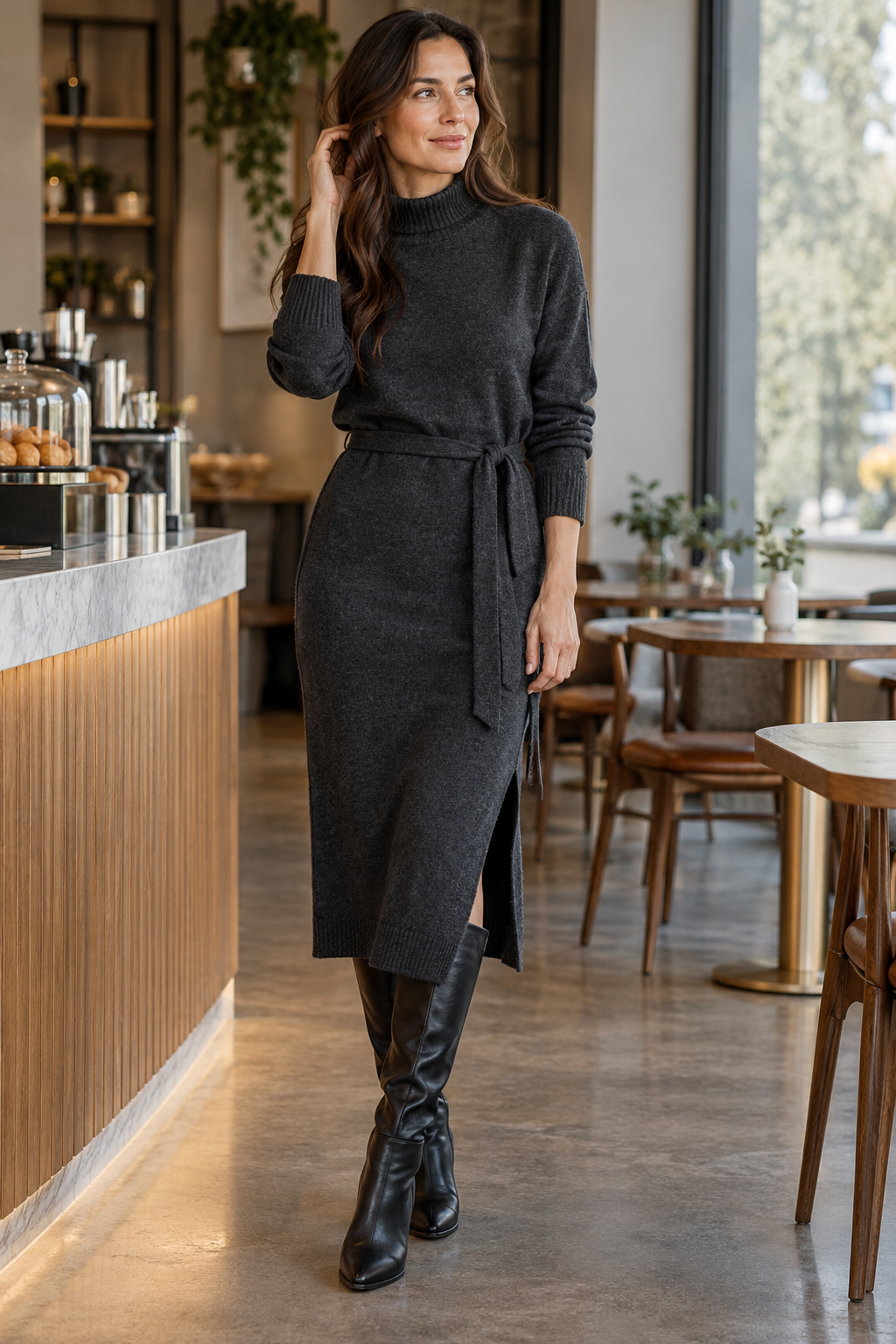
Adult model wearing a charcoal knit sweater dress at a cafe

Use belts carefully

Belting can introduce shape, especially on a relaxed straight dress, but it should not force the knit into awkward folds. A narrow belt may disappear into thick ribbing, while a very wide one can dominate a soft silhouette. Try a simple leather belt at the natural waist or slightly higher, then sit and walk to see whether it stays put. Sometimes the dress needs no belt at all; a structured bag or long coat can provide enough contrast. If the knit is delicate, avoid hardware that catches threads. Styling should protect the garment as well as flatter it.

Think about underlayers and static

The right underlayer can make a sweater dress feel much easier to wear. Smooth, close-fitting pieces reduce visible lines and can help a knit glide over the body. Tights should work with the dress’s weight: very shiny hosiery may feel disconnected from a soft matte knit, while opaque tights often create a quieter finish. Dry indoor air can cause static, especially with synthetic blends. Follow care instructions and consider a suitable anti-static solution if needed. Comfort is not an afterthought here; when the dress moves naturally, the outfit looks more confident.

Care for the dress you want to repeat

A beautiful knit dress is useful only if you can maintain it. Read the care label before buying and decide whether hand washing, flat drying, or professional cleaning fits your routine. Fold knit garments rather than hanging them for long periods, since gravity can stretch shoulders and hems. Give the dress a rest between wears and remove small pills with a fabric-safe tool, gently and only when necessary. Store it clean and dry at the end of the season. With reasonable care, a sweater dress can become a reliable cold-weather piece rather than a one-time outfit.
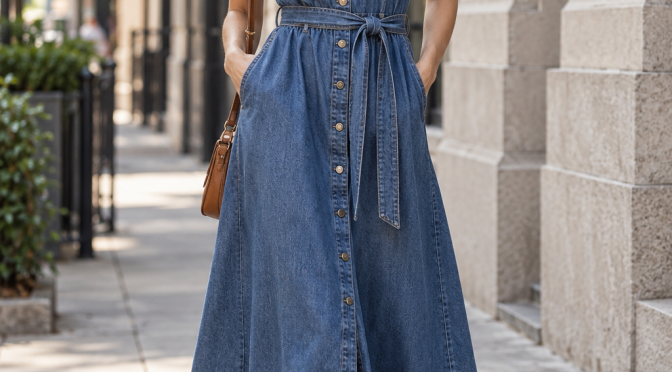
The Casual Midi Dress Formula for Comfortable Everyday Outfits

A casual midi dress works best when movement, fabric, and footwear suit the actual day ahead. These practical choices make a simple silhouette feel considered without over-styling it.

Define the midi length for your frame

Midi describes a range, not one exact hemline. A dress can stop just below the knee, at mid-calf, or closer to the ankle, and each point changes the proportions. Try on the dress with the shoes you will actually wear. A hem that falls at the widest part of the calf may feel different from one that sits a little higher or lower. If the length is almost right, tailoring can be worthwhile because a small adjustment can improve the whole silhouette. Do not rely on the model photo alone; your height, stride, and preferred coverage determine the practical length.

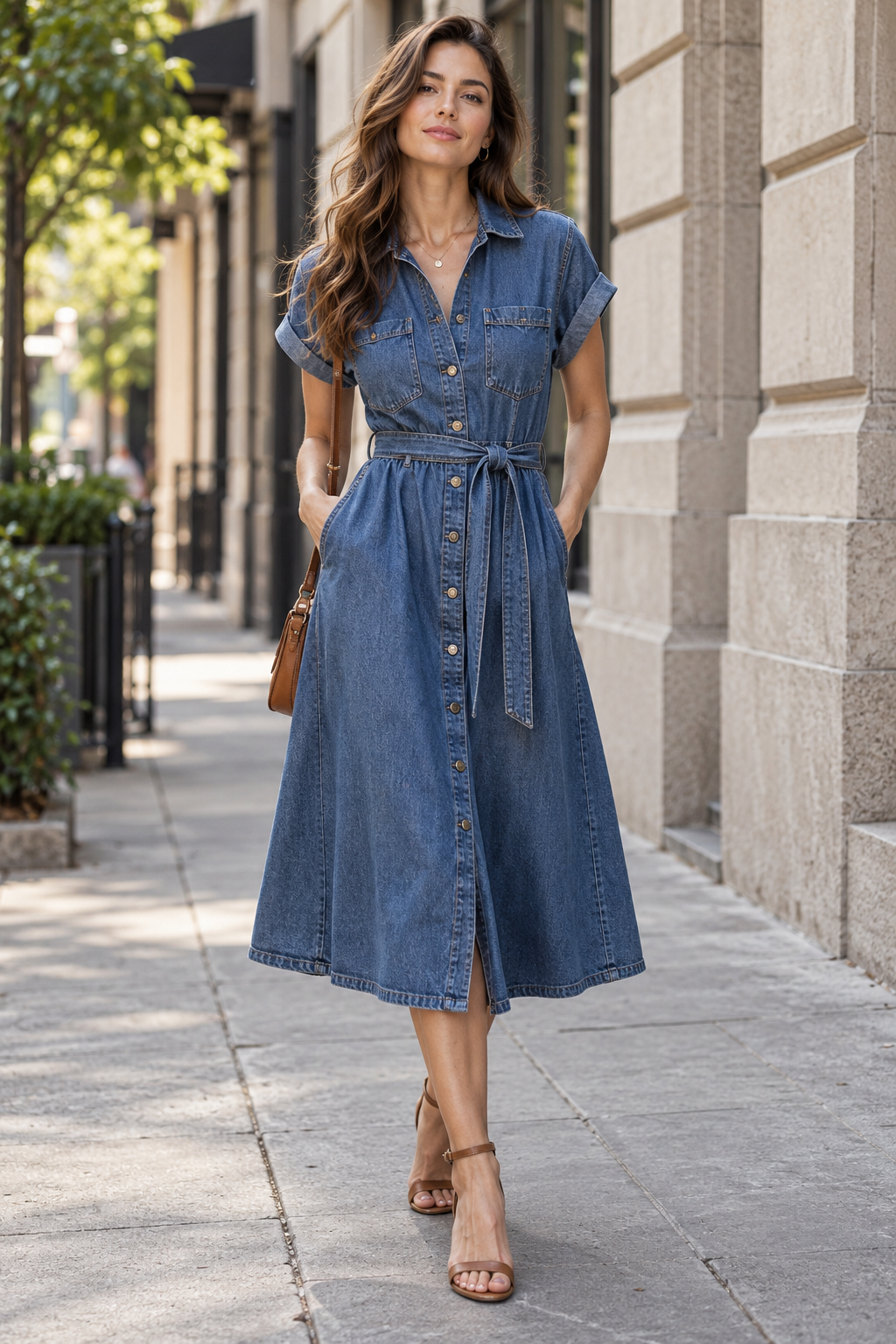
Adult model wearing a relaxed denim midi dress on a city street

Pick fabric for the weather and schedule

Cotton jersey is soft and forgiving, while woven cotton poplin can hold a more defined shape. Denim or chambray adds weight and works well through changing temperatures; linen is airy but creases naturally. Think about how many hours you will wear the dress, whether you will be sitting, and whether the fabric shows every fold. Breathability matters on a warm commute, and a little structure helps a dress look tidy after an afternoon out. If the fabric is thin, check opacity in daylight. A casual dress should reduce decisions, not create new worries about slipping, clinging, or ironing.

Use footwear as the anchor

Shoes can make the same midi dress feel athletic, relaxed, or quietly polished. Clean sneakers suit a walking-heavy day, flat sandals keep things light in summer, and loafers give a simple dress a sharper edge. Choose a shoe profile that balances the hem: very bulky footwear can make a delicate skirt look top-heavy, while barely-there sandals may feel disconnected from a substantial denim dress. Comfort should be tested beyond a few steps indoors. A useful everyday outfit is one you can wear to the market, on public transport, and to an unplanned coffee without needing to change.

Shape the waist only if it helps

A belt is an option, not a requirement. Some midi dresses look best with their original relaxed line, especially when the fabric drapes cleanly. Others benefit from subtle definition through a seam, tie, or slim belt. If you add one, check where it sits when you move and whether it bunches the fabric at the back. A belt should clarify the proportion rather than make the dress harder to wear. You can also create shape with a cropped jacket or an open shirt that frames the torso. Small changes often achieve more than dramatic cinching.

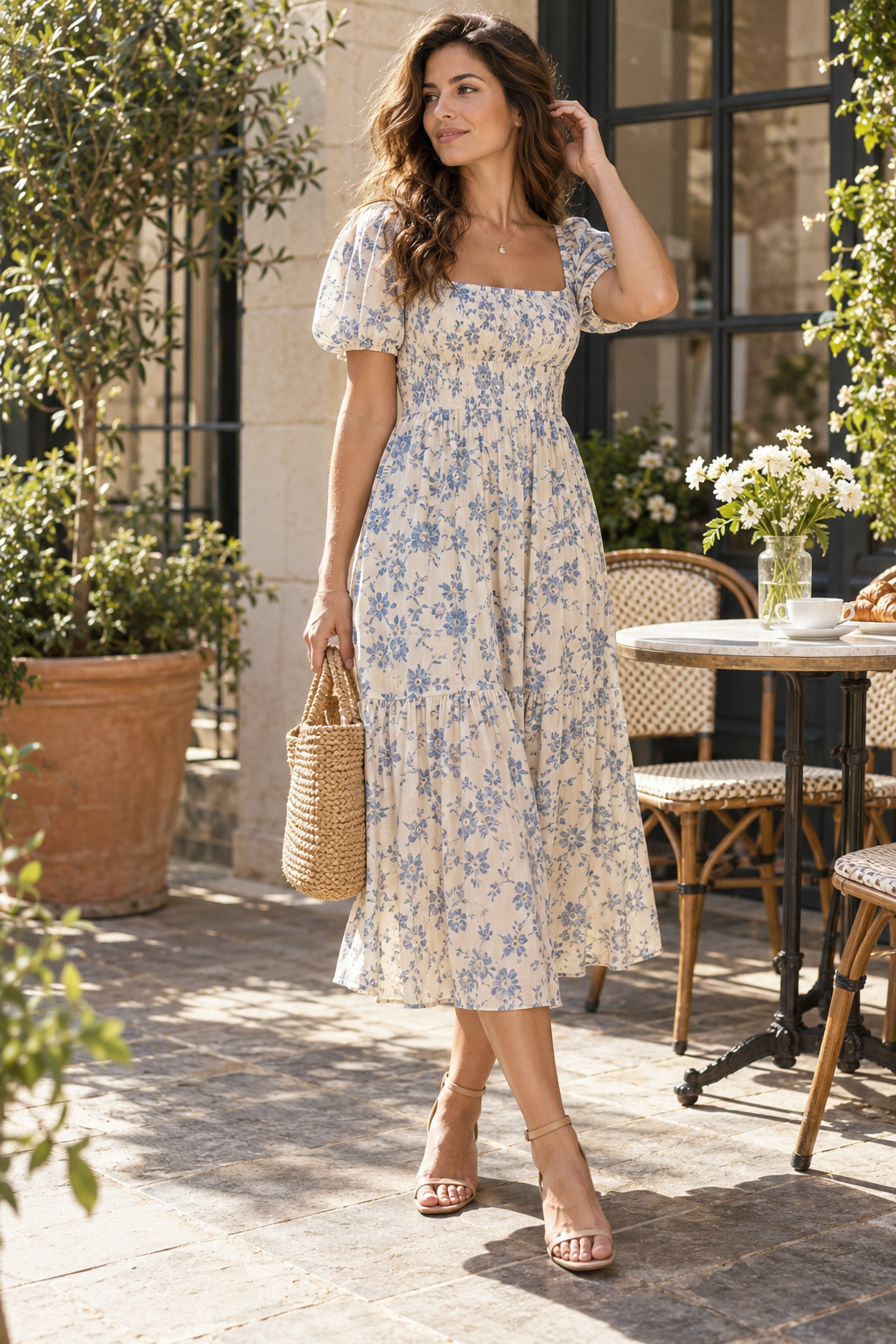
Adult model in a soft cotton midi dress at a cafe terrace

Plan layers around volume

Layering a midi dress is largely a question of balance. A short denim jacket can work over a fluid skirt, while a longer blazer may complement a narrower silhouette. For cooler days, a lightweight cardigan offers warmth without hiding the whole dress. Check how the pieces look both open and closed and whether sleeves bunch uncomfortably. A dress with puffed sleeves may need a roomier outer layer. When you add a bag, consider scale as well: a compact crossbody can leave an airy outfit intact, whereas a large tote can suit a more utilitarian cotton or denim dress.

Keep accessories useful

Everyday accessories should earn their place. A practical bag, sunglasses, and simple earrings may complete the look without extra effort. If the dress has a print, prominent buttons, or a gathered neckline, keep other details quiet. For a plain solid dress, one piece with character, such as a patterned scarf or textured bag, can add interest. Consider your routine before choosing jewelry: pieces that catch on a bag strap or need frequent adjustment are less useful than they look in a photograph. Casual style feels strongest when the wearer appears comfortable in it.

Repeat the outfit with small changes

A dependable midi dress can support several outfits if you change only one or two elements. Wear it with sneakers and a tote for errands, flat sandals for a weekend lunch, or loafers and a cardigan for a casual workday. Keep a quick photo of combinations you liked; this is a simple way to see which pieces you actually use together. If a dress works only with one perfect pair of shoes, it may be less versatile than expected. The best everyday formula is personal and repeatable: the dress fits well, the footwear matches the day, and the details feel effortless.

Shirt Dresses: How to Style One from Work to Weekend

A shirt dress borrows the structure of a button-front shirt and adds the ease of a dress. That combination makes it useful for work, travel, and weekends, but small choices in fabric and fit change its character. A good shirt dress should feel intentional when worn alone and flexible when layered.

Start with the shoulder fit

The shoulder line determines whether a shirt dress feels tailored or oversized. A relaxed dropped shoulder can be deliberate, but an accidental one may make the whole garment look too large. Check sleeve movement and whether buttons pull across the bust when you sit or reach. If the dress is intended for work, verify that the placket stays closed comfortably. Choose a fit that gives enough room without relying on a belt to fix every proportion. The waist and hem can often be adjusted more easily than the shoulders.

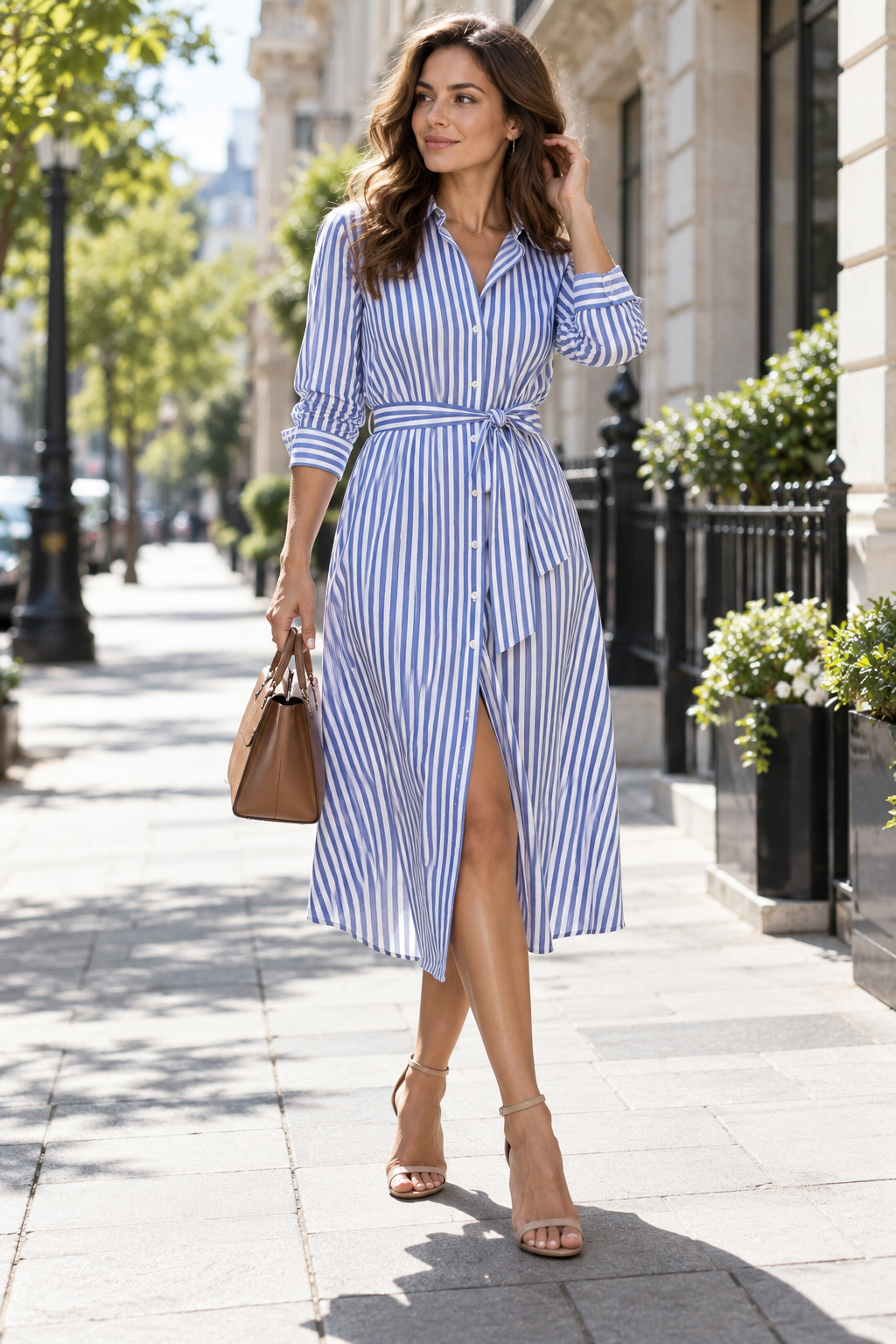
Adult model wearing a striped shirt dress on a city street

Choose fabric for the schedule

Crisp cotton poplin creates shape and feels fresh for daytime. Linen is breathable but wrinkles readily, which may suit a casual weekend better than a formal office. Tencel and soft blends drape more fluidly, while denim gives the dress a sturdy, casual mood. Hold the fabric up to light to check opacity and feel its weight. A very thin material may need a slip; a very heavy one may not move comfortably. The best fabric depends on where you plan to wear the dress most often.

Use the belt deliberately

A self-tie belt can define the waist, but it is only one option. Try wearing the dress loose, with the belt at your natural waist, and with a different belt for more structure. Notice where the fabric gathers; too much bulk at the middle can make the look feel untidy. If the dress has a straight shape, leaving a few lower buttons open over trousers can create another outfit. Keep the result appropriate to the setting and secure enough for movement. The goal is flexibility without constant adjustment.

Change footwear to shift the mood

A polished flat or low heel makes a shirt dress easy for work. Clean trainers can relax it for weekend errands, while a refined sandal suits a warm-weather lunch. Boots and a tailored coat can extend it into cooler months. Check the hem with each shoe because the overall proportion changes. A midi length that looks balanced with a heel may feel heavier with a flat. You do not need a new dress for every setting when one cut can be styled thoughtfully.

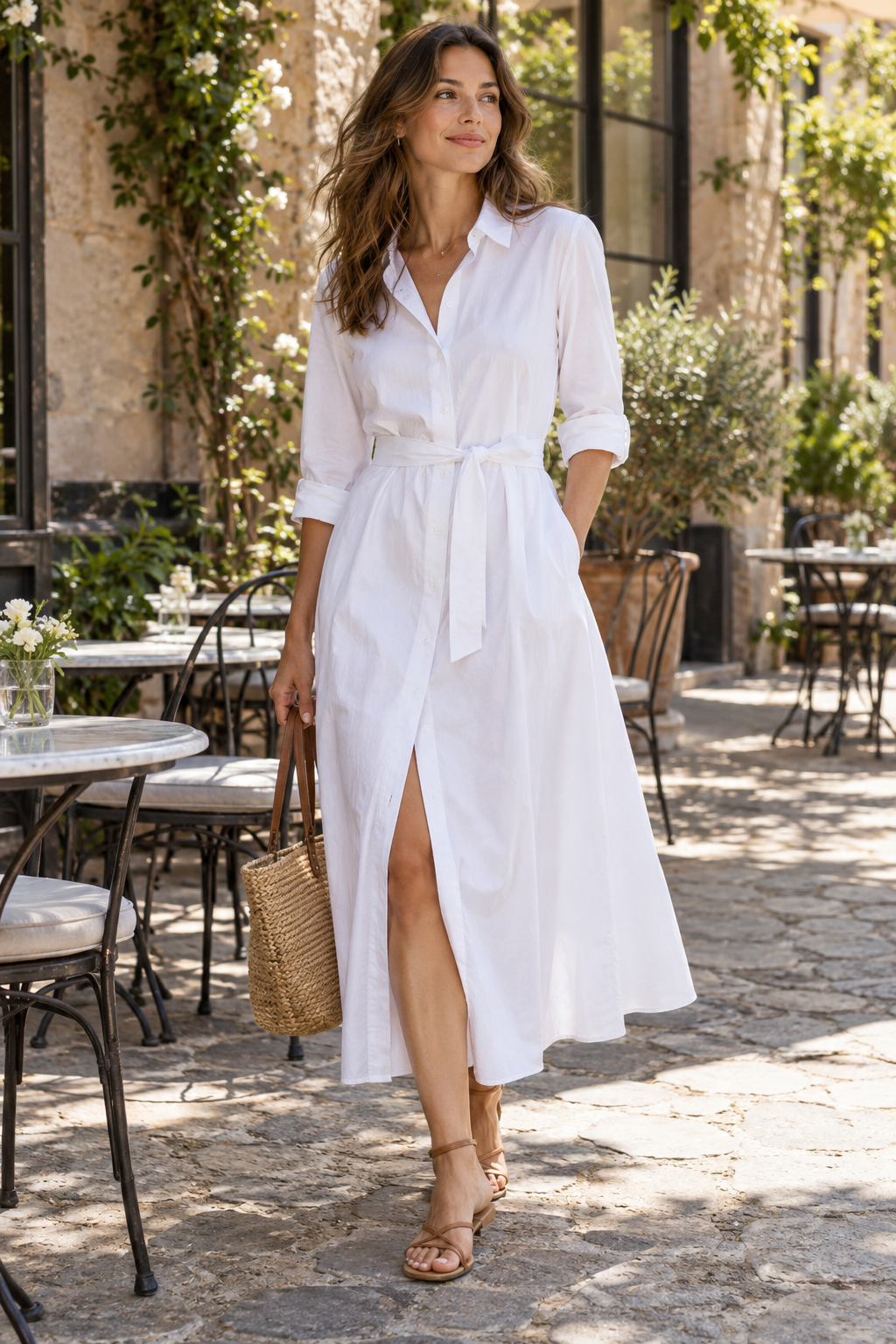
Adult model wearing a crisp cotton shirt dress in a cafe courtyard

Layer without hiding the shape

A blazer sharpens a soft shirt dress, while a fine knit over the shoulders gives a more relaxed feel. For colder weather, a fitted layer beneath can add warmth if the armholes and buttons allow it. Try layers at home before leaving: a bulky sweater can bunch under the dress, and a short jacket may cut across an awkward point. A long coat can preserve the vertical line. Think about the neckline too; leaving the top button open may soften a structured outfit, while closing it can feel more tailored.

Care for repeat wear

Because shirt dresses are often worn frequently, care matters. Check whether the fabric needs ironing, whether the buttons are secure, and how the collar holds its shape after washing. A small repair can extend the life of a favorite piece. Before buying, imagine three outfits using shoes and layers you already own. If the dress works across those situations and feels comfortable when you sit and walk, it may become one of the most useful garments in your wardrobe.

Can a shirt dress work for a smart-casual dinner?

Yes. Choose a refined fabric and an intentional fit, then add polished shoes and a small bag. A darker solid color or subtle stripe often feels more dressed up than a very casual print. Check the venue and make sure the dress remains comfortable through a seated meal.

What makes a shirt dress look polished?

Fit at the shoulder and bust, a clean collar, secure buttons, and a hem that looks intentional make the biggest difference. Steam or press the fabric when needed and choose shoes that suit the occasion. A belt can add structure, but it should not be required to make an oversized garment fit. Pay attention to the placket while seated. When these details work, the dress can look effortless in a way that still feels carefully considered.