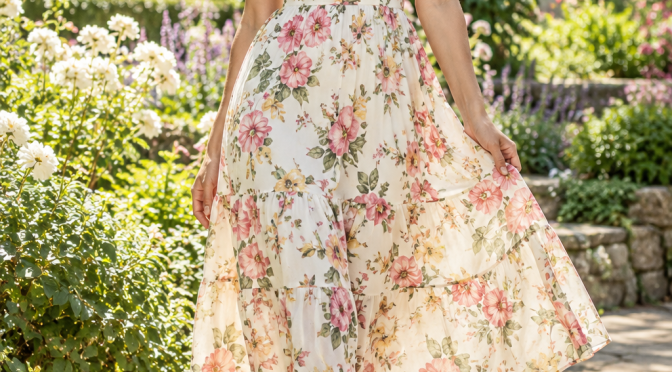
A floral dress can feel fresh every spring, but some prints stay useful far beyond a single event. The key is to choose scale, color, fabric, and silhouette together. A dress that works for a luncheon might also suit a garden party or a relaxed wedding when the styling changes. These details help you find a floral dress worth wearing repeatedly.
Start with print scale
Small scattered flowers create a softer texture from a distance, while large blooms become the main feature of the outfit. Neither is inherently more flattering. Look at how the print sits across the bodice, waist, and seams. A large flower cut awkwardly at a side seam can feel accidental; a well placed motif can look striking. Step back from the mirror to see the whole composition rather than studying a single detail. If the print is busy, a simpler silhouette often helps it read clearly. If the pattern is restrained, a more interesting sleeve or neckline may add balance.
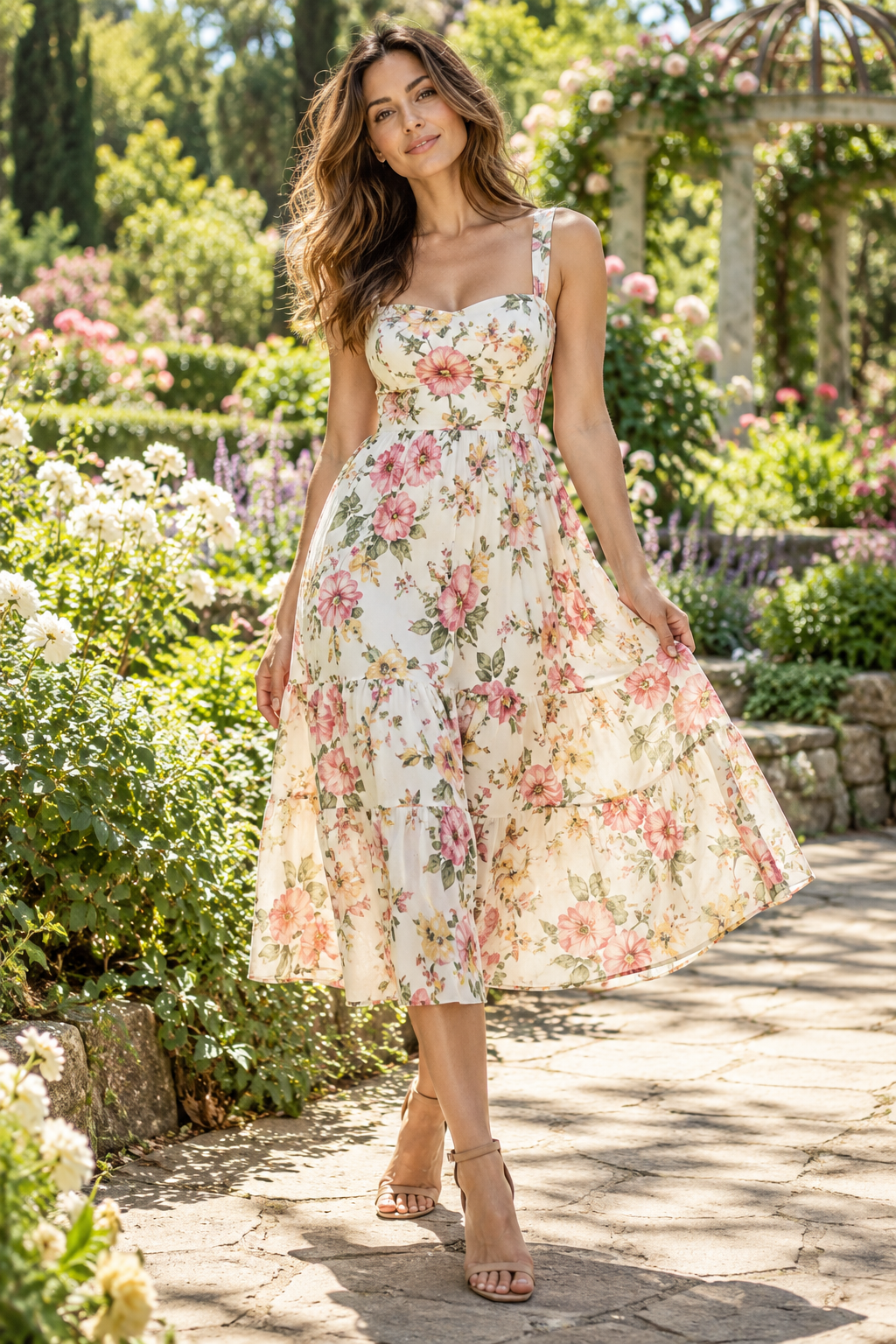
Choose a palette you can repeat
Think about the colors already in your wardrobe. A floral dress with one or two familiar shades will be easier to style with existing shoes and layers. Pastels feel light in spring, but deeper greens, blues, and reds can give a print more range across seasons. Check the background color of the print as well as the flowers; it often determines whether the dress feels casual or dressed up. Photograph the garment in daylight and indoor light. Some pale colors become washed out in photographs, while a slightly stronger base gives the print definition.
Let fabric set the formality
Cotton poplin creates crisp volume and can work beautifully for daytime. Chiffon moves softly and suits a wedding or celebration. Lightweight crepe offers drape without excessive shine, while satin makes a floral print feel more formal. Consider breathability and care. A dress that wrinkles severely during travel may be fine for a local brunch but difficult for an event across town. Inspect the lining and seams, especially with pale prints. The material should support the silhouette and keep you comfortable for the full occasion.
Find a silhouette you enjoy wearing
Wrap dresses offer adjustability, A-line midis give ease through the skirt, and shirt dresses can feel polished with a belt. Try each cut while walking and sitting. The waist should land where you want it, and the skirt should move without clinging. A floral print already carries visual detail, so you do not need a complicated shape to make an impression. If you are shopping for a wedding guest look, confirm the dress code and avoid a mostly white or bridal-looking print. The best silhouette works with the print and with your daily life.
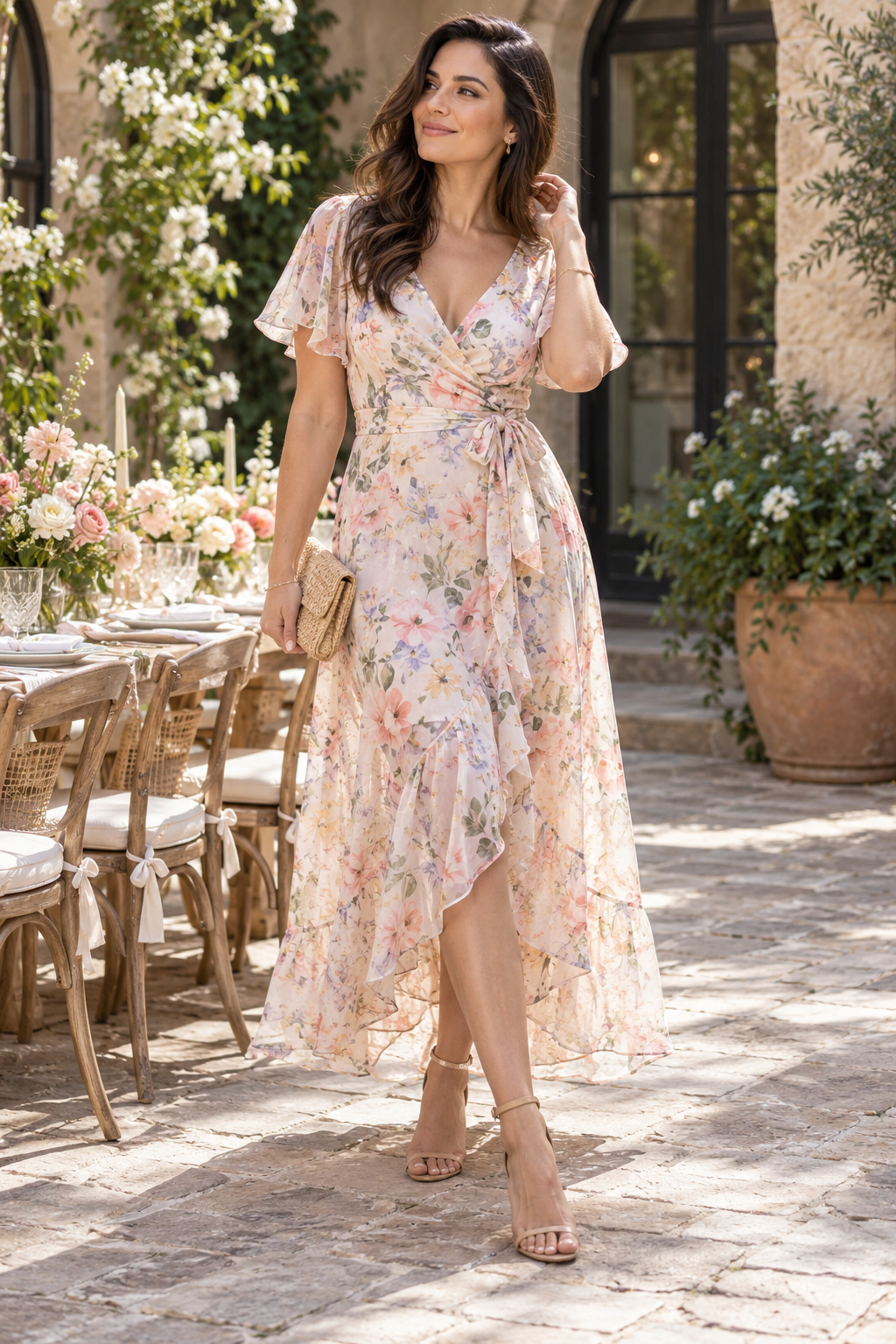
Change the accessories, change the mood
A flat sandal and woven bag can make a floral dress relaxed for day. A refined heel and small clutch can make the same garment ready for an evening celebration. A tailored jacket adds structure, while a light cardigan softens the look. Choose accessories from one of the quieter colors in the print rather than trying to match every flower. Jewelry can remain simple because the dress already has pattern. Test the full outfit before the event; the goal is a coherent look, not an exact color match across every item.
Check long-term usefulness
Before buying, imagine at least three occasions where you would enjoy wearing the dress. Try it with shoes and a layer you already own. Check the care instructions and whether the print remains appealing outside the season’s trend. A dress does not have to be neutral to be versatile; it needs a shape and palette that fit your life. If you keep reaching for it after the first event, you have chosen well. Spring style feels strongest when it is both joyful and genuinely wearable.
Can I wear florals to a formal spring event?
Yes, if the invitation allows it. Choose a refined fabric, a polished silhouette, and accessories that suit the venue. A floral chiffon or satin gown reads differently from a casual cotton sundress. Let the dress code decide the level of finish.
Can a floral dress be worn in autumn?
Often, yes. A print with deeper accents can work with a tailored jacket, closed-toe shoes, and a warmer bag. The fabric matters as much as the pattern: very light chiffon may feel out of place in cold weather, while crepe or cotton can move between seasons more easily. Think about the whole outfit and the event rather than treating florals as limited to one month.