
Petite dressing is about the relationship between the garment and the wearer, not a list of forbidden styles. A few proportion checks can make almost any dress silhouette more personal.
Look beyond the size label
Petite sizing usually adjusts more than hem length; it may also shift shoulder width, armholes, waist placement, and sleeve length. That is why a regular size shortened at the bottom may still feel slightly off. Try both petite and standard cuts when available. Look at where seams land rather than whether the label sounds correct. A dress should sit naturally at the shoulders and waist before you assess the skirt. If the bodice is too long, the entire silhouette can look lower and heavier even when the hem has been tailored perfectly.

Find the hemline that supports the shape
There is no universal rule that petite wearers must avoid midi or maxi dresses. The useful question is where the hem falls on your own leg and how it interacts with your shoes. A midi that ends just below the knee creates a different effect from one at the widest part of the calf. A maxi should skim close to the floor without requiring you to lift it while walking. Try the dress with the actual shoe height you plan to wear. Small changes in hem length can clarify the silhouette without changing the character of the dress.
Check waist placement first
A defined waist can be flattering only when it lands where intended. If it sits too low, the torso may appear longer and the skirt shorter; if too high, it can compress the upper body. Empire lines, wrap ties, and elastic waists all need their own fit test. Sit down and raise your arms to see whether the seam shifts. A tailor may be able to lift a waist seam, but that alteration can be more complex than a hem. Consider the cost before buying. Correct proportions start at the body’s key lines, not at the dress’s overall length alone.
Use volume intentionally
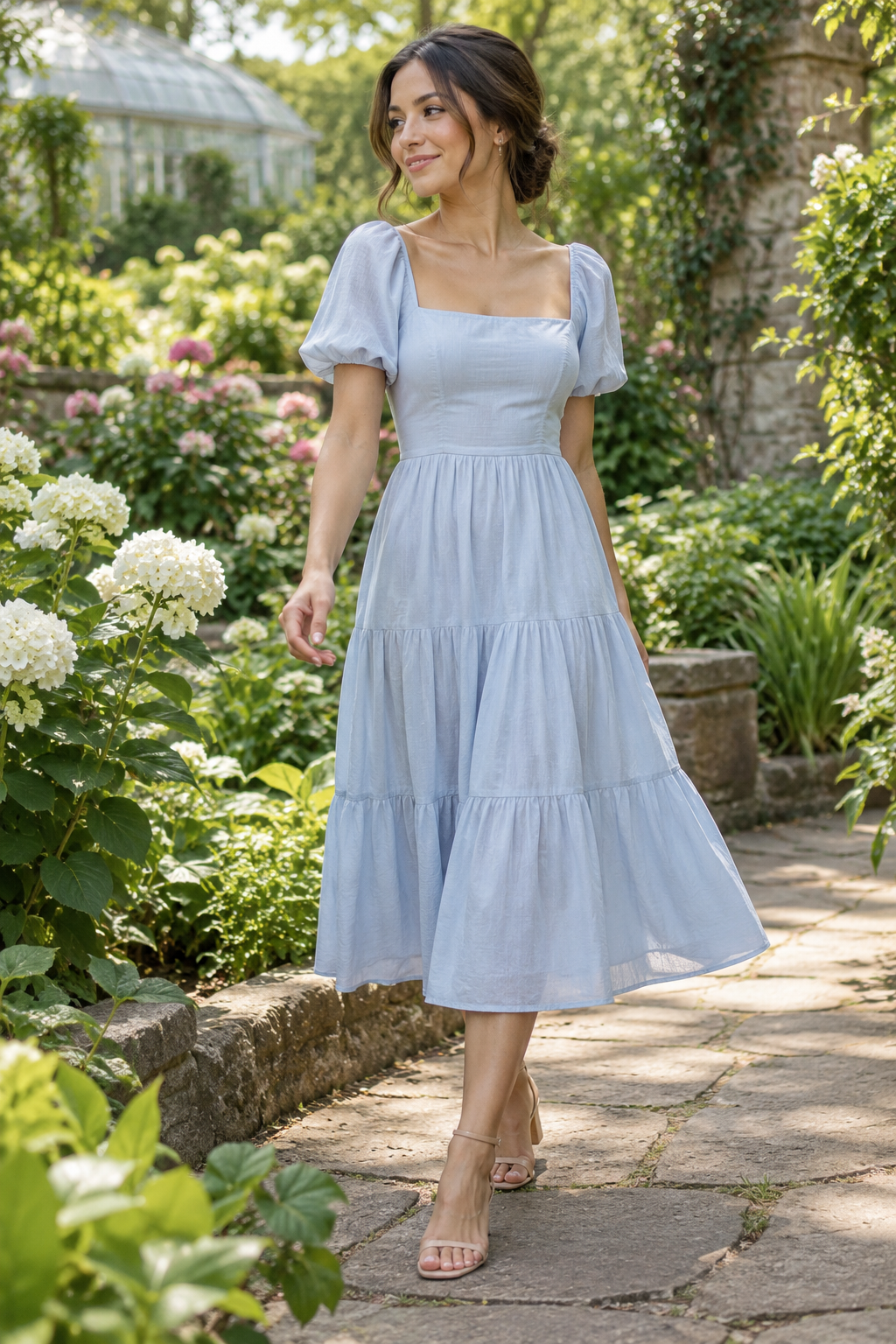
Petite dressing does not require narrow dresses, but volume should have a purpose. A full skirt may look balanced with a cleaner bodice, while a dramatic sleeve may work best with a quieter lower half. Look for fabric that holds its intended shape without adding unnecessary bulk. A lightweight tiered skirt can create movement; heavy layers might overwhelm the frame depending on the cut. Try walking and sitting, since volume changes in motion. The aim is not to make yourself look taller at all costs, but to let the dress’s design remain readable on your body.
Consider neckline and shoulder scale
Necklines and straps can appear wider or deeper on a petite frame than they do in product photography. Check whether the shoulder seam reaches the correct point and whether straps stay in place without slipping. A square or V neckline can create clean lines, but neither is automatically superior. The right choice depends on the dress’s proportions and your comfort. If a neckline gapes, shortening straps may help, though it can also raise the armhole. A fitting that evaluates the entire bodice is more reliable than making one isolated adjustment.
Approach alterations strategically
List the changes a dress needs before committing to it. Hemming and shortening a simple strap may be straightforward; moving a waist seam, reshaping a heavily embellished bodice, or preserving a border print can be more involved. Bring the correct shoes and undergarments to the fitting. Ask the tailor what the finished line will look like, especially if a hem has lace or pleats. Sometimes a slightly more expensive petite cut costs less overall than a cheaper regular dress with multiple alterations. The best purchase is the one that fits your budget after tailoring.
Build a personal proportion reference
Photograph dresses that feel especially balanced, then note the actual measurements: shoulder to waist, waist to hem, sleeve length, and preferred shoe height. These details can make online shopping more useful than generic petite advice. Compare a new dress with one you already enjoy rather than relying only on the model’s height. Your preferred proportions may differ by occasion; a formal gown and everyday midi need not follow the same rules. A small personal reference turns shopping into an informed choice and helps you recognize when a dress is worth altering.
Keep a note of the tailor and the alterations that worked. That record will make future purchases easier and help you distinguish a promising dress from one that requires too much rebuilding. Petite style becomes simpler when you know your own measurements and preferred visual balance.