
A black dress can move between daytime and dinner, but the transition works best when fabric and accessories suit both contexts. Think of two clear outfits built around one reliable piece.
Choose a dress with a flexible foundation
A black dress meant for several settings should have a silhouette you can wear for hours. A clean midi or knee-length cut often offers more range than a highly embellished party dress. Inspect the fabric in daylight: some black knits look casual and fade quickly, while matte crepe or a substantial woven blend holds a sharper line. Check lining, seams, and opacity. A comfortable neckline and secure shoulder fit matter as much as the skirt. If the dress needs constant adjustment, changing shoes will not make it versatile.

Build the daytime outfit
For a gallery visit, lunch, or relaxed work appointment, let the black dress be a quiet foundation. A tailored jacket, flat shoe, and practical bag can add structure without making the look severe. A warm neutral layer can soften the contrast. Keep jewelry simple and consider the dress’s surface: a textured black fabric may need fewer additions than a perfectly smooth one. The outfit should work when the jacket comes off. If it only looks finished beneath a coat, the underlying dress may not be as adaptable as you hoped.
Use proportion as the bridge
A layer can change the dress’s balance. A cropped jacket emphasizes the waist; a longer blazer creates vertical lines over a narrower skirt. Try the combination from the side and while sitting. The jacket should not pull across the dress or trap its sleeves. If the dress has volume at the skirt, keep the upper layer relatively clean. If the dress is a straight column, a softer cardigan or more sculptural jacket may add shape. Proportion gives the outfit coherence before accessories enter the picture.
Shift the evening mood with fewer pieces
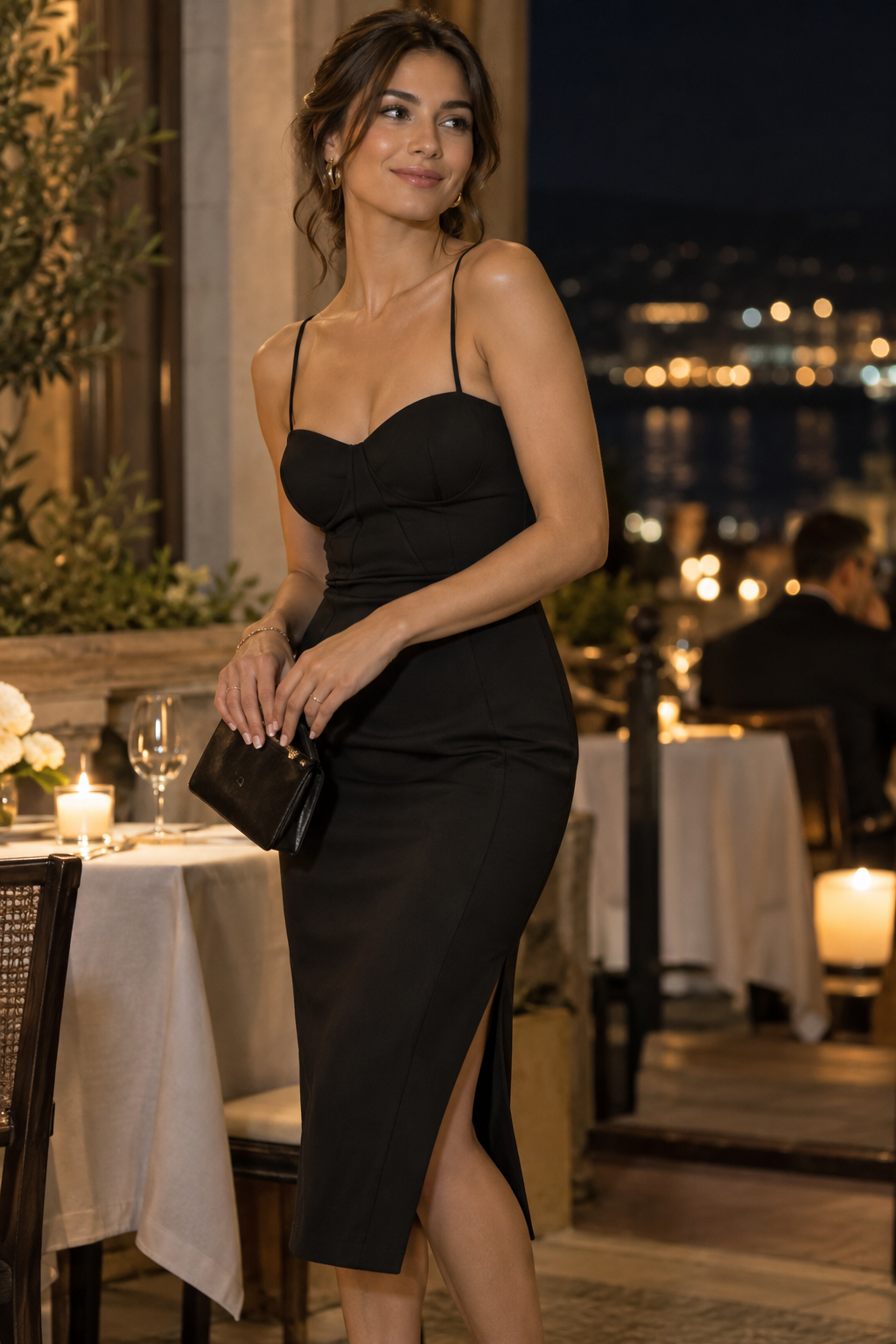
Dinner does not require a total costume change. Replace a large bag with a compact one, choose a more polished shoe, or add one piece of jewelry with presence. You might remove the daytime jacket to reveal the dress’s neckline or replace it with a sleeker layer. Avoid changing every accessory at once; the result can feel overworked. A black dress is useful because it lets texture and small details register. Decide what should be the evening focal point and keep the rest supportive.
Consider black under different light
Black can read rich, flat, or slightly faded depending on fabric and lighting. Look at the dress in a bright room and under warm evening bulbs. Satin and velvet reflect light differently from cotton or crepe. If the fabric is very matte, a small metallic accessory can add dimension. If it already shines, matte shoes may offer balance. Photographs are useful here: a dress that appears detailed up close may become a dark block from a distance. Texture and silhouette keep it interesting.
Keep shoes aligned with the schedule
A flat loafer, low heel, or sleek boot can suit daytime walking. Evening shoes can be dressier, but they still need to match the hem and venue. If changing shoe height, check the skirt length with both pairs. A midi that skims nicely in heels may look different in flats. Consider weather and travel; a dress that works only with fragile footwear may not be genuinely versatile. The best day-to-dinner outfit leaves enough comfort for both parts of the schedule.
Repeat the formula in new ways
Once you find a useful black dress, photograph two or three combinations that work. One might be jacket and flats for daytime; another, simple jewelry and a polished bag for dinner. Resist buying accessories only to rescue a dress that does not fit well. Care for the garment according to its label so the black remains deep and the shape holds. Versatility grows from a dependable base and a few thoughtful changes, not an unlimited collection of extras.
Before the day begins, lay out both versions of the outfit and photograph them. This reveals whether the evening change truly creates a new mood or merely adds clutter. Pack the second accessories in a small pouch so the transition is quick. A versatile black dress is valuable because it reduces decisions while still giving you a deliberate look for each part of the day.