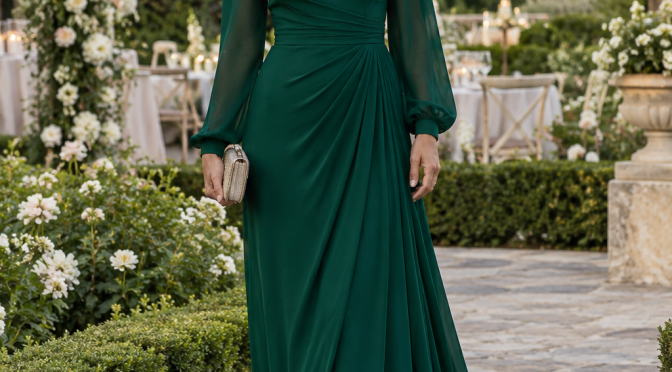
A modest wedding guest dress can feel contemporary and celebratory while meeting personal or venue-specific coverage needs. Start with the invitation, then refine fabric, fit, and layers.
Clarify the level of formality
Coverage and formality are separate decisions. A high neckline does not automatically make a dress suitable for black tie, just as long sleeves do not make a casual cotton dress formal. Read the invitation and note the time and venue. A full-length crepe gown may suit an evening celebration; a refined midi can work for an afternoon ceremony. If the venue has specific expectations around shoulders, sleeves, or hemlines, plan for them before shopping. A dress that naturally meets the requirement will feel more comfortable than one held together with a last-minute layer.
Choose coverage that stays put
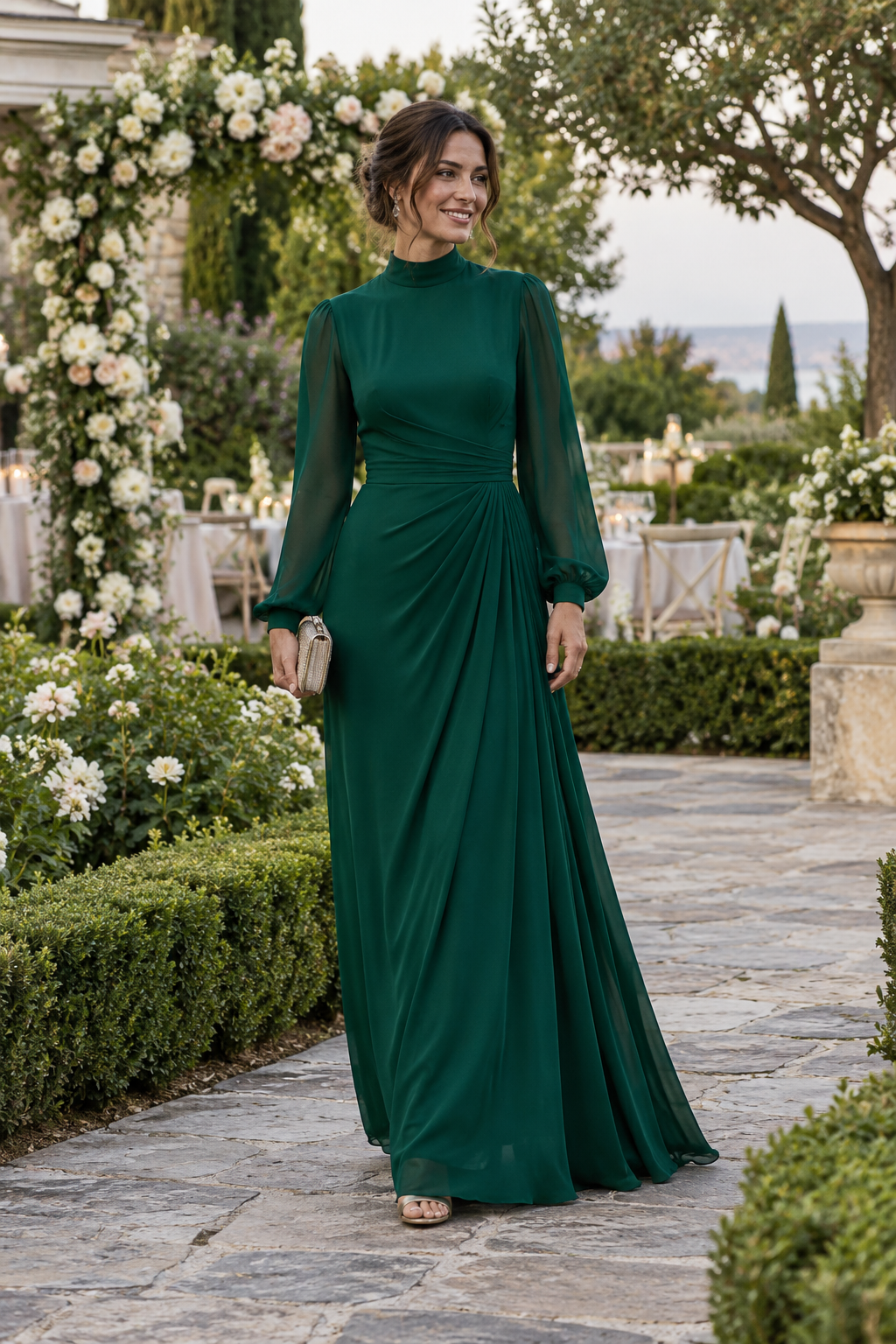
Try the dress while sitting, walking, and raising your arms. A neckline can look modest while standing yet shift when you lean forward. Sheer sleeves may provide visual coverage without meeting your own comfort needs, so inspect them in daylight. A lined bodice and secure armhole can make a substantial difference. If you prefer a higher neck, check whether it feels comfortable through a long meal. Good coverage is not about constantly checking yourself; it is about a garment that remains where you intended it to be.
Balance shape and volume
Long sleeves, a high neckline, and a full skirt can be beautiful together, but fabric weight and proportion matter. A fluid skirt may soften a structured bodice, while a tailored waist can define a dress with generous sleeves. There is no obligation to emphasize the waist, but a clear design line keeps the outfit intentional. Look at how the dress moves from the side. Heavy layers can create bulk at the hip or shoulder that was not visible in the product image. A modest silhouette should still allow an easy walking stride and comfortable seating.
Understand lining and transparency
Chiffon, georgette, and lace can look opaque in online photographs yet reveal more under sunlight or flash. Check the lining length, especially through the skirt. A slip may help, but it should not create static, visible edges, or overheating. Hold the fabric near a window and ask someone to photograph it from behind if needed. For a religious setting, confirm that sleeve and neckline coverage meet the relevant expectations rather than guessing. The right fabric and lining can make the entire outfit feel settled.
Plan layers without disrupting the dress
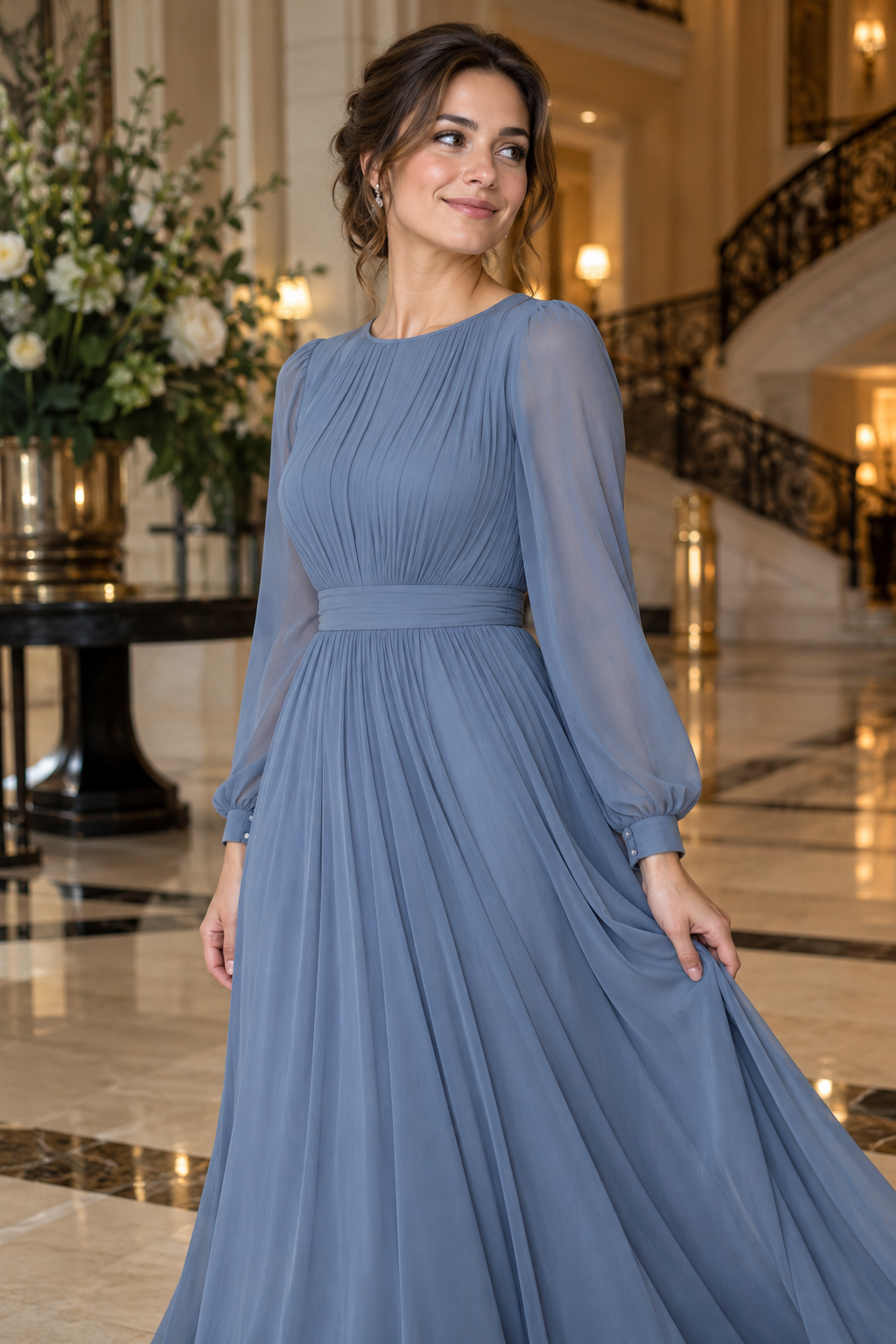
A tailored jacket, elegant wrap, or lightweight coat may be useful for a ceremony or cool evening. Try the layer with the actual dress, checking that sleeves do not bunch and the skirt does not catch. A scarf that constantly slips is not a reliable coverage plan. If you need a layer for the full event, choose one that looks purposeful in photographs and remains comfortable at dinner. Keep its texture compatible with the dress; a delicate gown beneath a very heavy knit can feel visually disconnected.
Select accessories for the neckline
A high neckline often works beautifully with earrings rather than a necklace. A clean sleeve can make a bracelet or ring more visible; embellished cuffs may need nothing else. Choose shoes that respect the dress length and venue, particularly if there are garden paths or stairs. A small structured bag can add polish to a flowing dress. Accessories should enhance the silhouette rather than compensate for unwanted fit or inadequate coverage. If the gown has strong color, such as emerald or dusty blue, restraint can be especially effective.
Respect the couple and your own style
Avoid white or bridal-looking styling unless the couple explicitly requests it. If the wedding has cultural or religious guidance, follow what the hosts communicate rather than relying on assumptions. Within those boundaries, choose a dress that reflects your taste. A modest look can be minimal, romantic, colorful, or architectural. Give yourself time for alterations, particularly at the sleeve and hem. When the garment fits your values, the invitation, and your body, you can focus on the celebration instead of the outfit.
Before ordering, review the venue’s guidance and ask a precise question if anything remains unclear. It is easier to choose a dress with confidence than to arrive uncertain about a rule. Keep a photograph of the complete outfit, including the layer you intend to wear, so you can judge coverage and formality together rather than as separate problems.