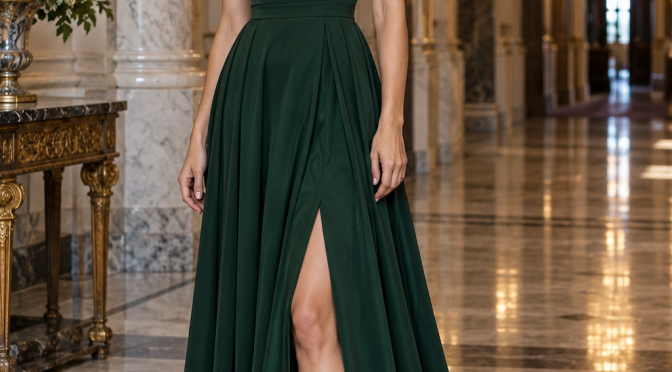
For tall shoppers, a dress can be long enough at the hem and still miss the correct waist or sleeve placement. A full fit check starts at the shoulder and works downward.
Assess the whole vertical proportion
Tall sizing often changes the distance between shoulder, bust, waist, and hip as well as overall length. A regular dress with extra hem allowance may still pull across the torso or sit too high at the waist. Begin by checking where the shoulder seam lands and whether the bodice follows your natural lines. If those points are wrong, hemming cannot solve the entire fit. Try tall and standard cuts side by side where possible. The best label is the one whose pattern matches your body, not the one that merely sounds appropriate.
Check the waist while moving
A fitted waist should stay at its intended point when you sit, stand, and raise your arms. If a seam rides toward the bust, the torso may be too short. If the belt must be tied very low to feel comfortable, the dress may not be designed for your proportions. Wrap and elastic waists can offer flexibility, but their position still matters visually. Photograph the dress from the side as well as the front. A correctly placed waist can change how the skirt falls and make the entire outfit look more balanced.
Measure sleeves, not just cuffs
Long sleeves are often the first obvious fit issue, but simply adding length is not always enough. Check shoulder width, armhole placement, and elbow position. A sleeve that ends at the wrist can still twist if the elbow shaping is too high. Try reaching forward and lifting a bag. For a formal dress, ensure the sleeve does not pull the neckline out of place. If a sleeve needs alteration, ask whether there is sufficient fabric at the cuff. A three-quarter sleeve may be an intentional alternative, but it should look designed rather than accidentally short.
Define the formal hem with shoes
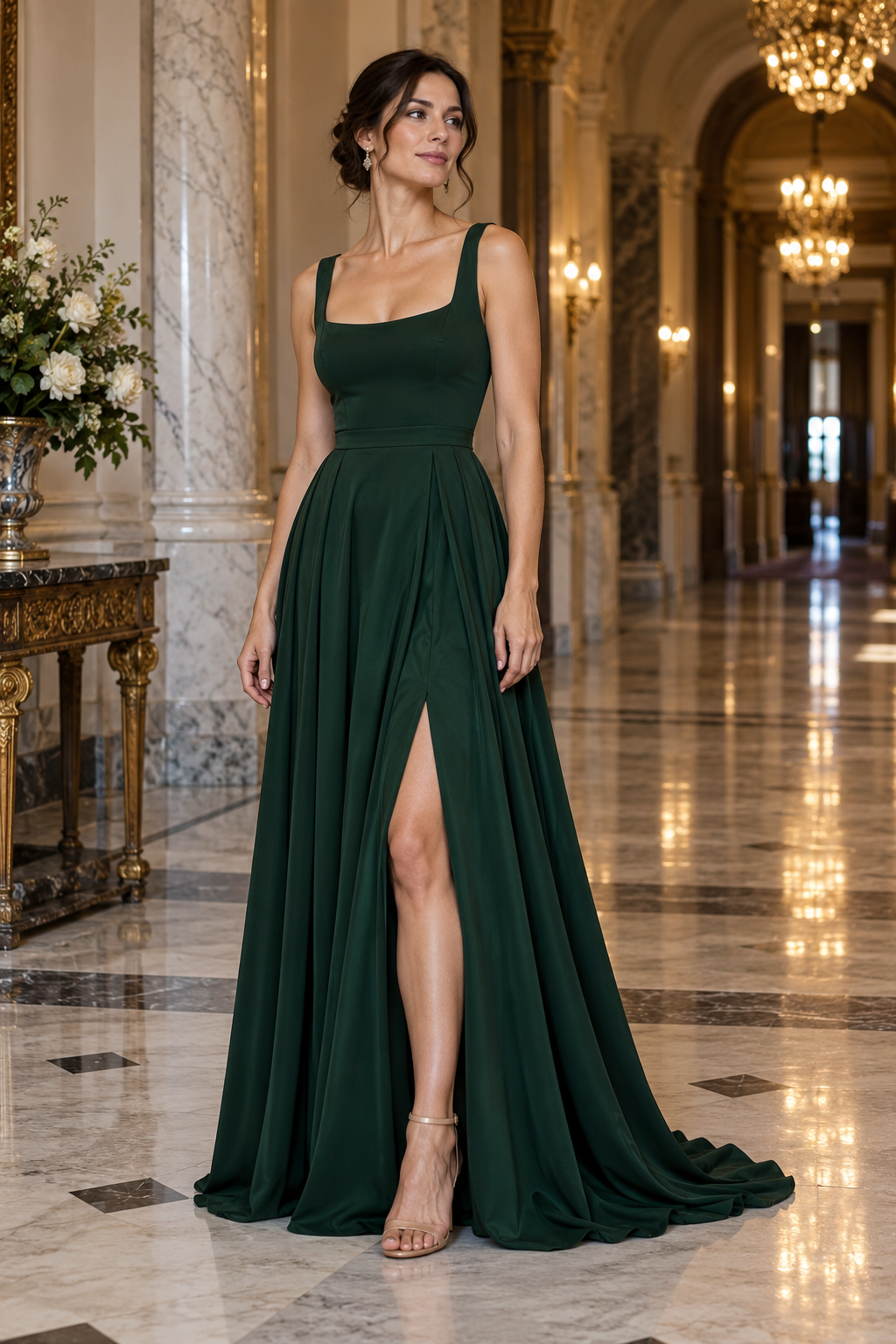
A floor-length gown should clear the ground enough for safe walking in the shoes you will wear. Tall shoppers may be tempted to accept a nearly long-enough hem, but an unintended ankle reveal can change the gown’s intended line. Conversely, a very long dress may drag and collect dirt. Bring the exact heel height to a fitting and walk on a flat surface. Consider stairs, dancing, and transport. If the design includes a train, ask how it will be managed during the event. The hem is a functional detail, not only a photograph detail.
Use midi length deliberately
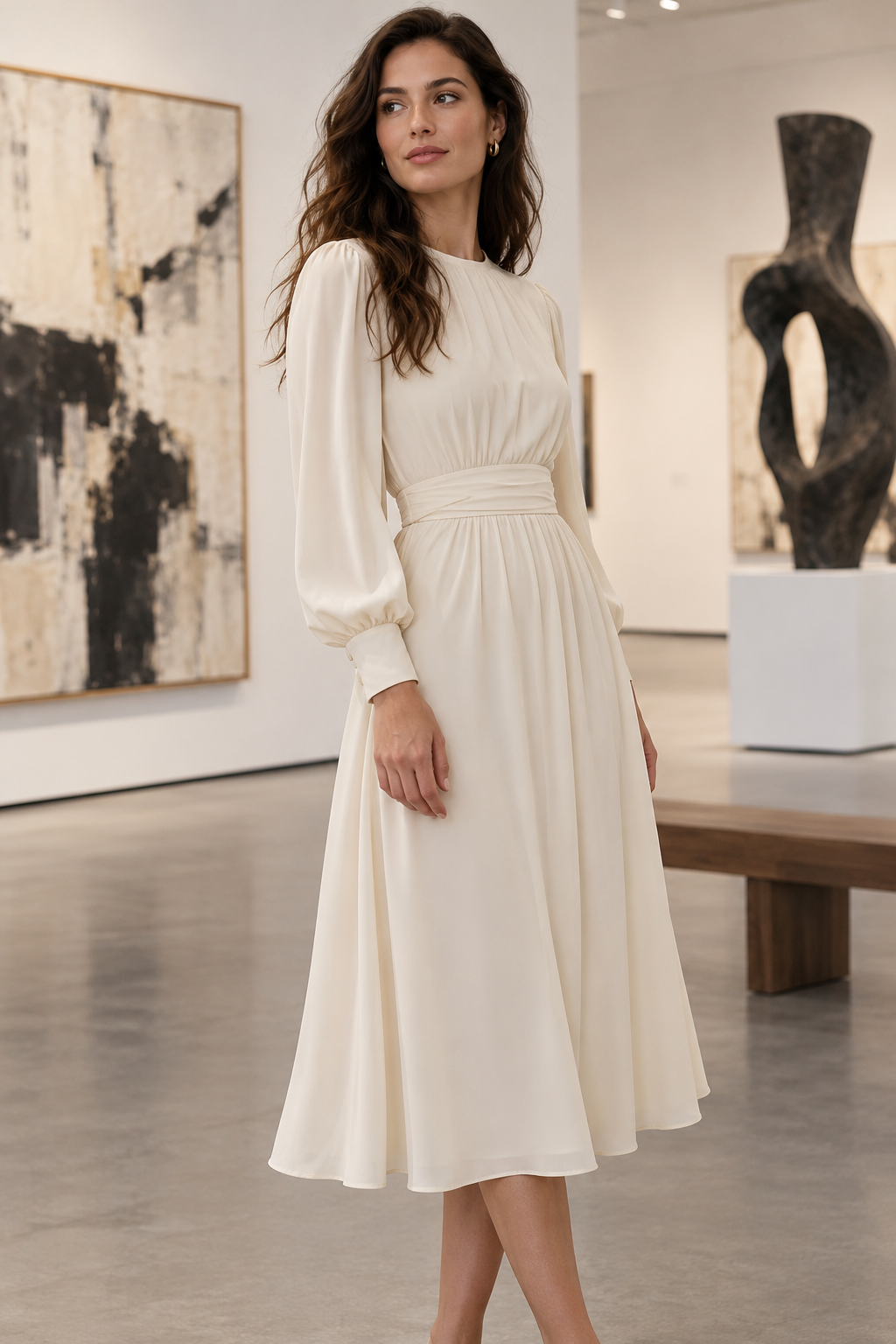
A midi can land at many points on a tall frame. A style described as mid-calf on a product model may look closer to knee length on you, which can still be attractive if intentional. Compare the actual garment length with a dress you already like. Look at the relationship between hem, footwear, and any coat you plan to wear. If a patterned border or pleated finish prevents easy hemming or lengthening, decide whether the existing length works before purchase. Personal reference measurements are more useful than generic length labels.
Evaluate alterations before buying
Some adjustments, such as taking in a waist or shortening a hem, are routine. Adding length at the torso or sleeve can be difficult if the garment lacks extra fabric. Ask a tailor about options before committing to an expensive dress. Check side seams, hem allowance, and any decorative trim. Include alterations in the total price and allow time for at least one fitting in the intended shoes and undergarments. A dress that nearly fits but needs structural rebuilding may be less practical than a slightly pricier tall cut.
Keep a useful measurement record
Record the shoulder-to-waist length, sleeve length, desired midi range, and formal hem length that work for you. Measure a dress you love while it lies flat and compare future size charts with those numbers. Product images are helpful for mood, not exact prediction. Ask retailers for garment measurements when possible, especially for occasionwear with limited return windows. A small fit record turns shopping into a clearer process and helps you recognize when a design is likely to suit your height without extensive alteration.
At the final fitting, ask someone to photograph the dress while you stand naturally, walk, and sit. These images often reveal proportion issues that a static mirror does not. If the waist, sleeves, and hem all behave as intended, you have found more than sufficient length: you have found a dress designed to move with you.