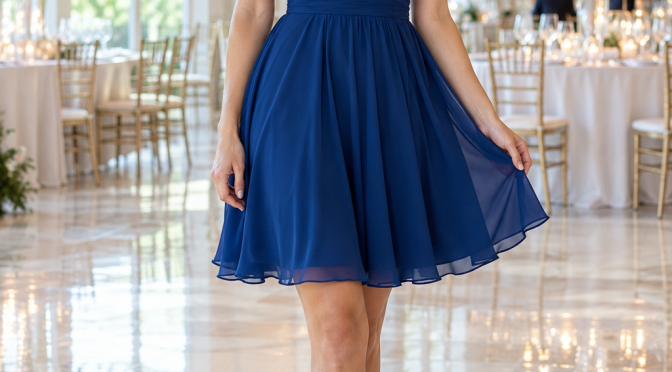
A homecoming look should feel festive without asking you to stand still all evening. Use a movement-first fitting to choose a dress that works for photographs, dinner, and dancing.
Begin with the actual event plan
A homecoming celebration may include a formal entrance, photos, dinner, and a crowded dance floor. The dress has to handle all of them. Check the invitation for formality, then ask where photographs and dancing will take place. A polished knee-length dress may suit a school or community event, while a longer silhouette can work in a more formal venue. Do not choose solely from a standing product photograph. Picture sitting at a table, walking up stairs, and raising your arms. A dress that survives those everyday motions is a better candidate than one that only looks good in a mirror.
Test the bodice for security
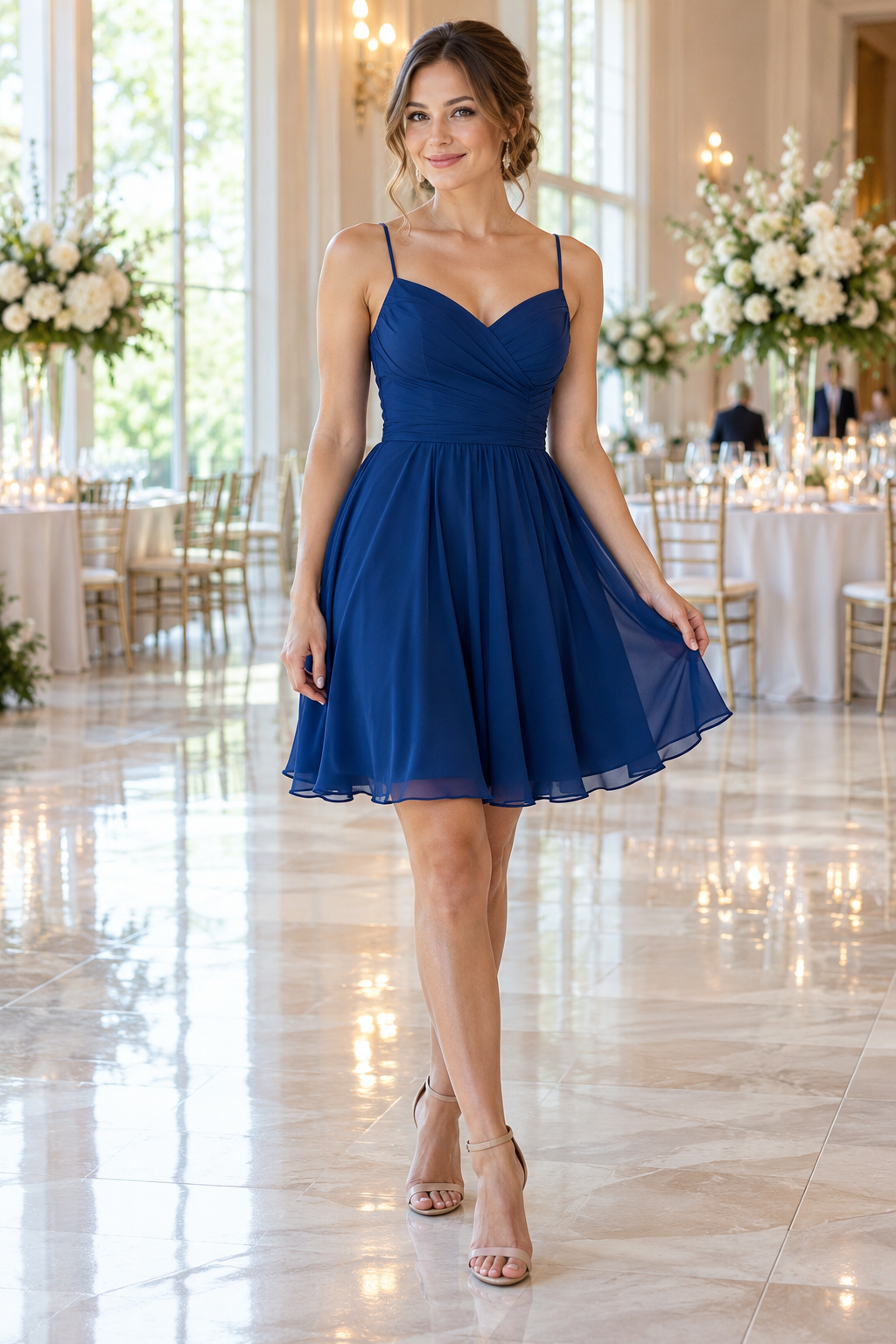
A strapless or narrow-strap bodice can look beautiful, but it needs to stay in place without frequent adjustment. Move through a few dance steps and reach overhead during a fitting. If the top slips, ask whether tailoring or built-in support can solve it. A properly fitted shoulder seam and armhole matter just as much on a sleeved dress. Tightening a waist until the neckline stays put can make the rest of the evening uncomfortable. Choose a bodice that feels stable while breathing normally. Confidence on the dance floor begins with clothing you do not have to monitor.
Choose a hem that moves with you
Short skirts can rise as you walk or sit, while very full skirts may take up more space than expected. Try the dress at your preferred length and move in front of a mirror. Sit in a chair and check coverage, then turn and walk briskly. A fit-and-flare shape can offer room for dancing, but the skirt should return to its intended line after motion. If you plan an alteration, bring the actual shoes to the appointment. A hemline is both a style choice and a practical boundary for the evening.
Pick fabric for the room
Satin brings shine under evening light, crepe creates a clean outline, and tulle adds volume. Each has a different feel after an hour of sitting or dancing. A heavier fabric may hold shape but trap heat; a light one may move beautifully but wrinkle or catch. Check the lining, seams, and any beading that touches the skin. Inspect the garment in both bright and dim light if possible. A fabric that looks opaque in a studio image can behave differently under flash photography. Comfort and finish should be evaluated together.
Use shoes you can actually wear
A beautiful heel is not useful if it turns dancing into a calculation. Walk on a hard floor in the shoes and note whether your foot slides forward or the strap rubs. A stable block heel, low heel, or polished flat can still look formal. If you plan a shoe change, test the dress hem with both pairs. The skirt should not drag once the heel comes off. Consider venue flooring, too: narrow heels may catch in gaps or feel unstable outdoors. A reliable shoe choice lets you enjoy the music rather than seek a chair.
Plan the photograph details
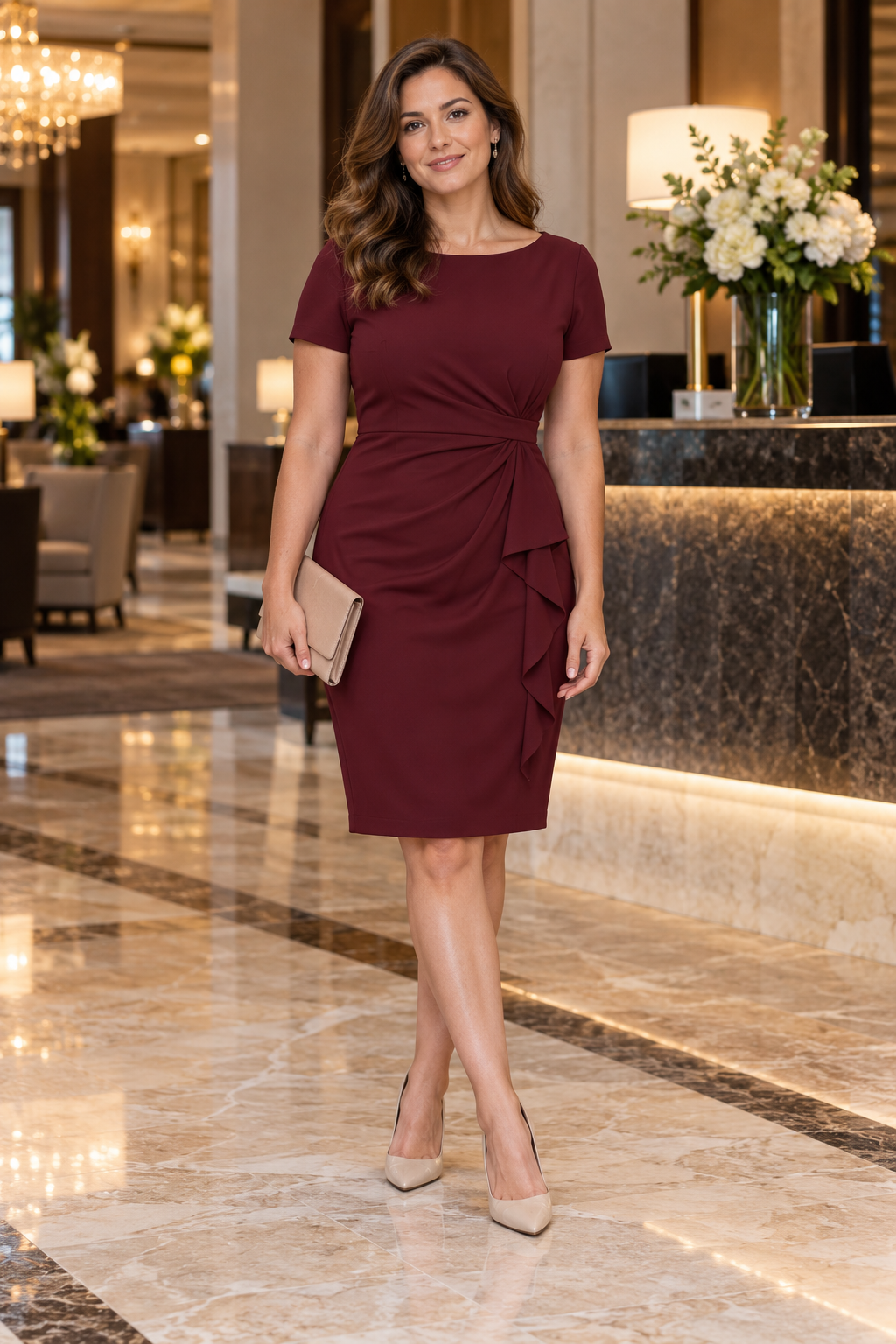
Photographs often reveal what a fitting mirror hides. Take pictures from the front, side, and seated position. Check that the neckline stays level, the waist seam sits correctly, and the skirt does not bunch. A small bag should carry essentials without competing with the dress. Choose jewelry around the neckline rather than adding every piece at once. If the dress is vivid blue or burgundy, restrained accessories can make the color feel intentional. The strongest look is one you can wear naturally in candid images as well as posed portraits.
Make a final movement rehearsal
Wear the complete outfit at home for at least a short practice: walk, sit, turn, and dance. Check closures, straps, and the hem after movement. Prepare a small repair kit if appropriate, but do not depend on tape or pins to correct a fundamentally poor fit. Give yourself time for alterations before the event. When a dress works in motion, it feels more personal and more celebratory. You can spend the night paying attention to friends and music instead of adjusting your clothes.
One last fitting detail is the bag: it should be light enough to carry or set down easily during the event. A compact design with a secure closure is often more useful than a large clutch. Keep your essentials simple. The dress, shoes, and accessories should support a night of movement and conversation, not create another set of tasks.