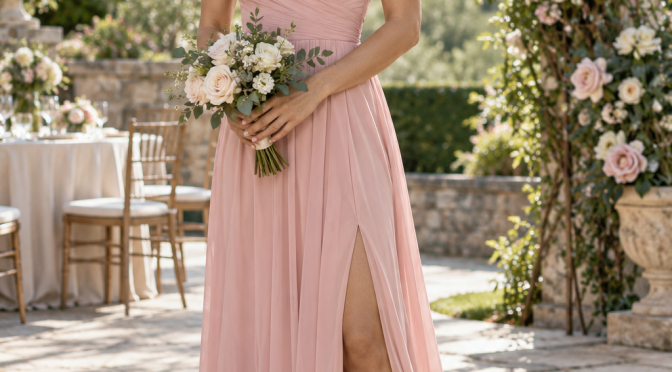
A pink bridesmaid palette can look cohesive without making every dress identical. The key is to compare undertones, fabric finishes, and the way each shade appears in the wedding light.
Begin with one anchor shade
Choose a shade that reflects the couple’s vision before gathering dozens of pink swatches. Blush can be pale and warm, dusty rose has a muted depth, and mauve often carries a cooler purple undertone. Those names vary across brands, so do not rely on labels alone. Set one anchor swatch beside every candidate and view them together in daylight. A small difference can look deliberate when the fabrics and overall formality match; a clash in undertone may look accidental even if the shade names sound related. Photograph the swatches on a neutral background for a second perspective.
Compare fabric as carefully as color
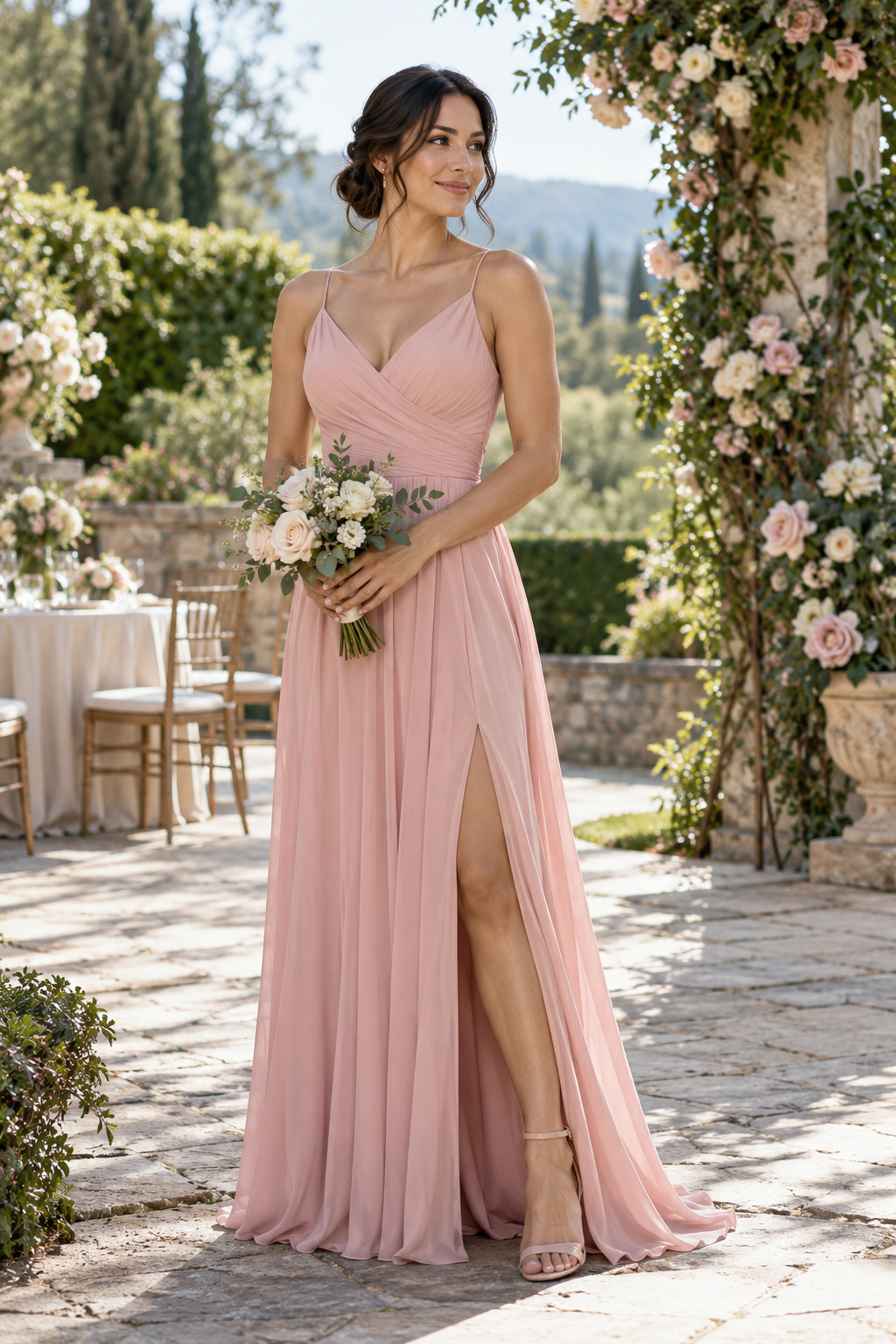
Pink shifts noticeably across satin, chiffon, crepe, and tulle. Shiny satin reflects the room and may appear lighter in photographs, while matte crepe can make the same pigment look deeper. If the bridal party will mix shades, a shared fabric or similar surface finish helps connect them. If fabric must vary for fit, keep the colors closer. Ask for physical swatches whenever possible. Online product photos are styled under different lights and may not represent the dresses side by side. Consistency is a visual decision, not merely a shopping filter.
Plan the lineup as a group
Consider the bridesmaids together in photographs, not just each dress separately. A gentle progression from blush to rose can create a lovely rhythm, while placing one dark mauve dress amid pale pink ones may make it the unintended focal point. There is no need for perfect symmetry, but review a lineup of swatches or simple dress photos before ordering. Think about bouquets, backdrop, and the bride’s gown. Pink dresses beside strongly pink flowers can become monochromatic; greenery or neutral blooms may provide breathing room. The final arrangement should feel intentional from a distance.
Let fit vary within a clear brief
A cohesive palette can accommodate different necklines and silhouettes. Define the shared elements first: length, fabric family, color range, and level of embellishment. Then let each bridesmaid select a cut that supports her body and comfort. A square neck, soft V, and one-shoulder shape can coexist when the dresses share visual weight. Check coverage and bodice support during fittings, especially if the event involves outdoor movement or dancing. A dress that requires constant adjustment will not look polished, however closely it matches the swatch.
Test the shades in wedding light
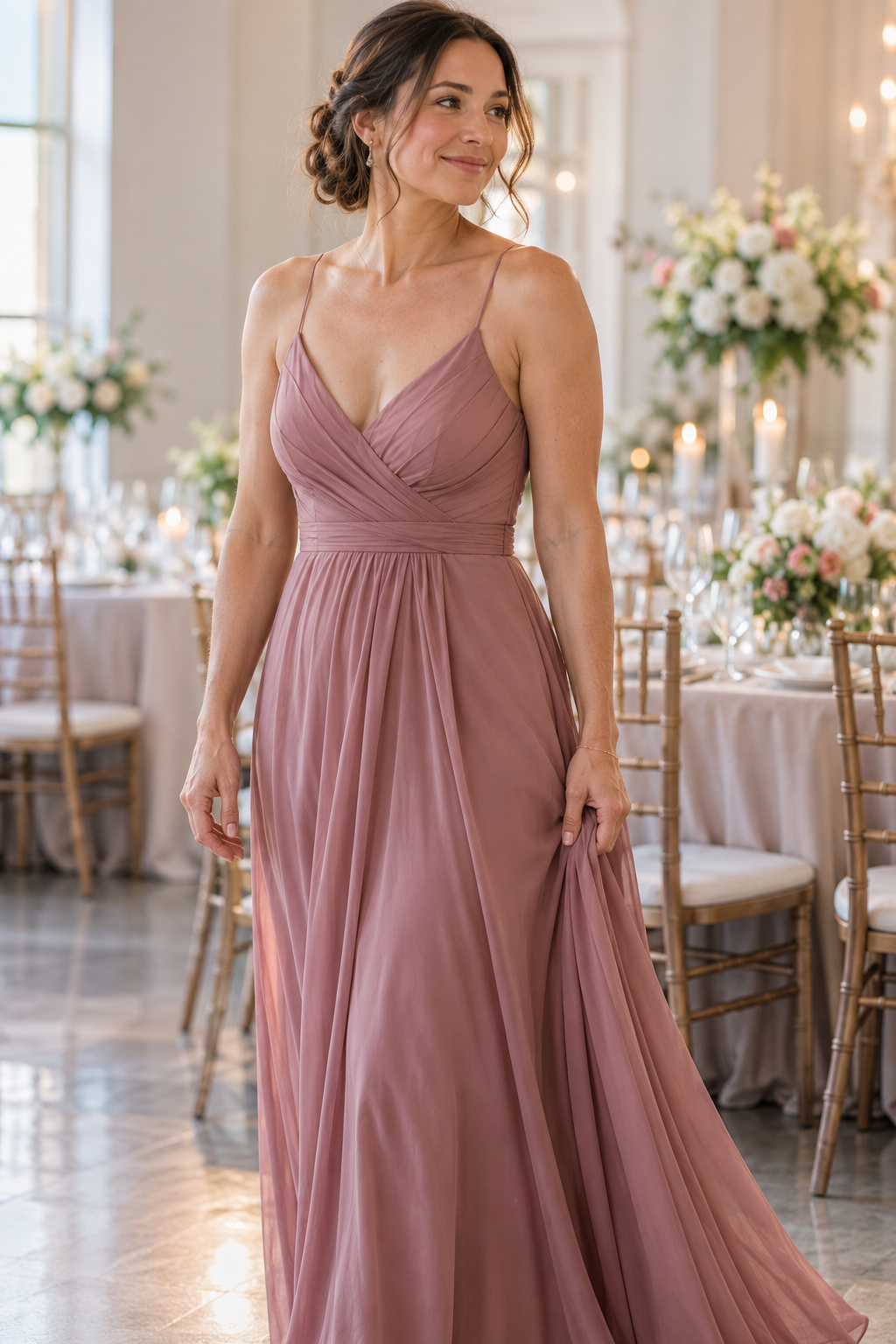
Outdoor morning light, golden hour, and a warm ballroom can each change a pink palette. Ask for photographs of the actual fabric near a window and under indoor bulbs. Pale blush may turn almost white in bright light; deeper rose can become brownish under warm light. If the couple wants clear contrast with the bridal gown, avoid a shade that photographs too close to ivory. Flash photography can reveal both sheen and transparency. Testing the palette in realistic conditions is more reliable than choosing from a single studio image.
Coordinate accessories without uniformity
Accessories should connect the group quietly. Shoes in a related neutral, simple jewelry, and similarly scaled bouquets can support mixed pink dresses without looking rigid. Avoid demanding identical pieces that do not suit every neckline. A delicate necklace may work with a plain V neck, while earrings can be better beside a high collar. If one dress has strong embellishment, keep its accessories quieter. The aim is a shared mood rather than a costume. Practical shoes and layers should also suit the venue and season.
Order with alteration time
Once the palette is approved, confirm availability and delivery dates before anyone purchases. Colors can vary slightly between production runs, so order swatches and dresses with enough time to compare. Schedule alterations early; the hem and bodice are especially visible in group photographs. Ask each person to try the dress with the intended shoes and underlayers. A final group photo of the finished outfits can catch surprises. When color, fabric, fit, and comfort align, mixed pink dresses feel personal and beautifully coordinated.
One final detail is communication. Share the approved swatch, fabric finish, length, and ordering deadline in one clear message. Invite questions before purchases are placed. Small decisions made early prevent expensive exchanges later. When each bridesmaid understands both the shared vision and her room for choice, the palette becomes easier to build and more enjoyable to wear.