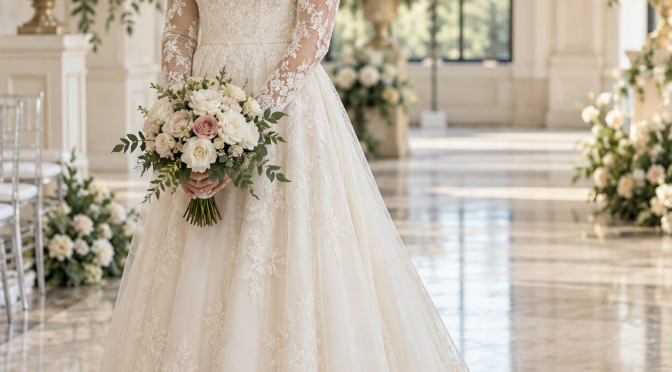
A train can give a wedding gown beautiful movement at the ceremony, but it also changes walking, photographs, and dancing. Plan the bustle before the reception rather than treating it as a last-minute fix.
Choose train length for the venue
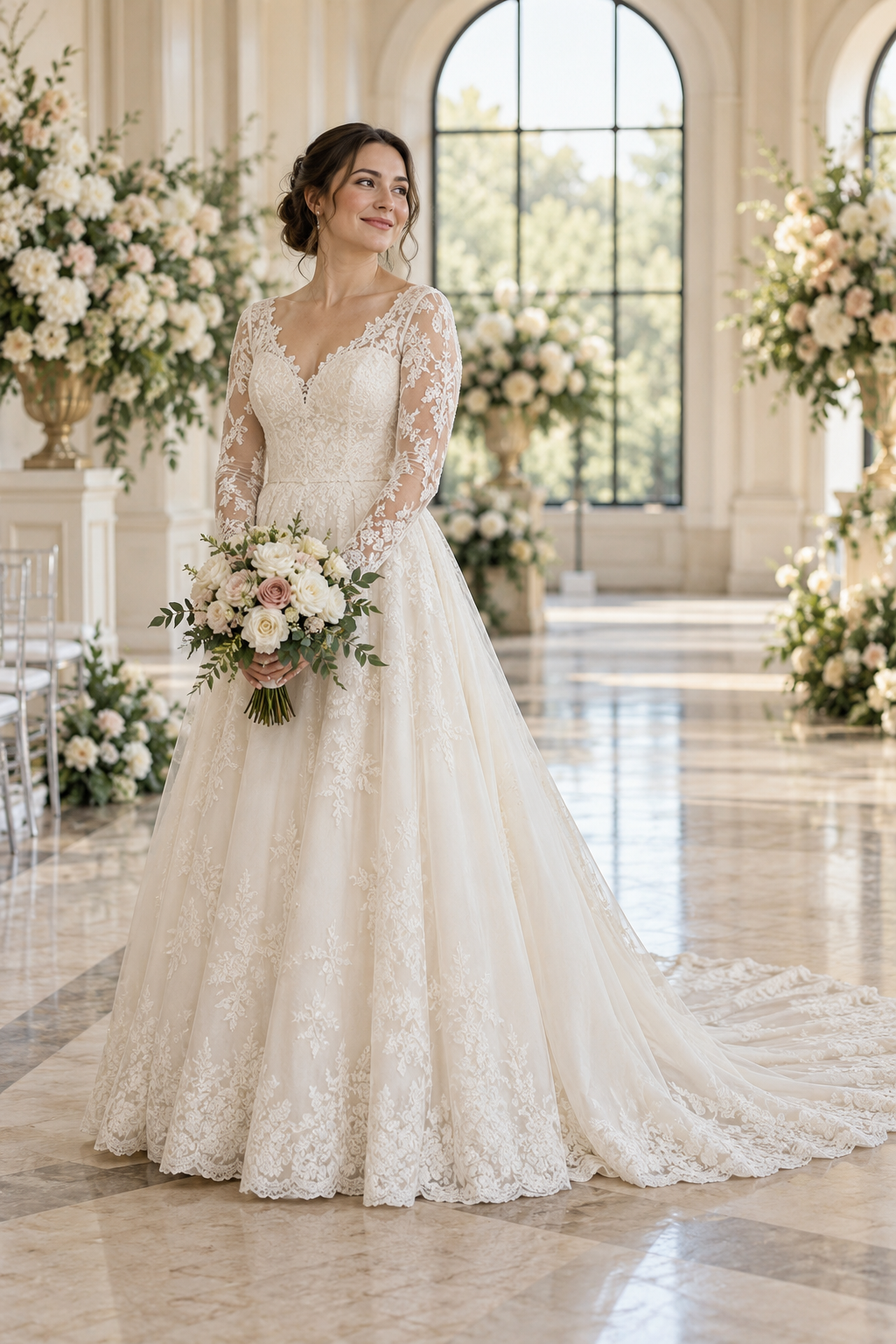
A sweep train brushes the floor gently, while chapel and cathedral lengths create more drama. The right choice depends on the aisle, floor surface, and time spent outdoors. A long train on grass, gravel, or wet stone may require extra handling and cleaning. Try walking with the gown in a space that approximates the venue. Think about stairs, tight doorways, and the path from dressing room to ceremony. A train should support the occasion’s atmosphere without becoming an obstacle to enjoying it.
Understand the bustle’s job
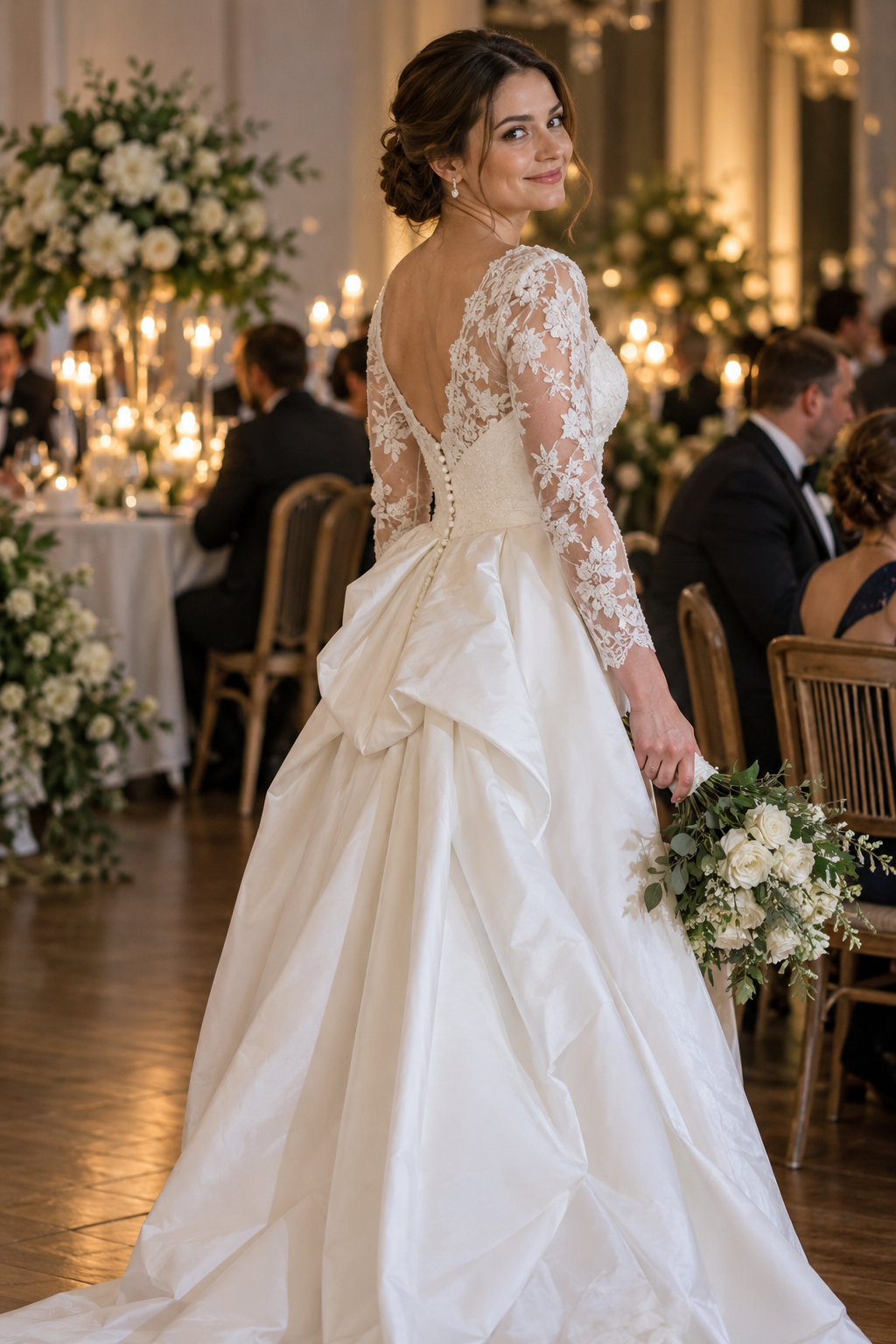
A bustle lifts and secures the train so you can move more freely at the reception. It is not simply a hidden hook; its placement changes the back of the dress. Different gowns may suit an over-bustle, under-bustle, or another tailored solution. Ask the alterations specialist to show the shape from behind and the side. Check whether the fabric pools or pulls when fastened. The bustle should preserve the dress’s design as well as keep the train off the floor. Plan it during alterations, not after the final fitting.
Practice the transition
The change from ceremony to reception can happen amid photographs, greetings, and a crowded schedule. Have one trusted person learn how to fasten the bustle and practice it at the final fitting. Take a short video if helpful, showing each loop or button clearly. If there are several points, consider discreet labels that will not show when worn. Do a timed rehearsal while the bride stands naturally. A bustle that takes too long or needs repeated re-fastening can interrupt the day more than expected.
Test the gown while moving
Walk, turn, sit, and make a few dance steps with the bustle secured. Check whether the hem catches under shoes and whether the bustle changes the fit at the waist. A gown can feel balanced during a fitting but behave differently after several hours. Bring the actual wedding shoes to the appointment. If you plan to change into lower shoes, test the bustle and front hem with both pairs. The reception configuration should be comfortable enough that the bride can stop thinking about the train.
Protect fabric and embellishment
Delicate lace, tulle, and beadwork need careful bustle placement. A hook attached to a fragile layer may tear; a poorly positioned loop may snag embroidery. Ask the tailor how the weight of the train is supported and whether extra reinforcement is needed. Practice lifting the train on stairs without pulling at decorative edges. If outdoor photographs are planned, decide who will help carry it and where it can be laid safely. Preservation starts with practical handling during the wedding itself.
Coordinate photography
A train often looks its best when spread deliberately for ceremony portraits. Tell the photographer if the dress has a distinctive back or long train, and allow a little time for someone to arrange it. After the bustle is fastened, take a few photographs of that version too. The reception look is part of the gown’s story, not merely a practical compromise. Make sure the bustle does not hide a key detail or create an uneven line. A fitting photograph from the back can help resolve that before the wedding.
Prepare a small contingency plan
Bustle loops and buttons can fail under dancing or crowded movement. Ask the tailor whether a spare fastening or discreet repair kit makes sense for the gown. Keep a helper informed, but do not rely on safety pins as the main plan. Confirm where the dress will hang between events and how it will be transported without crushing the train. Thoughtful preparation lets the ceremony have its dramatic moment and the reception feel free. Both versions of the dress deserve equal attention.
If the bride wants two distinct looks, a reception dress is an option, but it should not be necessary merely because the train was never planned. Discuss mobility with the tailor early enough to solve it within the chosen gown. The best train gives drama when wanted and disappears neatly when the celebration calls for movement.