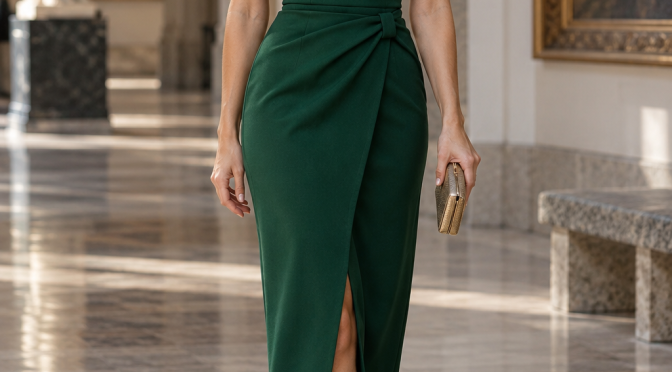
Green ranges from soft and quiet to rich and dramatic. Sage feels airy, olive looks grounded, and emerald creates a strong evening statement. Rather than asking which green is universally best, choose a shade and fabric for the place you will wear it. The right combination can make one dress useful across several occasions.
Understand the shade families
Sage has a muted, gray cast that often feels gentle in daylight. Olive and moss carry more warmth and can work beautifully with earthy accessories. Emerald and forest green have depth that suits evening lighting. Hold the dress near your face and compare it in daylight and indoors. Some greens shift dramatically under warm bulbs or in photographs. Do not rely on a product image alone; the background and editing may change how the color appears. A shade you enjoy wearing will be easier to style and repeat.
Match the green to the occasion
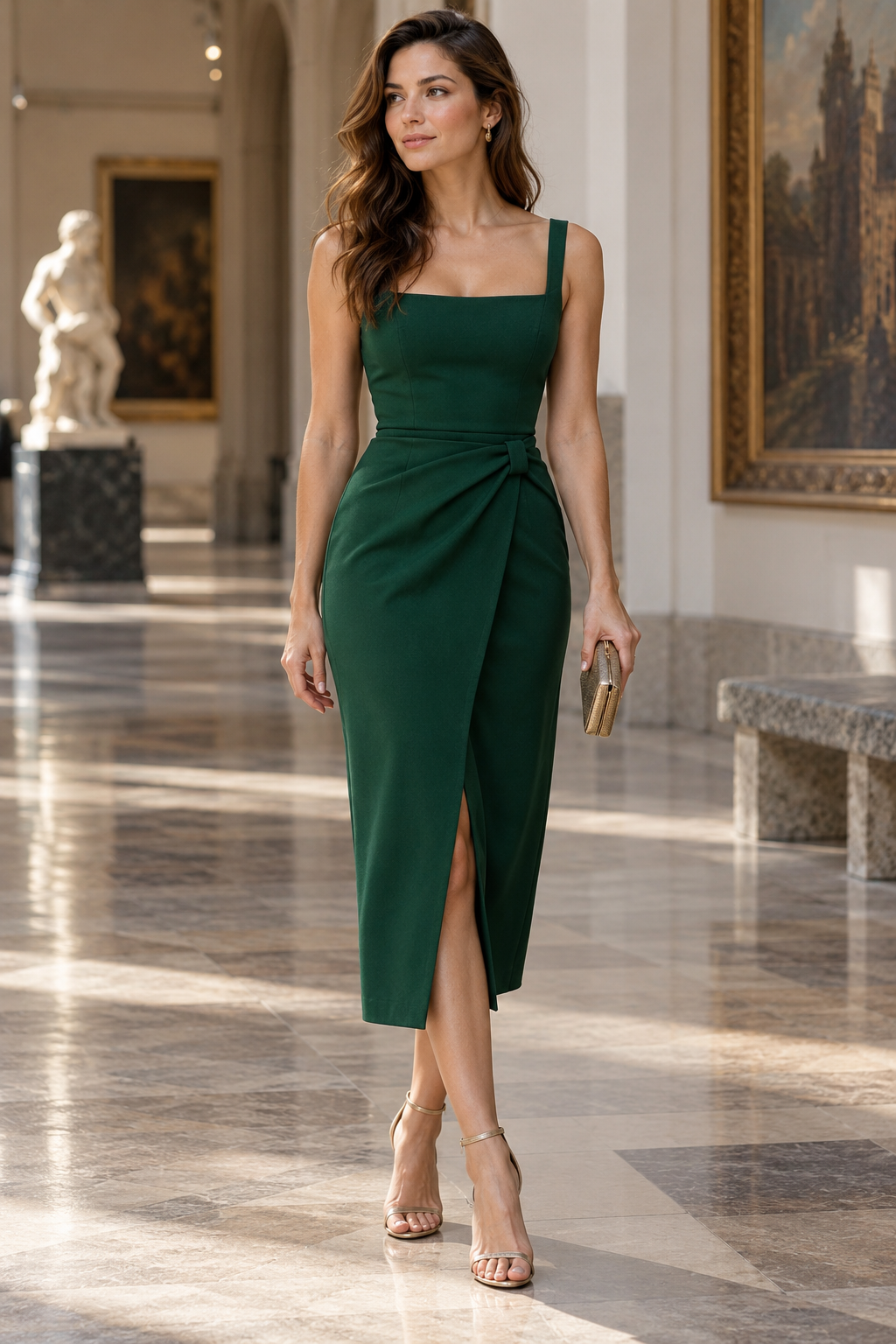
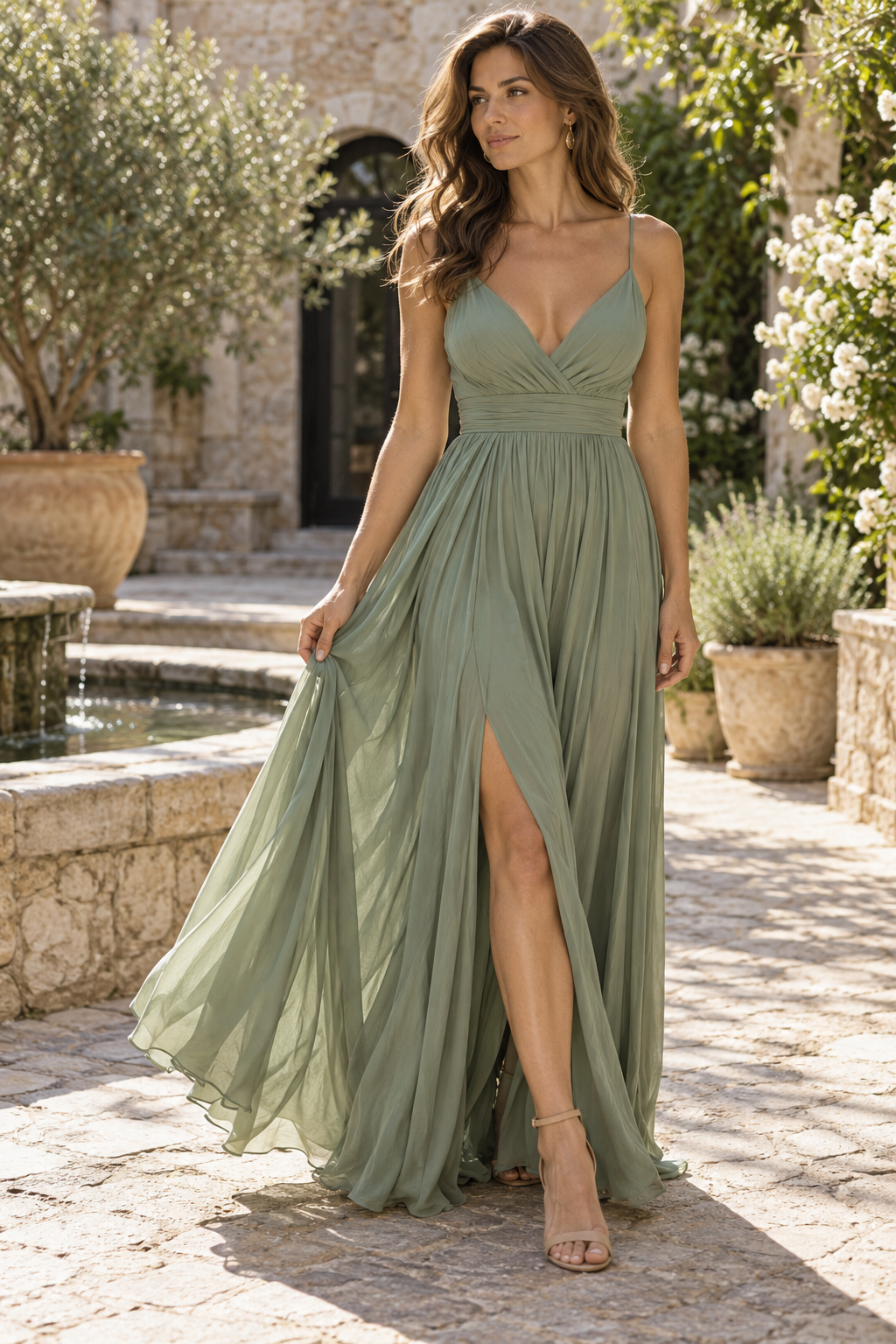
A light sage midi can suit a garden party or daytime wedding when the cut is polished. A tailored olive shirt dress works for a more casual lunch or creative workplace. Emerald satin or deep green velvet can look formal at a dinner or gala. The dress code still matters more than the color. At a wedding, consider whether the bridal party is wearing green and choose a distinct shade or silhouette if needed. Let venue, time, and season guide the final level of formality.
Use fabric to control intensity
The same emerald can feel very different in matte crepe and glossy satin. Crepe gives a clean line; satin reflects light and looks more glamorous; chiffon makes sage feel soft and moving; velvet deepens forest green. Check how the fabric behaves after sitting and whether the lining supports it. A thin material may reveal seams in bright light, while a heavy one can feel too warm at a summer event. Fabric determines comfort and visual impact together, so evaluate it as carefully as the shade.
Build an accessory palette
Gold adds warmth to olive or emerald, while silver can feel crisp against sage and blue-leaning greens. These are options rather than strict rules. Tan, cream, navy, and black shoes can all work when the rest of the outfit feels coherent. Choose one metal tone or one accessory as a focal point, then keep the others simple. An emerald dress may need little more than refined earrings and a small bag. A quiet sage dress can accommodate a more distinctive shoe or textured clutch.
Think about print and texture
A green floral print can feel lively for day, while a solid dress lets shape and fabric lead. If you choose a print, notice scale and placement across seams. If you choose texture, such as pleats or embroidery, check that it remains flattering when you move. Several strong elements at once can make the outfit feel busy. A practical approach is to decide what you want people to notice first: the color, the silhouette, or a detail. Give that choice room to stand out.
Test the complete look
Put on the dress with the planned shoes, bag, layer, and jewelry. Take a photograph from a normal distance in light similar to the event. Walk and sit to check the fit. If you can imagine wearing the dress again with different accessories, it may be a particularly useful addition to your wardrobe. Green can be versatile precisely because it has so many moods. Choose the version that supports the occasion and still feels recognizably yours.
Can I wear green to a wedding?
Usually, yes. Check the invitation and any color request from the couple. If green is the bridal party color, a different shade, print, or silhouette can help distinguish your look. The level of formality and fit matter as much as the color itself.
Can green work all year?
Yes, with the right shade and fabric. Pale sage in airy chiffon feels natural in spring, while olive cotton can work for daytime in autumn. Emerald crepe and forest velvet often suit evening or cooler weather. The calendar is less important than the venue, lighting, and level of formality. Try changing shoes and outerwear before deciding that a green dress belongs to only one season. A versatile piece can move between occasions with relatively small styling changes.