
A white dress can be a fresh everyday choice, not only a bridal one. Fabric, silhouette, and styling details determine whether it feels casual, polished, or event-ready.
Read the occasion first
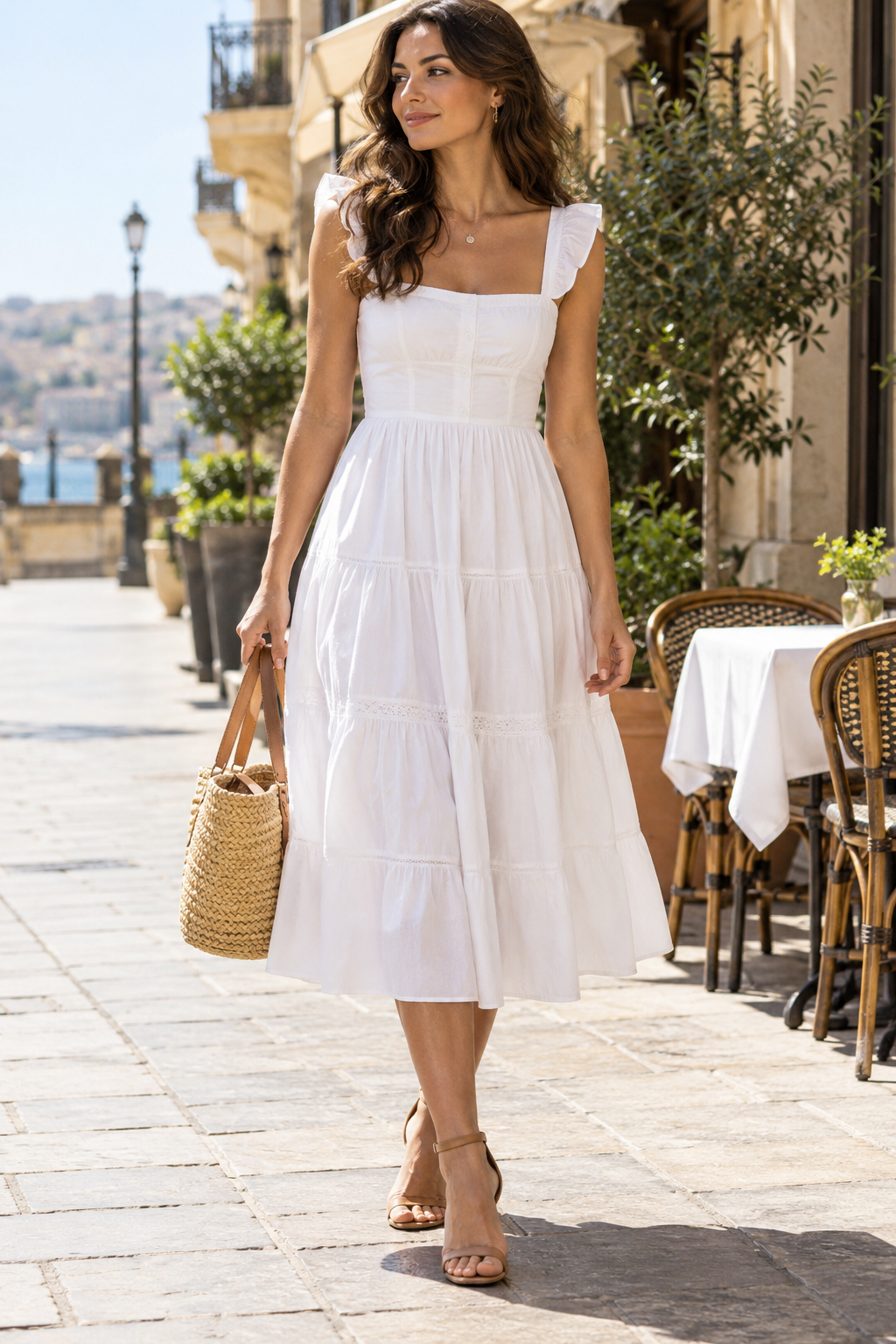
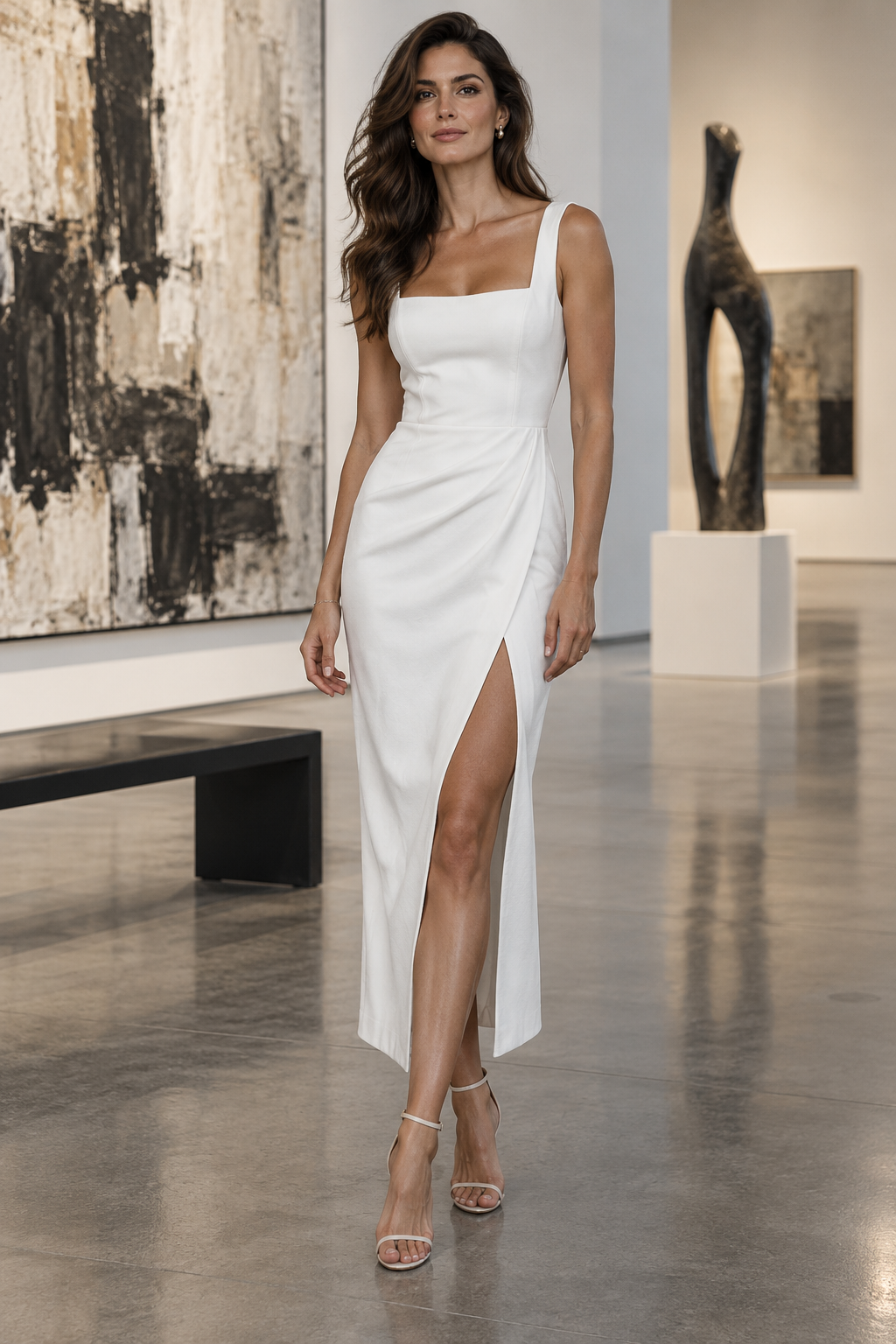
White can signal very different things depending on the setting. A cotton midi with easy sandals feels relaxed at lunch, while a crisp tailored dress with refined shoes can suit a gallery opening or summer dinner. Before choosing accessories, check the dress code, venue, and time of day. For somebody else’s wedding, respect the couple’s stated guidance and avoid an outfit that could be mistaken for bridalwear. For an ordinary celebration, white is simply another versatile neutral. The goal is to make the outfit appropriate to the occasion rather than relying on color alone to set the tone.
Choose the right white and fabric
Bright optic white looks sharp and graphic, while ivory, chalk, and soft cream bring a warmer effect. Hold potential pieces against your skin in daylight; indoor lighting can make a fabric appear cooler or more opaque than it really is. Cotton poplin lends structure and breathability, linen brings texture and natural creasing, and crepe creates a cleaner drape. Thin synthetic fabric may reveal underlayers and can lose its shape after sitting. Examine the garment in front of a window and from behind. A lining, heavier weave, or thoughtfully placed seams can make a simple white dress feel much more finished.
Let silhouette set the mood
The cut of a white dress often communicates more than its color. A loose shirt dress with rolled sleeves feels practical and understated. A fitted sheath or sculpted midi looks more formal, especially with precise shoulders and a clean hem. A flowing tiered skirt brings movement but can read more romantic. Decide where you want volume: at the sleeve, waist, or skirt, rather than everywhere at once. Pay attention to how the dress behaves when you sit and walk. A silhouette that moves naturally is easier to wear repeatedly, which matters if you want the piece to earn space in your wardrobe.
Build contrast with accessories
White creates a quiet canvas, so texture can do useful work. A woven bag and flat leather sandals steer a cotton dress toward daytime; a compact structured bag and polished heels move it toward evening. Brown, tan, and black add clear contrast, while metallic accents can brighten a formal look. Avoid adding accessories simply because the dress is plain. One strong element, such as an interesting belt or pair of earrings, may be enough. If the dress has lace, cutwork, or prominent buttons, let those details remain visible. A deliberate accessory choice is more persuasive than a crowded collection.
Consider underlayers and care
The least glamorous details often decide whether a white dress becomes a favorite. Check opacity in sunlight and under flash photography, then select smooth undergarments close to your skin tone where needed. A white lining does not always disappear beneath a white outer layer, so test the combination rather than assuming. Look at the care label before buying: some dresses need specialist cleaning, while others can be washed gently at home. Carry a small stain-removal pen for long events, but follow the fabric instructions before treating a mark. Practical planning makes wearing white feel easy instead of precious.
Layer without losing the line
A light jacket or cardigan can extend a white dress beyond peak summer. Choose a layer that respects the silhouette: a cropped jacket can preserve a defined waist, while a relaxed blazer can sharpen a softer dress. Heavy outerwear may overwhelm a delicate skirt, so consider proportion from head to toe. In transitional weather, closed-toe flats or low boots can look grounded, especially with linen blends or heavier cotton. For warmer days, keep the layer simple and breathable. The best pairing should look like part of the outfit, not an emergency response to the temperature.
Make one dress work several ways
Try styling the same dress for three realistic appointments before deciding it is useful. A cotton midi might pair with flat sandals for errands, a woven bag for brunch, and a tailored jacket for a casual office. A structured white dress might move from a daytime event to dinner by changing shoes and jewelry. Photograph these combinations so you can see whether the dress truly adapts or only works in theory. Repeating a well-chosen piece is more interesting than chasing a new one for every invitation. When fabric, fit, and care suit your life, white becomes remarkably wearable.