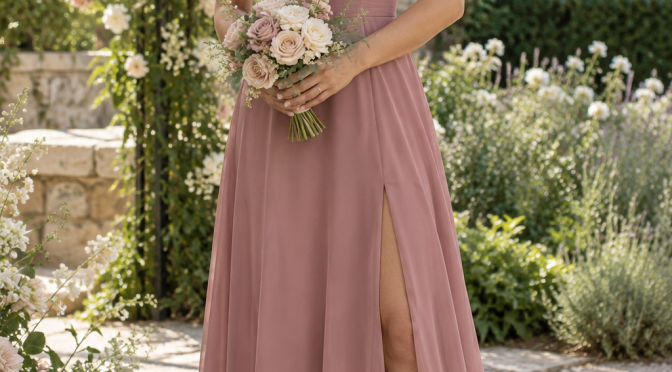
A cohesive bridesmaid lineup does not require identical necklines. Choose shapes that share a visual language while giving each attendant room to feel comfortable and confident.
Start with a clear visual anchor
Before discussing individual necklines, decide what should remain consistent across the bridal party. A shared fabric, color family, hem length, or level of formality can hold the group together while necklines vary. For example, floor-length dresses in the same matte crepe can accommodate a square neck, a one-shoulder cut, and a soft V without looking accidental. Photograph swatches in the wedding light when possible. A satin finish can reflect strongly beside a muted chiffon, even if both fabrics carry the same color name. Establishing an anchor early also makes fittings simpler: each person can assess her own dress against a common brief rather than trying to reproduce somebody else’s silhouette.
Think about support before aesthetics
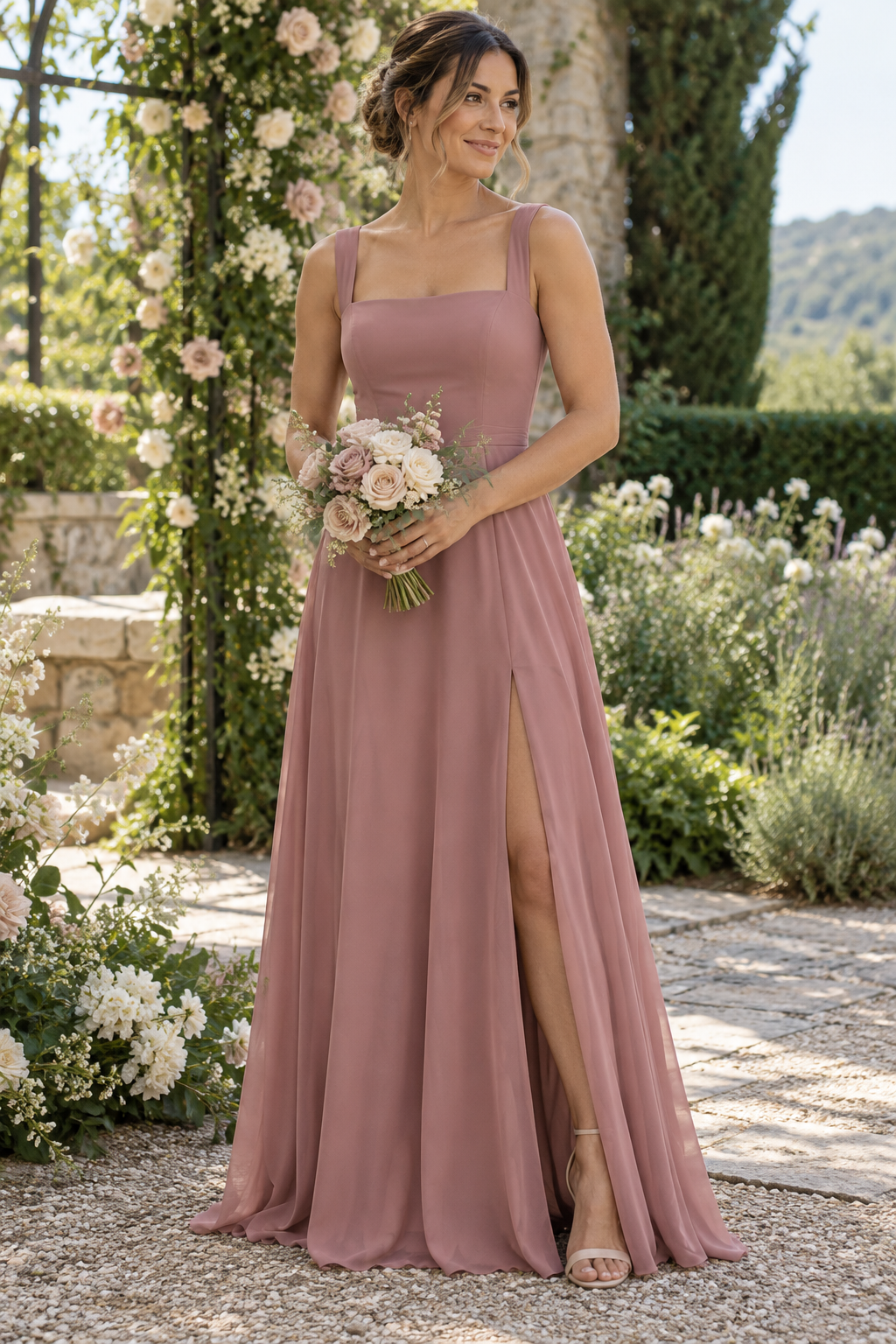
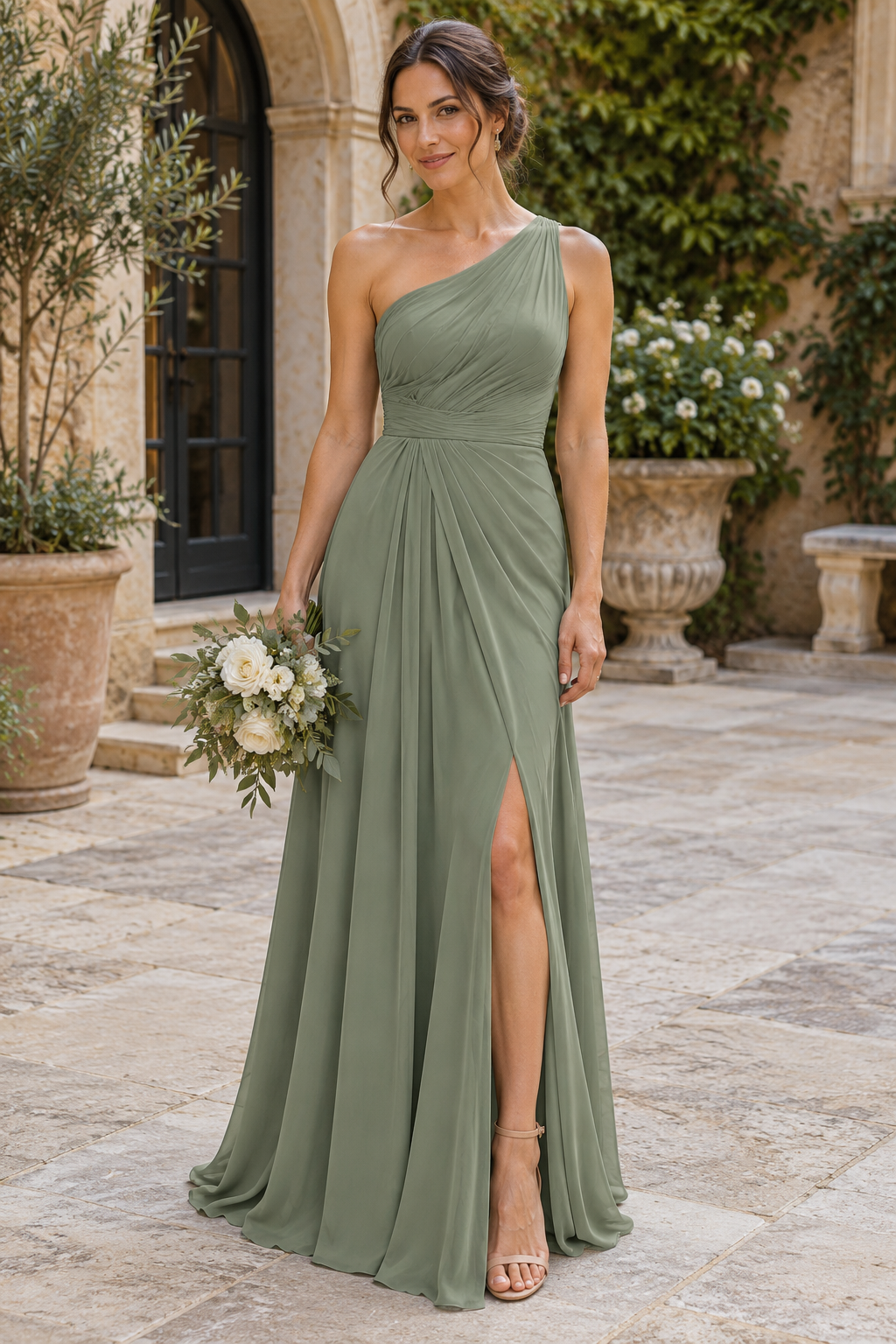
A neckline should work with the structure underneath it. Strapless and very narrow-strap dresses often demand built-in support, a specialist bra, or alterations to prevent slipping. A wide square neckline can frame the collarbone beautifully but may need a secure fit at the shoulders. One-shoulder designs create an elegant diagonal line, yet the bodice still has to stay level when the wearer moves. Ask each bridesmaid to sit, reach, and walk in a fitting, not just stand in front of a mirror. If a neckline needs constant adjustment, it will distract her during photographs, dinner, and dancing. Comfort is part of the polished effect.
Balance different shapes in one photograph
When several necklines appear together, consider the group as a composition. An alternating arrangement of open and covered shoulders can feel more balanced than clustering every strapless style at one end. You do not need to prescribe where everyone stands permanently, but a quick trial photograph can reveal whether one dramatic neckline dominates. Keep embellishment levels comparable: a heavily beaded halter may look unrelated beside very plain crepe dresses. Subtle differences in drape or sleeve shape usually read as intentional when fabric and color remain consistent. The aim is not perfect symmetry; it is a rhythm that lets each person register individually while the group still feels unified.
Match the neckline to the setting
The wedding environment changes how a neckline looks and feels. In a breezy garden, secure straps and a bodice that stays in place may matter more than a dramatic open shoulder. A formal evening venue can support sculptural asymmetry or a deeper V, especially when the fabric has weight. For a religious ceremony or a cooler season, a coordinated wrap or removable layer may be useful. Think about the distance between ceremony and reception, too. A neckline that looks lovely under studio lighting should still look natural in daylight and remain comfortable through a long schedule. Practical context improves the styling rather than limiting it.
Use tailoring to create the best fit
The same neckline can appear very different when shoulder width, bust placement, or torso length changes. Schedule fittings with enough time for alterations, and ask the tailor to evaluate strap length and neckline stability before adjusting the hem. A bodice that gapes at the chest may need more than a smaller size; it may need reshaping at the seams. If dresses come from different brands, compare the actual fabric and construction rather than relying on size charts. Photograph each finished look from the front and side in natural light. A well-fitted simple neckline will generally feel more refined than an elaborate one that does not sit properly.
Keep jewelry and hair in conversation
Necklines create different spaces for accessories. A high halter often looks strongest with earrings rather than a necklace, while a square neck can frame a delicate pendant. An asymmetric neckline may benefit from hair swept away from the exposed shoulder, though there is no fixed rule. Agree on a general jewelry mood, such as restrained warm metals or small pearls, without requiring identical pieces. This protects the group’s coherence while allowing personal choices. Consider bouquets and makeup colors in the same planning conversation; a striking neckline plus large earrings plus a bold bouquet can become visually crowded. Editing is usually more effective than adding.
Make the final decision together
Invite each bridesmaid to name the features she feels good wearing and any practical limits she has. Offer a curated set of approved shapes instead of an unlimited search or a single mandatory option. Before ordering, place screenshots or samples together and confirm that the dresses share the agreed color, fabric mood, and formality. Then allow time for returns and alterations. The final lineup should look connected in group portraits but also feel considerate to the people wearing it. That balance is what makes varied necklines look deliberate, modern, and easy to enjoy on the wedding day.