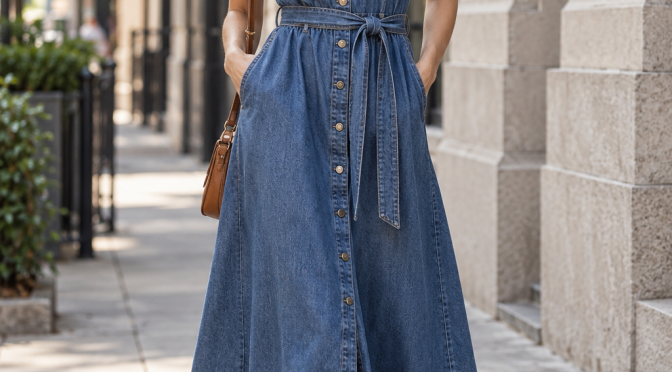
A casual midi dress works best when movement, fabric, and footwear suit the actual day ahead. These practical choices make a simple silhouette feel considered without over-styling it.
Define the midi length for your frame
Midi describes a range, not one exact hemline. A dress can stop just below the knee, at mid-calf, or closer to the ankle, and each point changes the proportions. Try on the dress with the shoes you will actually wear. A hem that falls at the widest part of the calf may feel different from one that sits a little higher or lower. If the length is almost right, tailoring can be worthwhile because a small adjustment can improve the whole silhouette. Do not rely on the model photo alone; your height, stride, and preferred coverage determine the practical length.
Pick fabric for the weather and schedule
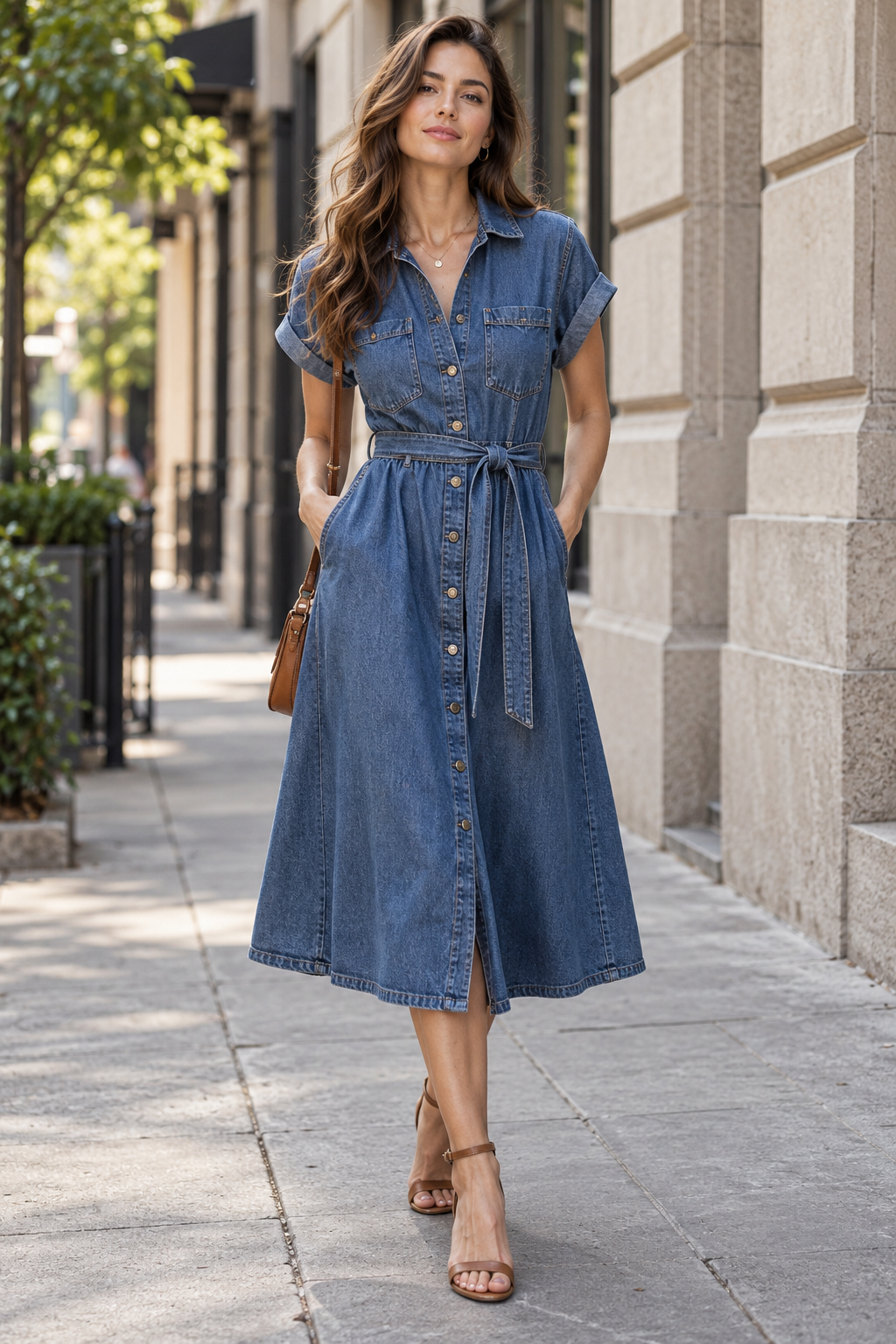
Cotton jersey is soft and forgiving, while woven cotton poplin can hold a more defined shape. Denim or chambray adds weight and works well through changing temperatures; linen is airy but creases naturally. Think about how many hours you will wear the dress, whether you will be sitting, and whether the fabric shows every fold. Breathability matters on a warm commute, and a little structure helps a dress look tidy after an afternoon out. If the fabric is thin, check opacity in daylight. A casual dress should reduce decisions, not create new worries about slipping, clinging, or ironing.
Use footwear as the anchor
Shoes can make the same midi dress feel athletic, relaxed, or quietly polished. Clean sneakers suit a walking-heavy day, flat sandals keep things light in summer, and loafers give a simple dress a sharper edge. Choose a shoe profile that balances the hem: very bulky footwear can make a delicate skirt look top-heavy, while barely-there sandals may feel disconnected from a substantial denim dress. Comfort should be tested beyond a few steps indoors. A useful everyday outfit is one you can wear to the market, on public transport, and to an unplanned coffee without needing to change.
Shape the waist only if it helps
A belt is an option, not a requirement. Some midi dresses look best with their original relaxed line, especially when the fabric drapes cleanly. Others benefit from subtle definition through a seam, tie, or slim belt. If you add one, check where it sits when you move and whether it bunches the fabric at the back. A belt should clarify the proportion rather than make the dress harder to wear. You can also create shape with a cropped jacket or an open shirt that frames the torso. Small changes often achieve more than dramatic cinching.
Plan layers around volume
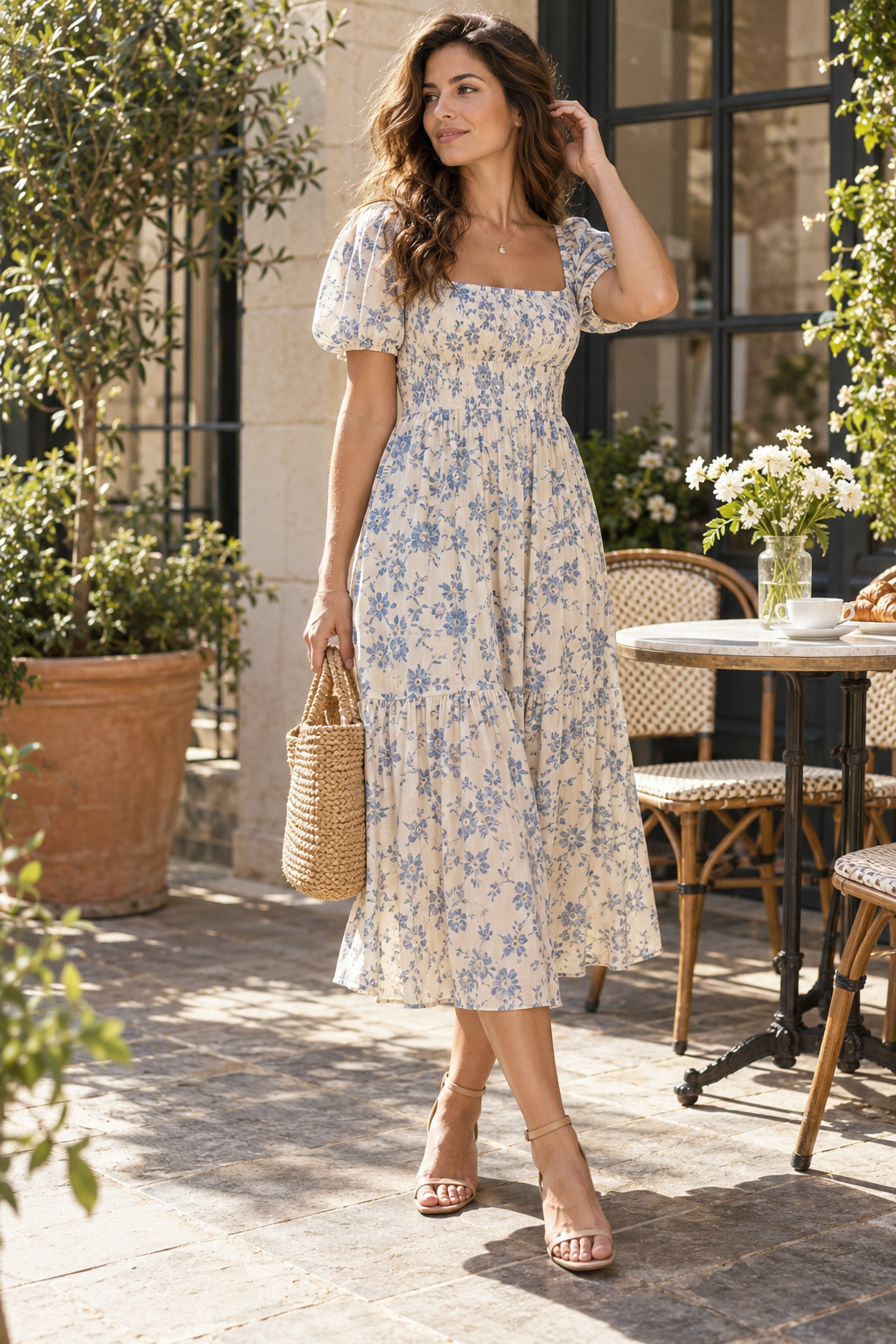
Layering a midi dress is largely a question of balance. A short denim jacket can work over a fluid skirt, while a longer blazer may complement a narrower silhouette. For cooler days, a lightweight cardigan offers warmth without hiding the whole dress. Check how the pieces look both open and closed and whether sleeves bunch uncomfortably. A dress with puffed sleeves may need a roomier outer layer. When you add a bag, consider scale as well: a compact crossbody can leave an airy outfit intact, whereas a large tote can suit a more utilitarian cotton or denim dress.
Keep accessories useful
Everyday accessories should earn their place. A practical bag, sunglasses, and simple earrings may complete the look without extra effort. If the dress has a print, prominent buttons, or a gathered neckline, keep other details quiet. For a plain solid dress, one piece with character, such as a patterned scarf or textured bag, can add interest. Consider your routine before choosing jewelry: pieces that catch on a bag strap or need frequent adjustment are less useful than they look in a photograph. Casual style feels strongest when the wearer appears comfortable in it.
Repeat the outfit with small changes
A dependable midi dress can support several outfits if you change only one or two elements. Wear it with sneakers and a tote for errands, flat sandals for a weekend lunch, or loafers and a cardigan for a casual workday. Keep a quick photo of combinations you liked; this is a simple way to see which pieces you actually use together. If a dress works only with one perfect pair of shoes, it may be less versatile than expected. The best everyday formula is personal and repeatable: the dress fits well, the footwear matches the day, and the details feel effortless.