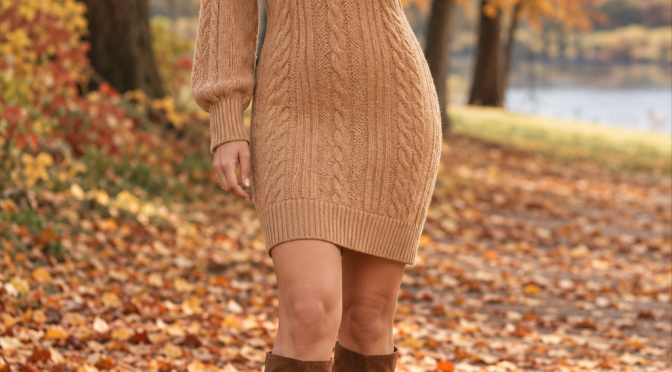
A sweater dress can offer warmth and ease while still looking refined. The key is choosing knit weight, fit, and layers that move together rather than fighting the silhouette.
Start with the knit itself
A sweater dress should feel comfortable against your skin and recover after gentle stretching. Examine the fabric composition, knit density, and seam construction before deciding on color or styling. Fine-gauge knit can drape close to the body, while a heavier rib gives more texture and can feel substantial. Hold the garment up to light to check opacity, particularly at the hips and seat. Rub a small area gently to see whether the surface fuzzes easily. No knit is completely maintenance-free, but a well-made one should retain its shape after ordinary movement and make you want to wear it again.
Choose ease deliberately
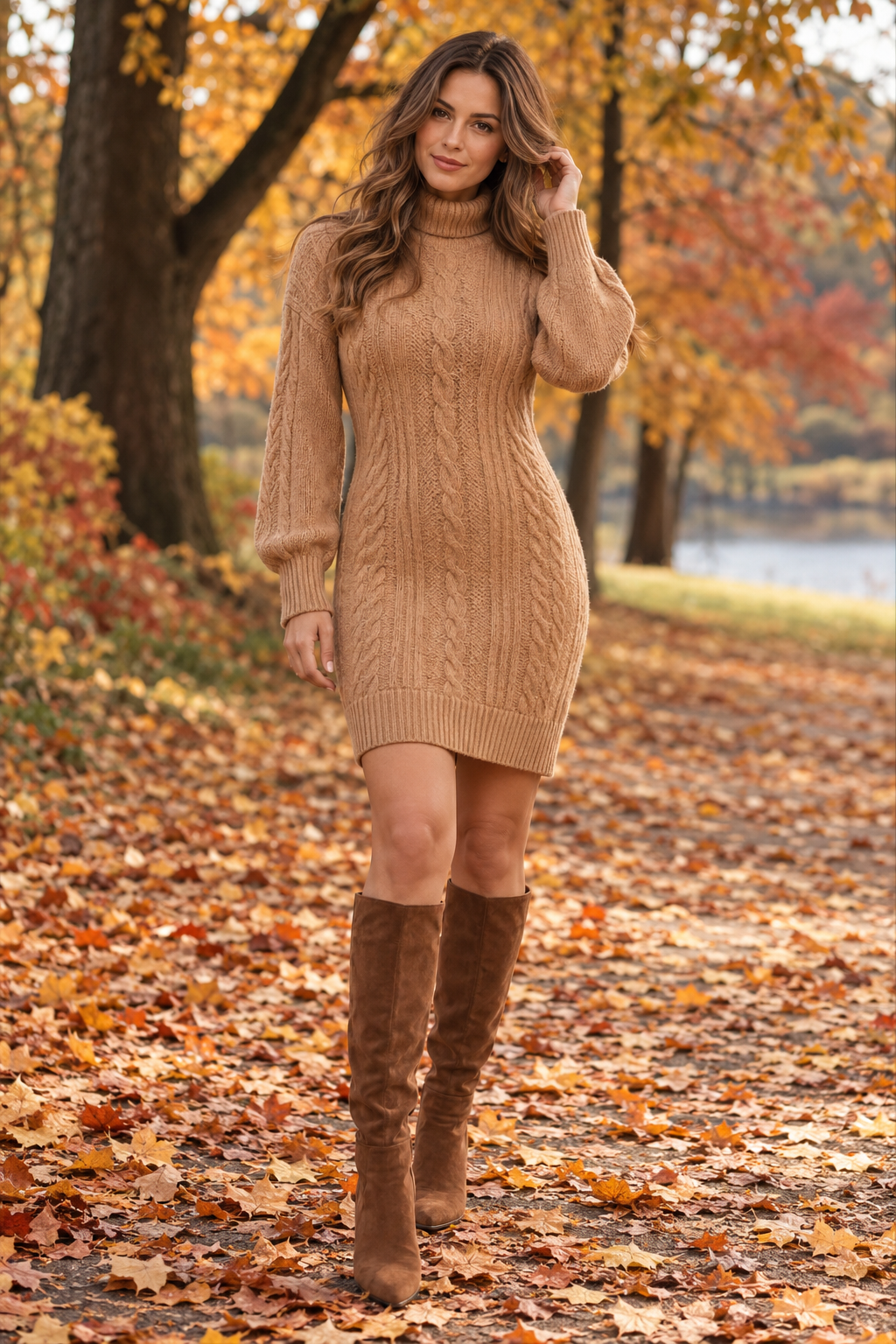
A sweater dress does not have to be skin-tight to look polished. A little ease through the torso allows the knit to fall smoothly and keeps the dress comfortable when seated. If you prefer a closer fit, look for enough stretch and a weight that does not become transparent over curves. Oversized designs need proportion too: a defined shoulder, clean neckline, or controlled hem can prevent the garment from looking shapeless. Try walking and sitting in the dress before committing. If it rides up constantly or twists around the body, the issue is likely fit or knit construction, not a styling problem.
Check length with your footwear
Knit dresses can change length slightly as they hang, so allow the fabric to settle before judging the hem. A knee-length style may pair naturally with tall boots, while a longer midi can look elegant with ankle boots or loafers. The gap between hem and boot top matters visually and practically in cold weather. Try the full outfit in a mirror from the side as well as the front. If the hem clings to tights, consider a smooth underlayer or a different hosiery texture. The most comfortable length is one that stays in place as you move rather than requiring frequent adjustment.
Layer for warmth, not bulk
A sweater dress already supplies texture, so outer layers should fit over it easily. A tailored coat can give a relaxed knit clear structure; a roomy trench suits a lighter gauge on milder days. Check that the coat sleeves accommodate the dress sleeves without bunching. A thin thermal layer underneath can add warmth without changing the outline, but test the neckline and hem so it stays hidden. If you add a scarf, choose one that complements the dress’s knit rather than repeating the same heavy texture everywhere. Comfortable layering creates a smooth shape and lets each piece do a distinct job.
Use belts carefully
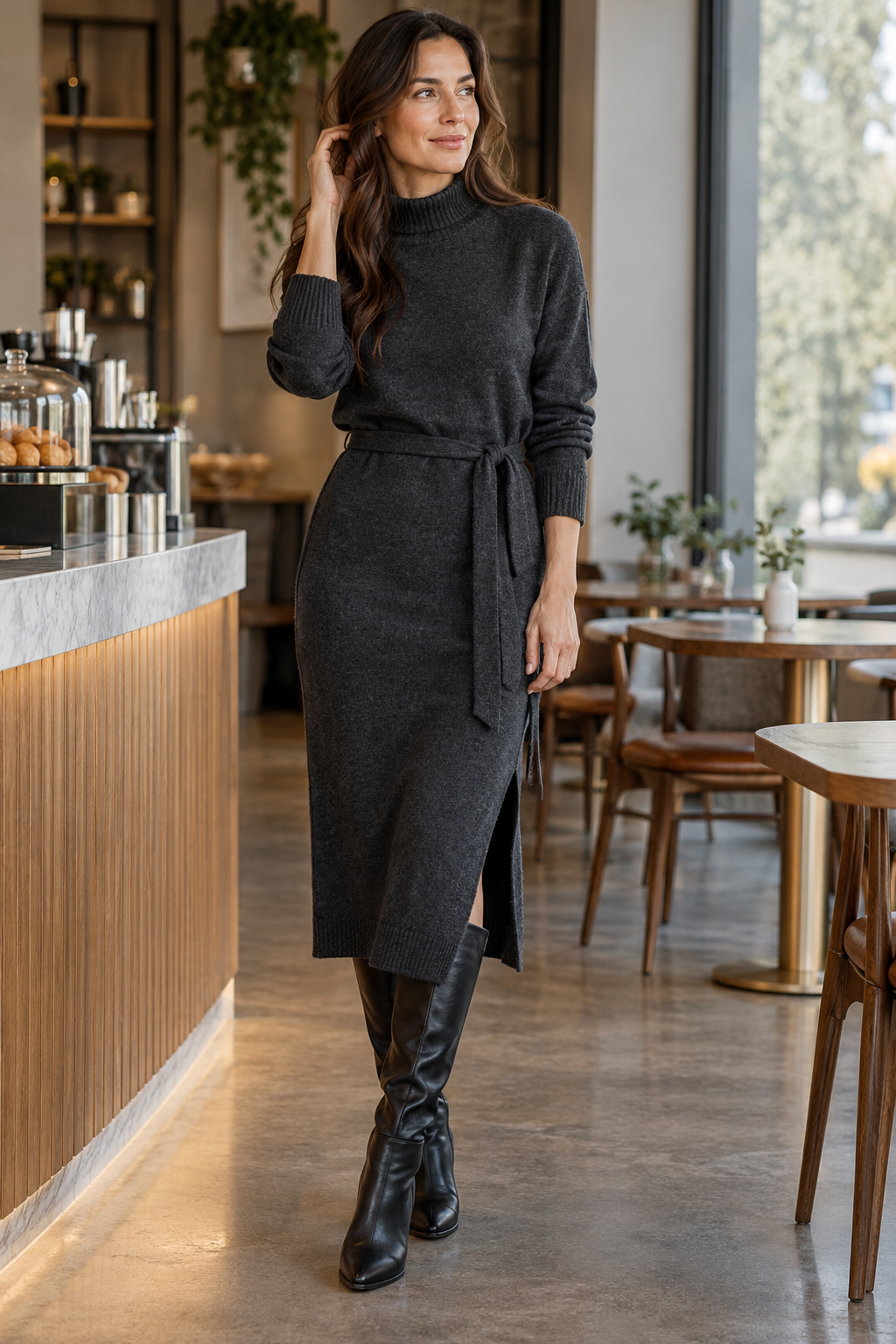
Belting can introduce shape, especially on a relaxed straight dress, but it should not force the knit into awkward folds. A narrow belt may disappear into thick ribbing, while a very wide one can dominate a soft silhouette. Try a simple leather belt at the natural waist or slightly higher, then sit and walk to see whether it stays put. Sometimes the dress needs no belt at all; a structured bag or long coat can provide enough contrast. If the knit is delicate, avoid hardware that catches threads. Styling should protect the garment as well as flatter it.
Think about underlayers and static
The right underlayer can make a sweater dress feel much easier to wear. Smooth, close-fitting pieces reduce visible lines and can help a knit glide over the body. Tights should work with the dress’s weight: very shiny hosiery may feel disconnected from a soft matte knit, while opaque tights often create a quieter finish. Dry indoor air can cause static, especially with synthetic blends. Follow care instructions and consider a suitable anti-static solution if needed. Comfort is not an afterthought here; when the dress moves naturally, the outfit looks more confident.
Care for the dress you want to repeat
A beautiful knit dress is useful only if you can maintain it. Read the care label before buying and decide whether hand washing, flat drying, or professional cleaning fits your routine. Fold knit garments rather than hanging them for long periods, since gravity can stretch shoulders and hems. Give the dress a rest between wears and remove small pills with a fabric-safe tool, gently and only when necessary. Store it clean and dry at the end of the season. With reasonable care, a sweater dress can become a reliable cold-weather piece rather than a one-time outfit.