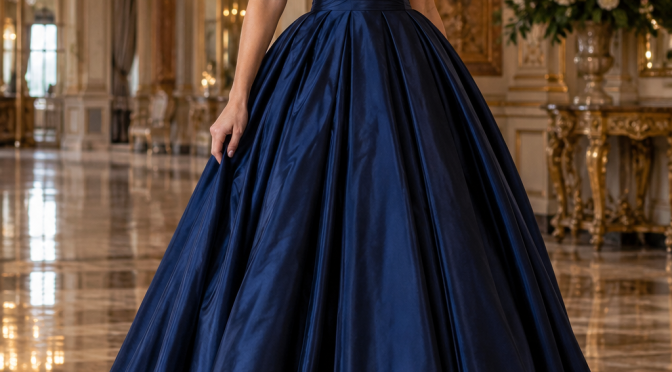
A ball gown is defined by more than a full skirt. Proportion, construction, movement, and event logistics determine whether the dress feels as good throughout the evening as it looks on arrival.
Confirm what the invitation means
A ball gown suits black-tie celebrations, formal galas, and other events where a dramatic floor-length dress belongs. Read the invitation closely rather than assuming that every evening event calls for the same level of formality. Venue and schedule matter too: a ballroom supports volume differently from a compact restaurant or outdoor terrace. Consider stairs, transport, and seating before committing to a very wide skirt or long train. The right degree of drama is the one that fits the occasion and lets you move through it comfortably. A striking gown should enhance your presence, not become the main logistical challenge of the night.
Understand the skirt structure
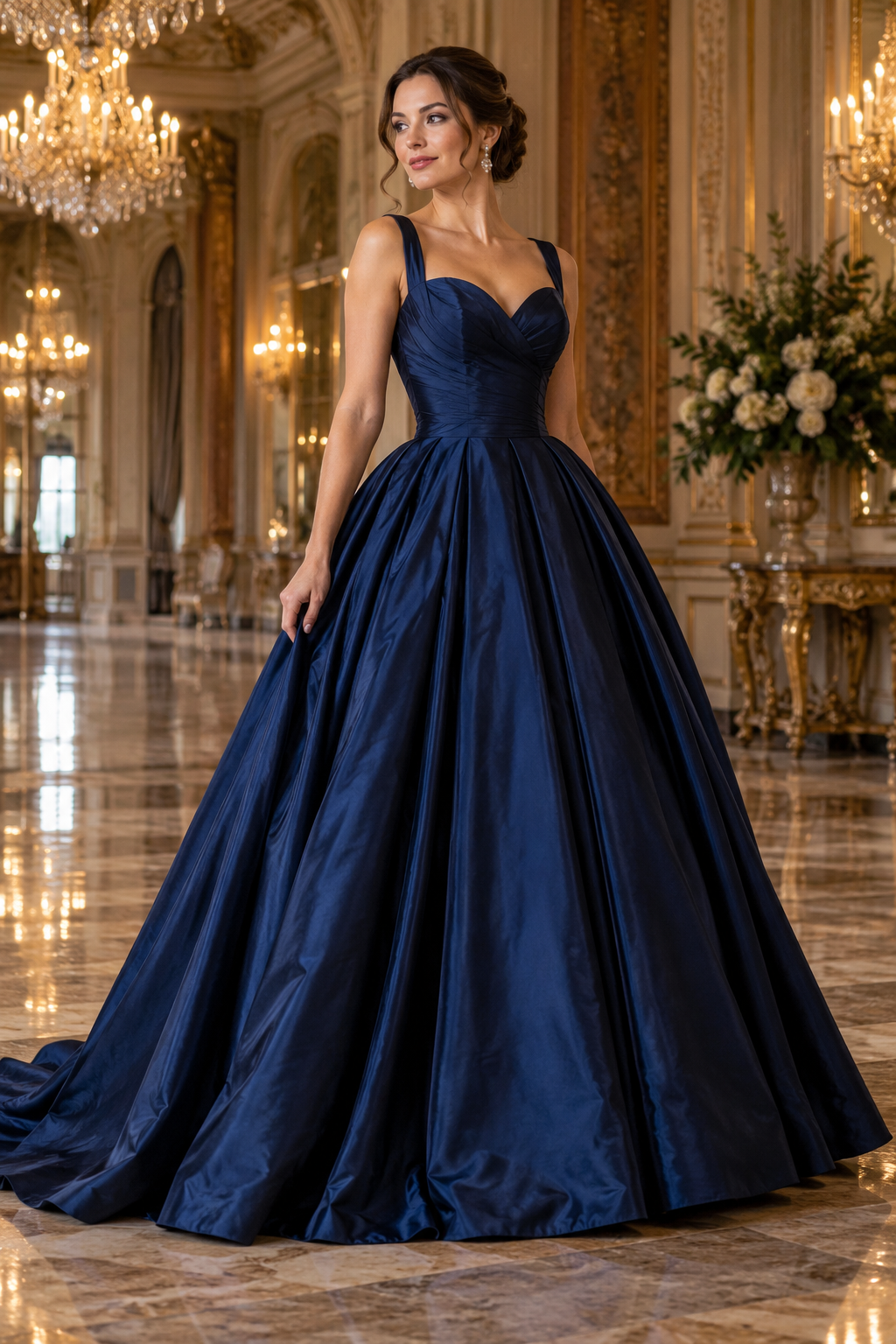
Full skirts gain shape through pleats, gathers, layered tulle, a structured underskirt, or a combination of these. Each creates a different effect when walking. Pleats can offer controlled volume, while multiple light layers create softer movement. Lift the skirt gently to see how much fabric you will manage on stairs and check whether the lining tangles with the outer layer. A very heavy skirt can pull at the waist after several hours. Try sitting in a chair similar to what the venue might provide. The gown should remain beautiful in motion and at rest, not only while standing still for photographs.
Inspect the bodice fit
The bodice supports the visual balance of a ball gown. Check whether it stays level when you raise your arms or turn, and whether seams sit where they were designed to sit. If the neckline is strapless, ask about internal support and whether alterations can improve security without constricting breathing. A fitted waist should feel snug but allow a full meal and a long evening. Examine the back closure for smoothness and stability. A dramatic skirt can distract from a small fit issue in the fitting room, but photographs and hours of wear will make that issue much more apparent.
Choose fabric for the effect you want
Satin can create a luminous, formal surface; mikado and other structured fabrics give a sculptural outline; tulle softens the silhouette. There is no universally superior choice. Think about the venue lighting and the look you want in photographs, then examine the fabric from several angles. Some materials mark or crease more easily, and very shiny surfaces can emphasize folds. A dark color may make details subtler, while a vivid shade puts shape and construction in focus. Ask for a fabric swatch if ordering online and view it in daylight as well as indoor light.
Plan alterations before the event
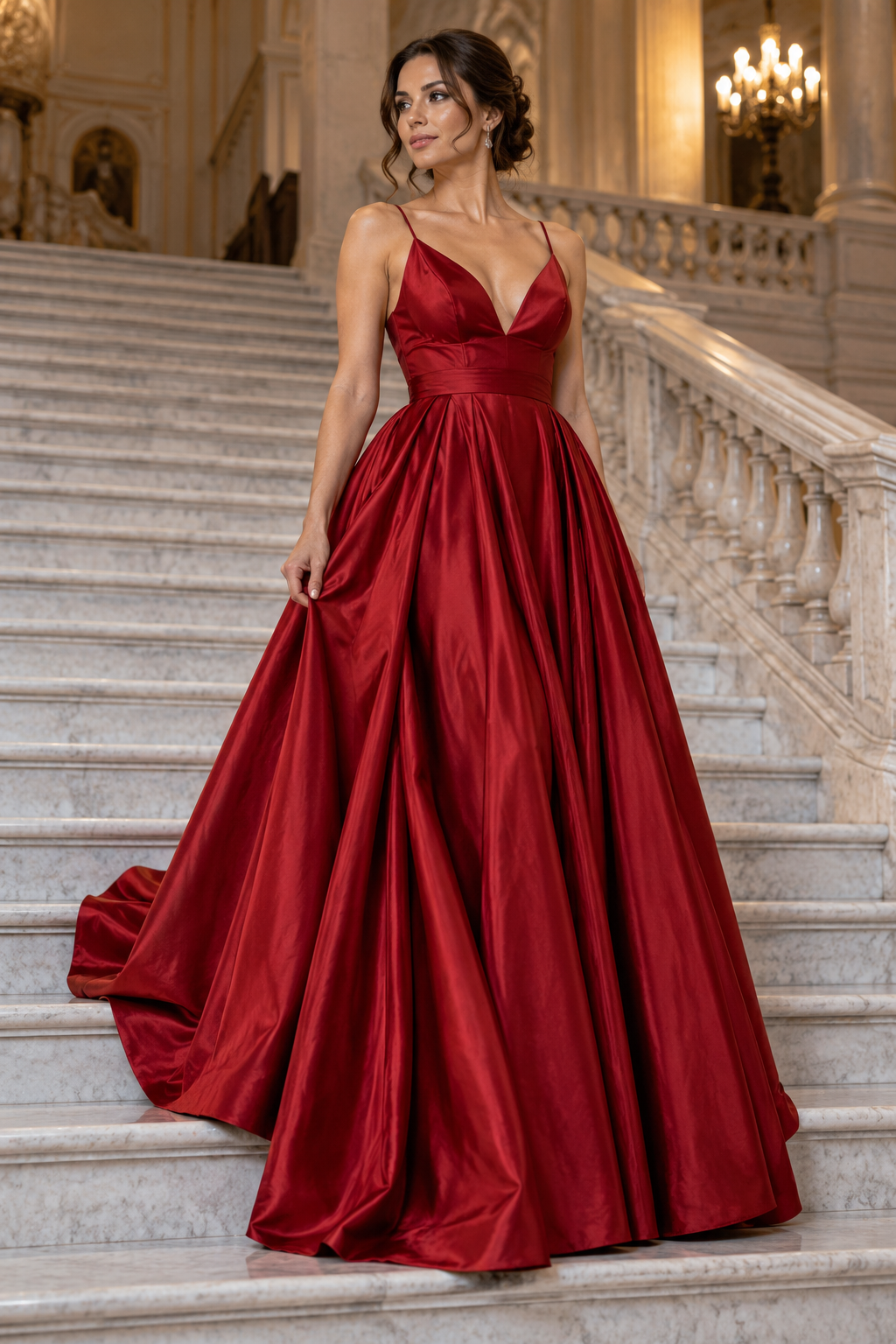
Formal gowns commonly need hem and bodice adjustments, so include both time and cost in the decision. Bring your intended shoes and undergarments to the fitting. The hem should clear the floor enough for safe walking while retaining the intended line. If the gown has a train, ask how it will be managed during dinner and dancing; a bustle or discreet loop may be useful. Avoid scheduling the final fitting too early if sizing may change. Good alterations do not call attention to themselves, but they can transform a dress from impressive to genuinely wearable.
Edit accessories around the silhouette
A ball gown already creates a strong statement. Let the neckline and fabric guide jewelry choices rather than adding every formal accessory at once. A simple pair of earrings may be enough with an embellished bodice; a restrained necklace can work with a plain open neckline. Choose a small bag that carries essentials and shoes you can stand in for the expected duration. If the skirt is very wide, test your walking stride in the full outfit. Hair and outerwear should also support the dress’s shape. The finished look should have a clear focal point rather than competing details.
Do a full rehearsal
Before the event, wear the gown with the exact shoes, underlayers, jewelry, and outerwear you plan to use. Walk through a doorway, climb a few stairs, sit down, and check how the hem and bodice behave. Take photographs in both daylight and evening light if possible. Prepare a small kit with fashion tape, a safety pin, and the appropriate stain-care information, but do not depend on emergency fixes for poor fit. Confirm how you will transport and store the gown without crushing its skirt. A short rehearsal removes surprises and lets you enjoy the occasion.