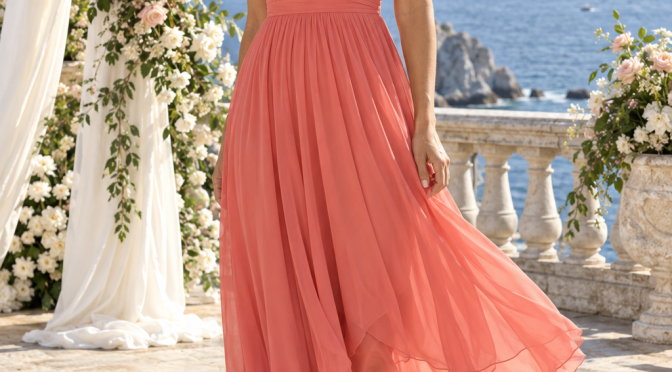
A beach wedding asks guests to balance ceremony with the realities of sand, sun, wind, and changing light. The right dress feels polished enough for the invitation while remaining easy to wear on the terrain. Start with the dress code and the setting, then choose fabric, length, and footwear that let you enjoy the celebration.
Read the invitation and location
A beachfront ceremony and a resort ballroom are different environments even when both sit by the sea. Check whether the ceremony is directly on sand, on a terrace, or indoors with a coastal view. A formal invitation may call for a refined maxi or elegant midi, while a relaxed daytime celebration can welcome a lighter print or simpler silhouette. Look for any request from the couple about color or formality. When in doubt, keep the cut polished and let airy fabric soften it. The goal is to respect the occasion without dressing for a setting that exists only in photographs.
Choose fabric that moves well
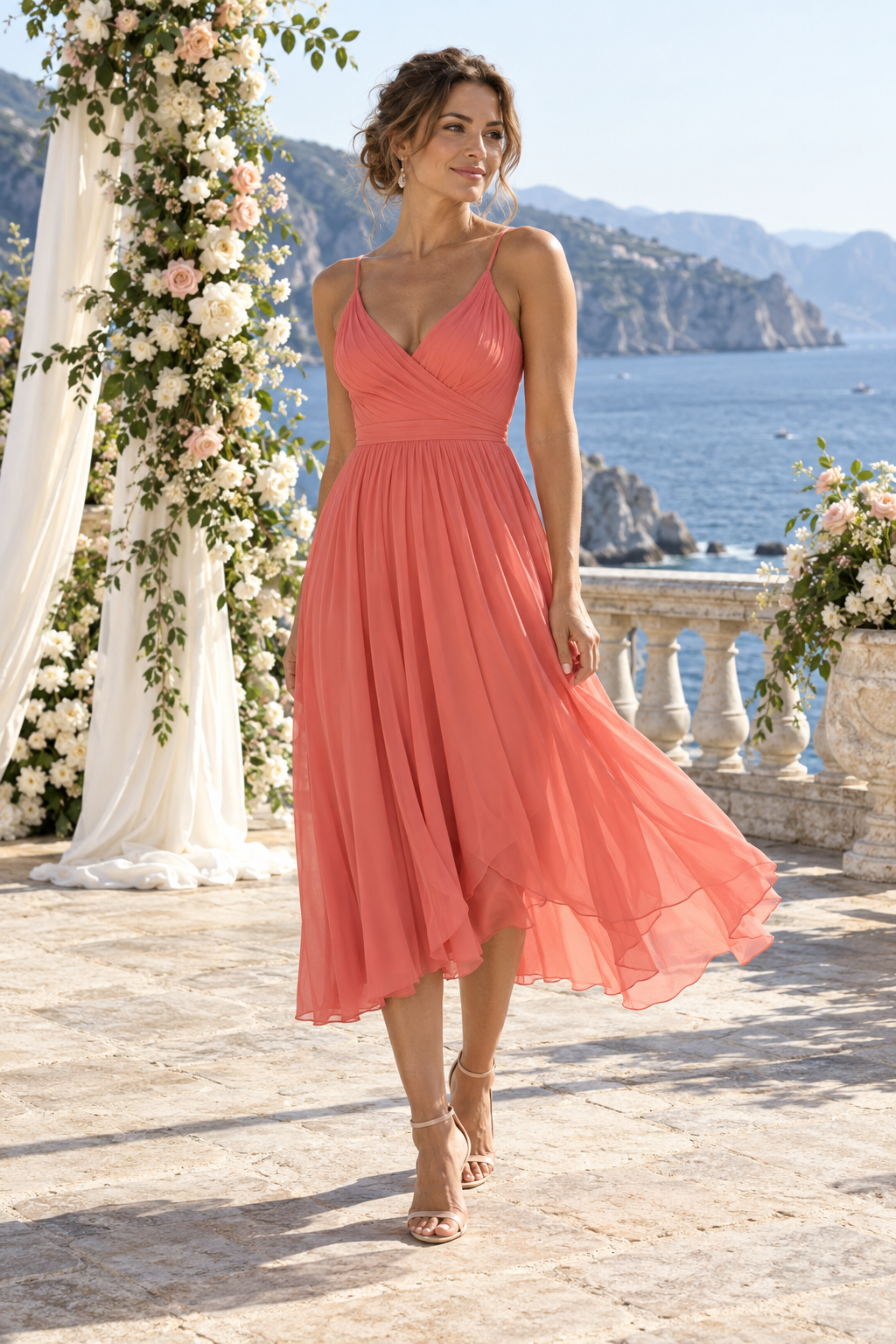
Sea air can be humid and breezy, so fabric matters. Chiffon, lightweight crepe, and breathable cotton blends can feel comfortable for long stretches outdoors. Linen has a relaxed texture but wrinkles easily; that may be fine for a casual event and less suitable for a formal one. Satin can look beautiful near water but may show moisture marks or cling in heat. Try the dress in daylight and walk around before deciding. A lining should provide coverage without making the garment heavy. If a skirt moves in the wind, check that it remains comfortable and secure.
Think carefully about length
A long dress can look graceful at a beach wedding, but a hem that drags through sand becomes awkward quickly. A midi often offers the easiest balance between occasion and movement. If you prefer a maxi, have it hemmed with the shoes you will actually wear and allow a little clearance from the ground. Very short skirts can become difficult in a breeze. Consider the route from ceremony to reception too: steps, boardwalks, and grass may all be involved. A practical length lets you move naturally rather than carrying the skirt throughout the event.
Choose shoes for the surface
Thin heels sink into sand and can catch between deck boards. A dressy flat, stable block heel, or elegant sandal is usually more useful. If the reception moves indoors, you can bring a second pair, but plan where the change will happen. Try the shoes with the dress before the event so the hem and proportions work together. Barefoot ceremonies are sometimes part of the plan, yet it is best to follow the couple’s guidance rather than assume. Footwear that supports the terrain helps you stay present during photographs, conversation, and dancing.
Use color and accessories with restraint
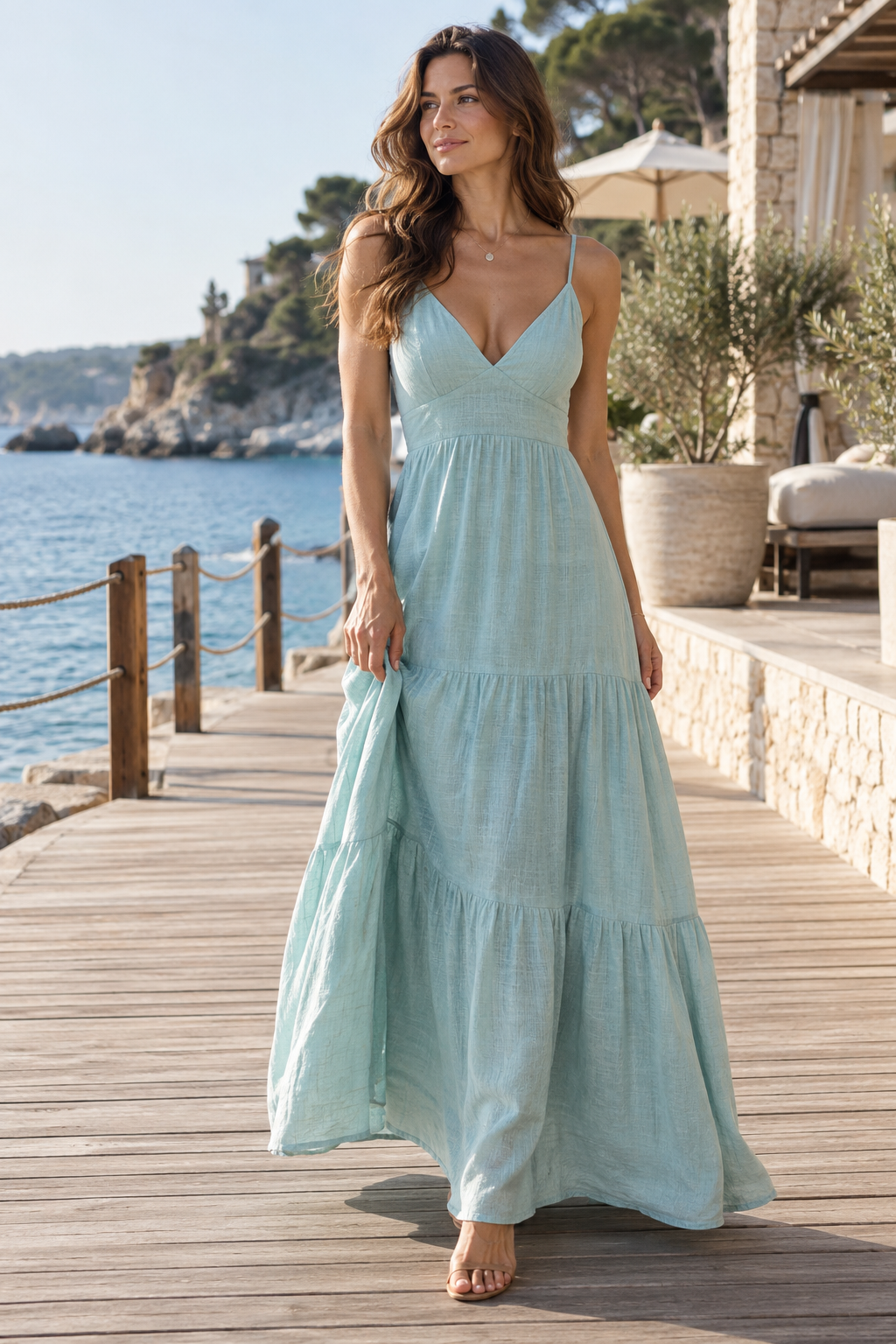
Coral, sea glass green, blue, and soft floral prints can reflect the setting, but there is no requirement to dress like the scenery. A rich solid color can be equally striking against the coastline. Avoid white, ivory, or a bridal-looking pale dress unless invited by the couple. Keep jewelry secure in wind and choose a small bag that closes properly. A lightweight wrap can help after sunset. Sun protection is practical for a daytime ceremony; choose a product that will not transfer onto fabric. Let one detail lead, then keep the rest simple.
Test the full outfit outdoors
Before the wedding, wear the dress and shoes outside for a few minutes. Notice how the hem moves, whether straps stay in place, and how the fabric looks in direct light. Sit down and stand up again. If you will travel, check how the dress creases in a car or suitcase and whether a steamer will be available. This rehearsal can reveal small problems while you still have time to solve them. The most successful beach guest outfit feels effortless because it has been planned for the actual environment.
Can I wear a floor-length gown to a beach wedding?
Yes, especially when the dress code is formal. Choose a light fabric and tailor the hem for your shoes and the ground. If the ceremony is directly on sand, ask whether a dressy flat or stable sandal would be more practical than a heel.
What should I bring if the beach gets cooler after sunset?
A light wrap or tailored layer can be useful when wind rises after dark. Choose something that works with the neckline and can be carried easily during the ceremony. If you are traveling between venues, keep it in a small garment bag or with a companion so you can enjoy the warm part of the day without carrying it constantly.