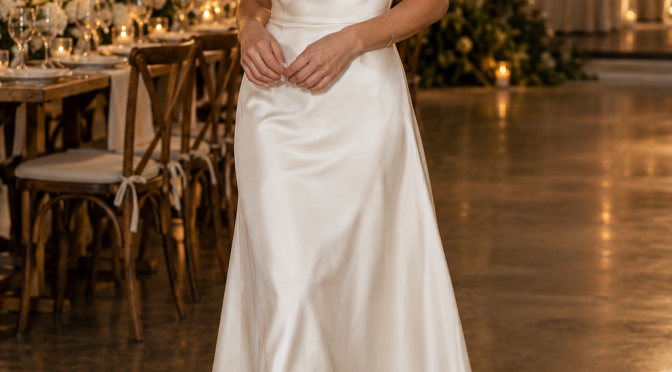
A second dress can change the pace of a wedding day. After the ceremony and formal portraits, some brides want a lighter look for dinner, dancing, or an after-party. The decision is personal. A reception dress should solve a real need and add to the experience, rather than creating another schedule to manage.
Decide why you want to change
Begin with the reason. You may want freedom to dance, less weight than a full gown, a silhouette that suits the evening venue, or a way to express another side of your style. If the ceremony dress already moves well and you love wearing it, a second dress is optional. If you do change, choose a clear moment in the schedule, such as after portraits or before the first dance. Share that plan with whoever is helping you dress. A well-timed change feels like part of the celebration, not an interruption that pulls you away from your guests.
Choose a silhouette for movement
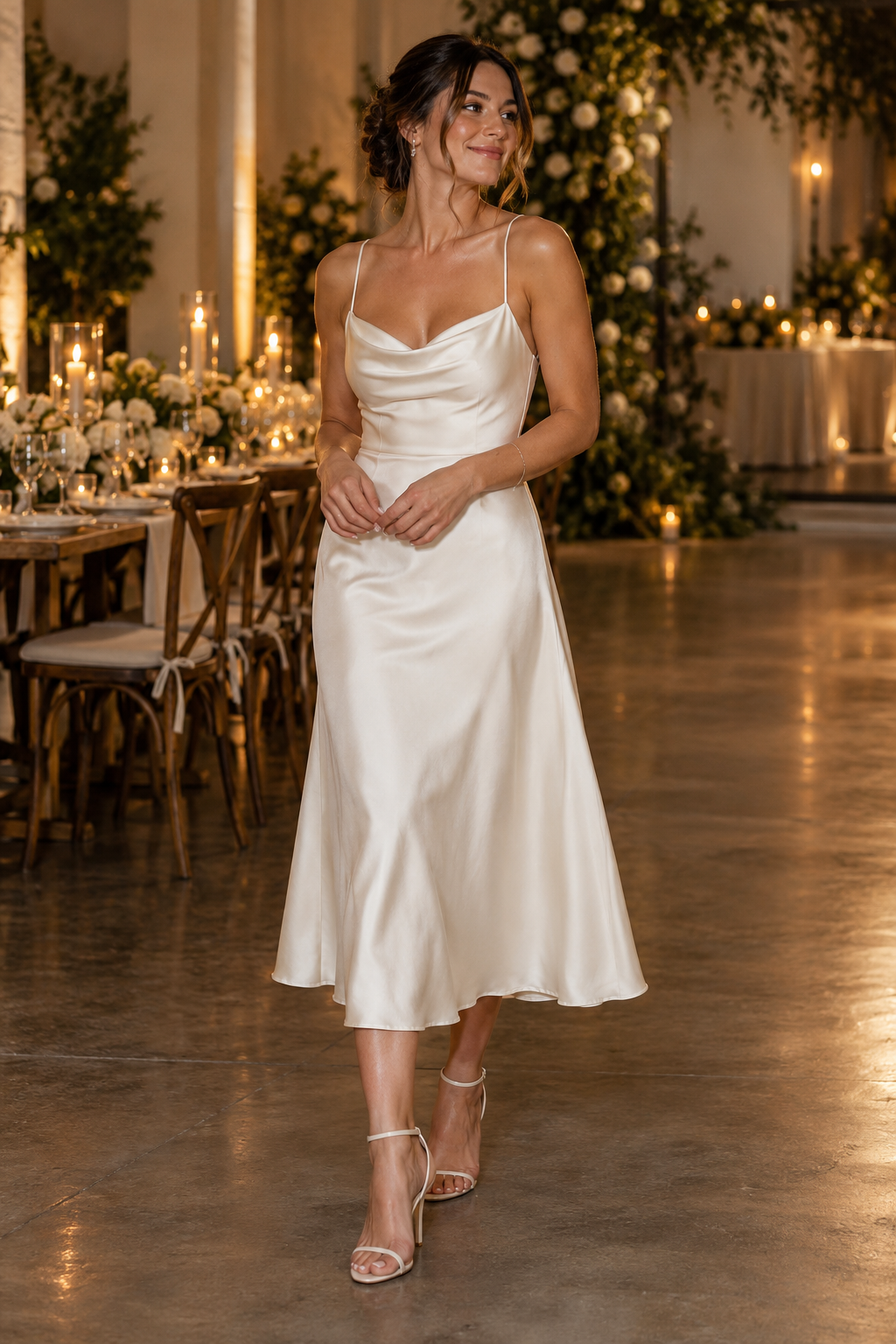
A short or midi dress can free the legs, while a slim long dress may retain the elegance of the ceremony look without a wide skirt. Test whether you can sit, walk quickly, and dance. A dress that is lighter but needs constant adjustment will not make the evening easier. Consider the neckline and support, especially if you will change without time for complicated undergarments. If you love sleeves, make sure they allow a full range of movement. The best second look feels secure from the first song through the last conversation.
Connect the two looks thoughtfully
The second dress does not need to match the gown exactly. A shared detail can create continuity: the same earrings, a similar neckline, a repeated fabric texture, or a consistent color tone. You might use the reception look to introduce sharper tailoring if the ceremony dress is romantic. White and ivory are common, but champagne or another meaningful color can be beautiful. Try the two outfits side by side in photographs. They should both feel like versions of you, even when their silhouettes are very different.
Plan the change itself
A change of clothes takes more time than it seems in a busy wedding schedule. Choose a private room with enough space, good light, and a place to keep the first gown safe. Practice any buttons, zippers, or fastening with the person who will help. Pack the second dress on a suitable hanger and protect it during transport. If you will switch shoes, check the new hem with that pair. Keep a small kit for minor repairs and makeup touch-ups. Planning these details makes the transition calm instead of rushed.
Think about photographs
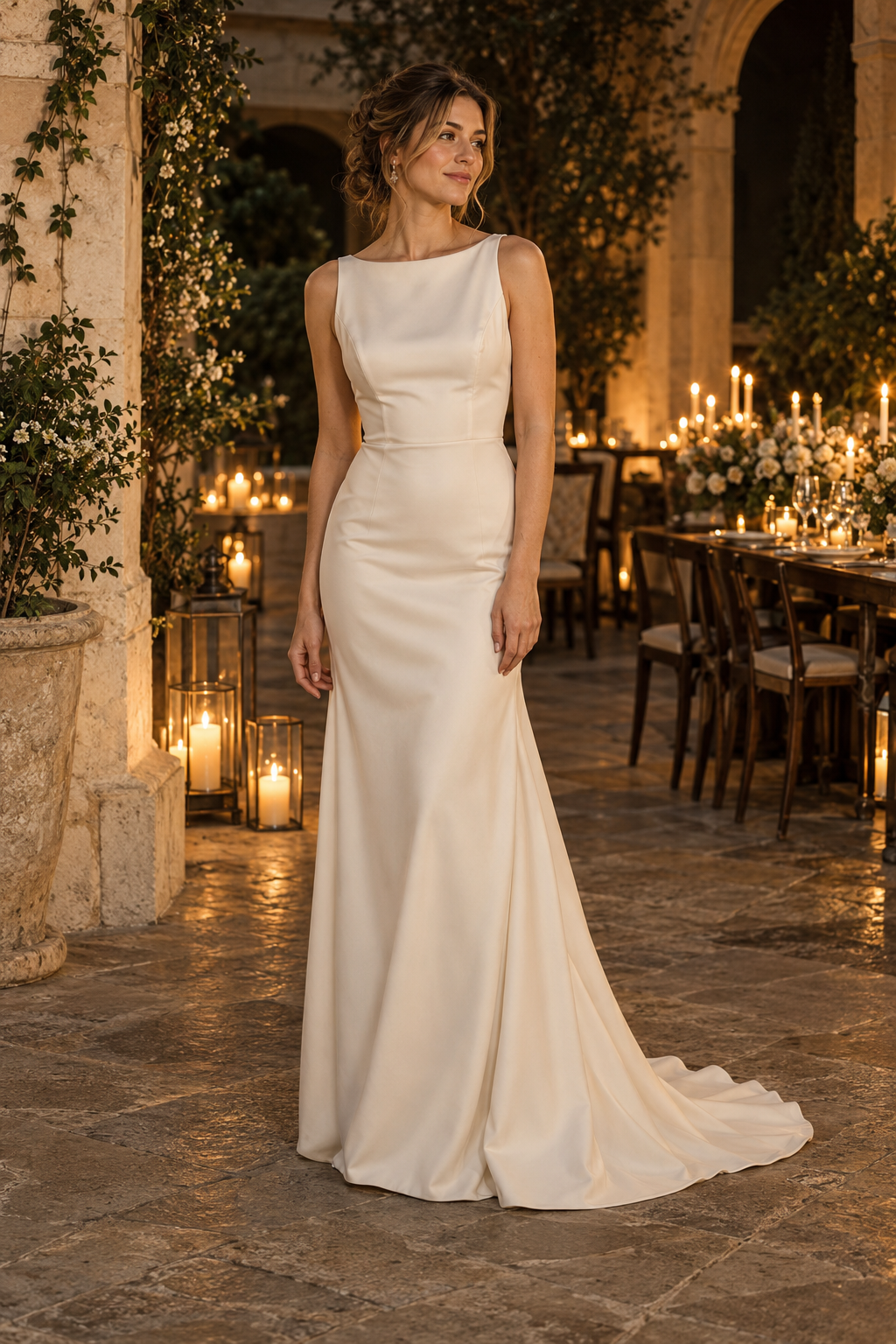
A reception dress often appears in candid images under dimmer light than the ceremony gown. Satin catches light beautifully but may show creases; crepe gives a smooth matte line; sequins or beading can sparkle but may catch on other garments. Ask for a few photographs early after the change while the dress is fresh, then enjoy the rest of the night. If the second look is important to you, tell the photographer roughly when it will appear. That simple note helps preserve both chapters of the day.
Make room for comfort
The late hours of a wedding can be energetic and emotional. Prioritize breathable fabric, shoes you can truly dance in, and a fit that lets you eat and move. A reception dress can be glamorous without being restrictive. Wear it for a rehearsal at home, including a short dance and a seated moment. If you find yourself repeatedly pulling it into place, consider tailoring or another option. The second look succeeds when it lets you be fully present with the people celebrating beside you.
Do I need a second dress for the reception?
No. Many brides stay in their gown all day and love that continuity. A second dress is useful when it improves comfort, movement, or personal expression enough to justify a change. Choose the experience you want, not a trend you feel obliged to follow.
When is the easiest time to change?
Many couples choose a natural pause after formal portraits and before dancing, but the best point depends on the day’s schedule. Ask the planner or a trusted helper to protect a short window for the change. If dinner and speeches run together, a later switch may be calmer. A second dress should add energy to the night, so choose a transition that does not make you miss moments you care about.